The most personal part of a luxury car is often the part its owner sees every day: the cabin. A new exterior color changes how a vehicle appears from the street; upholstery changes the surfaces around the driver, the feel of a seat and the relationship between details that are usually taken for granted. The same attention carries over to a yacht salon or a set of cockpit cushions.
Motenza Couture, also presented as Motenza Auto Couture, is an automotive and marine upholstery atelier in Hollywood, Florida. Its published work includes a Miami Blue Rolls-Royce interior, a white-and-pink Lamborghini Huracán, a BMW X5 dashboard and a custom Mercedes Metris passenger cabin. This profile looks at those projects and the questions that make an upholstery brief useful, whether the starting point is a worn panel or an entirely different interior.
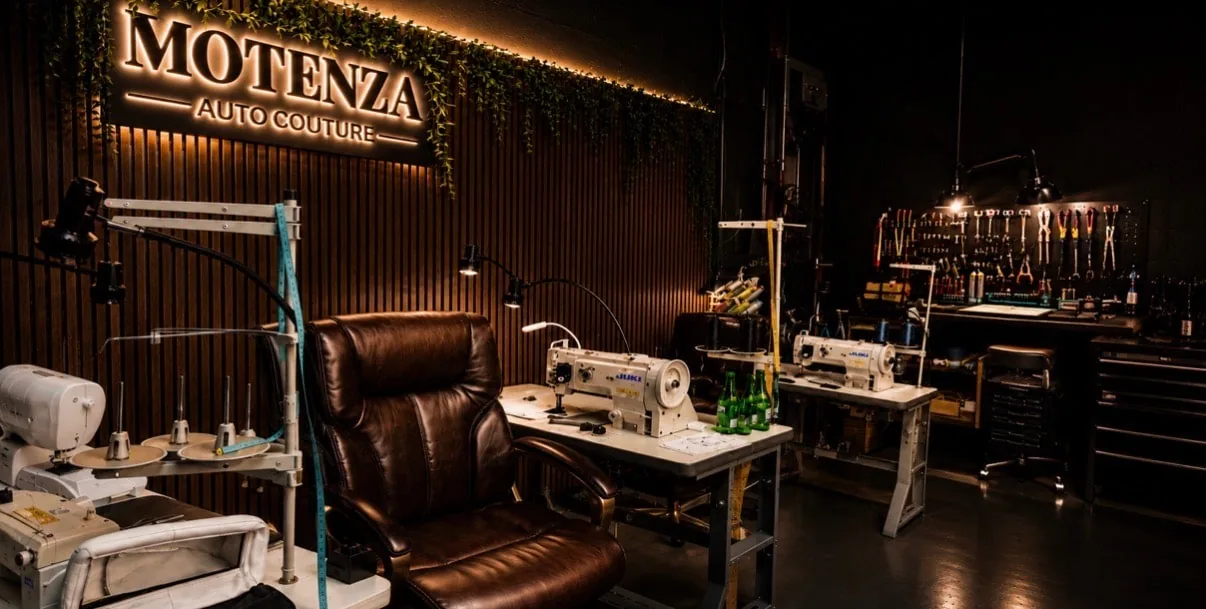
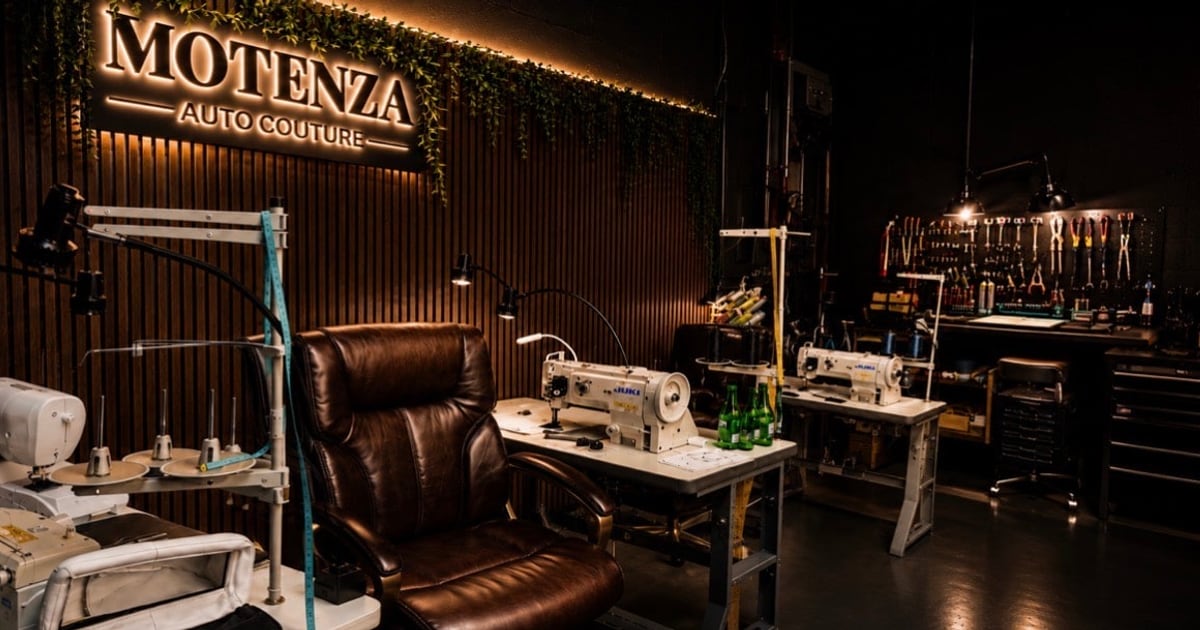
Inside the Hollywood upholstery atelier
The company’s atelier overview describes a workshop focused on leather, Alcantara, sewing and fitting. Its public address is in Hollywood, between the Miami and Fort Lauderdale markets. References to Miami describe the region it serves; they do not establish another workshop in Miami. Contacting the atelier before bringing a vehicle or loose upholstery pieces is the practical starting point.
An interior project has several connected decisions. The visible cover is one layer; the supporting padding, panel shape and attachment points influence the finished result. A design conversation should identify what will be retained, what will be removed and which adjoining surfaces need to work together. The photographs in this article come from the atelier’s workshop and completed-project pages.
For an owner, the useful question is how a proposed change fits the actual vehicle or vessel. A striking reference photograph can establish a direction. An agreed component list and physical material samples turn that direction into something the workshop can assess and quote.
A Rolls-Royce interior in Miami Blue
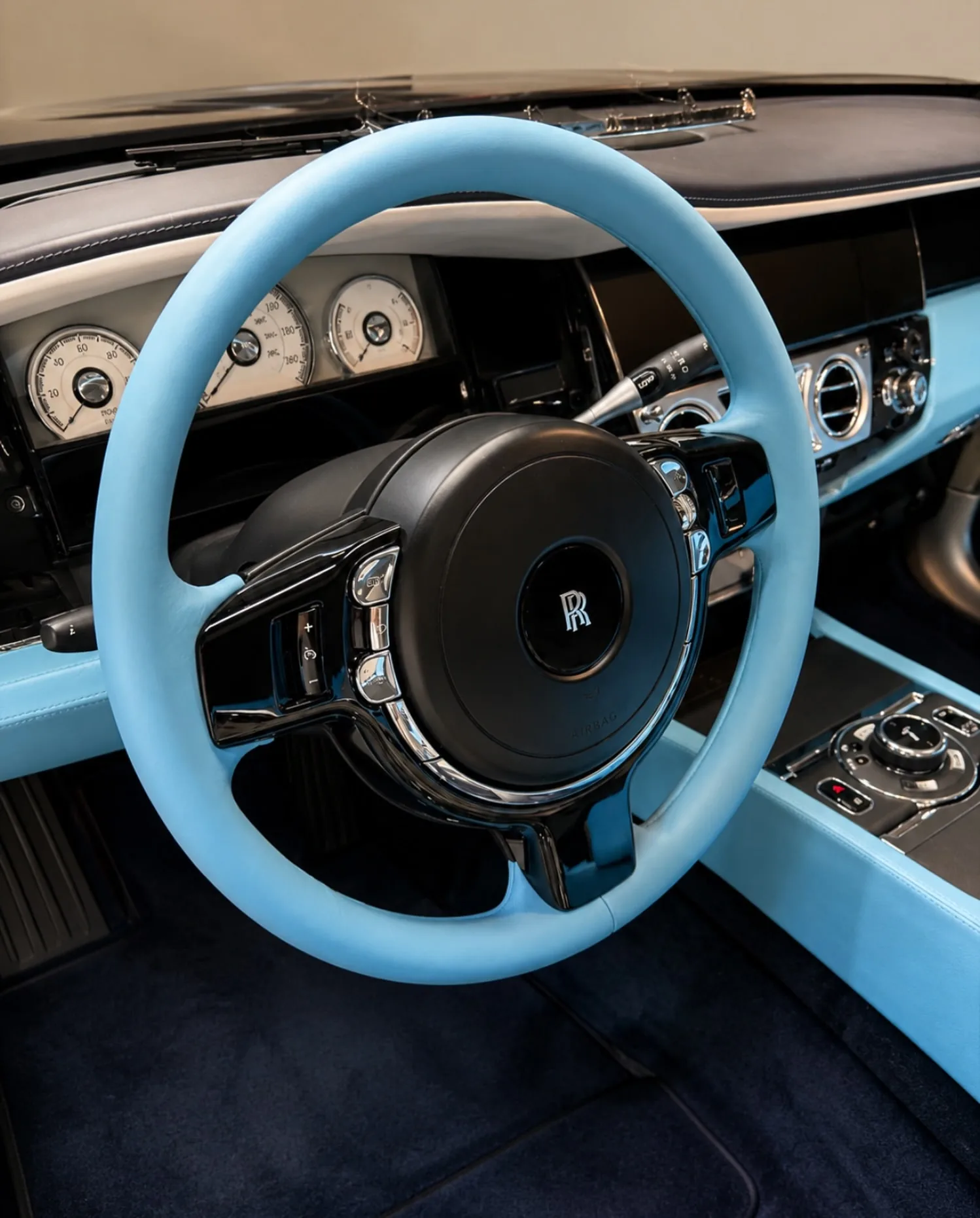
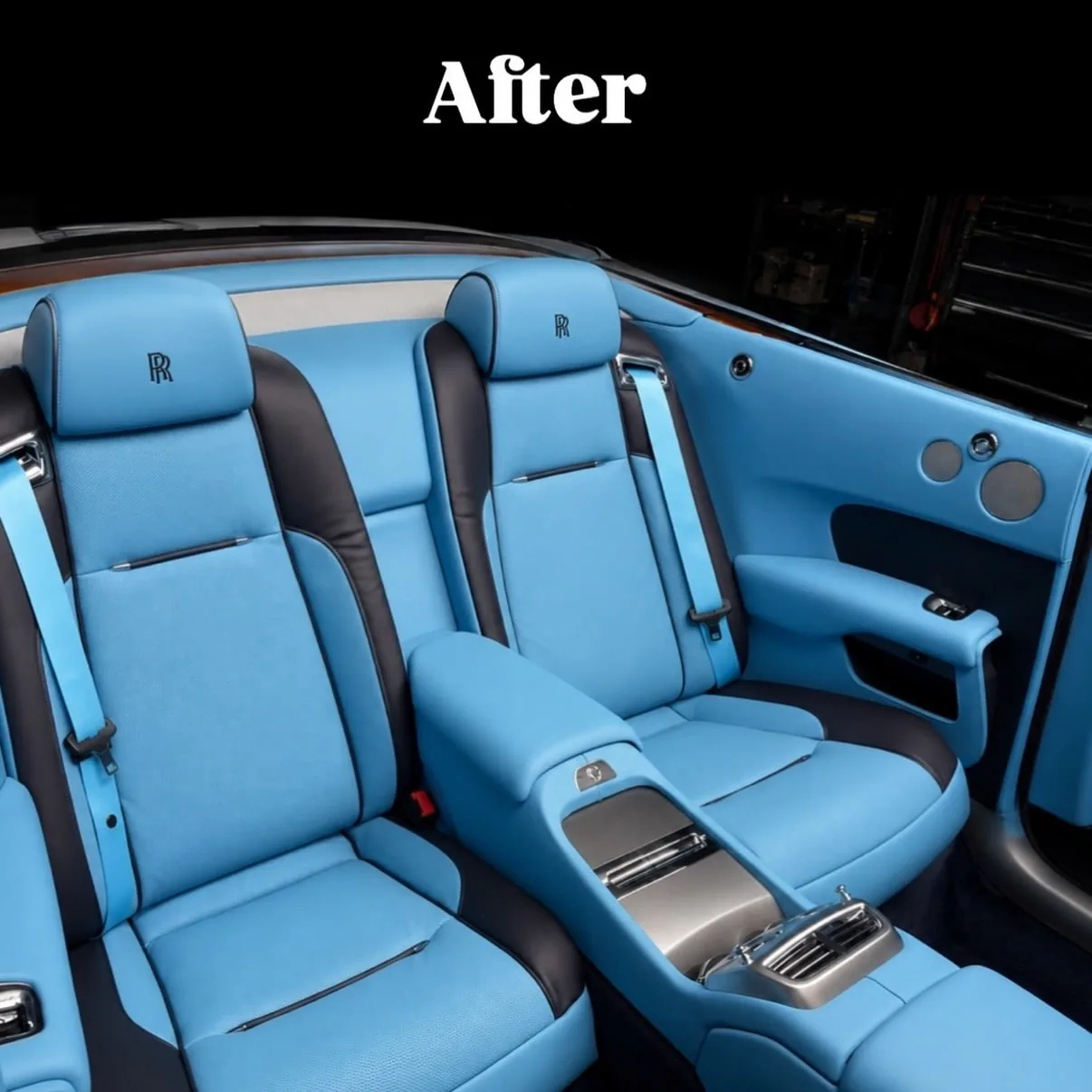
The Miami Blue Rolls-Royce project records a change from ivory to blue leather. The company’s photographs show the color across rear seating and door upholstery, as well as the steering wheel and dashboard trim. The darker retained surfaces and metal details provide a different visual rhythm beside the blue.
This is a useful example of a cabin-wide palette. Choosing a seat color in isolation leaves questions about the door inserts, armrests, console and surfaces around the driver. In a coordinated retrim, the boundaries between those materials are part of the design. A stitch line can connect separate pieces; a poorly considered transition can interrupt an otherwise consistent interior.
For someone planning a Rolls-Royce interior color change, the project is a reference for discussion. Identify the exact model and year, photograph the current cabin and mark the pieces included in the proposed work. Ask which original finishes remain, how the new leather will meet them and what the material sample looks like in daylight. The project photographs establish this particular result; they do not set a price or a specification for another car.
Lamborghini Huracán: white leather and pink Alcantara
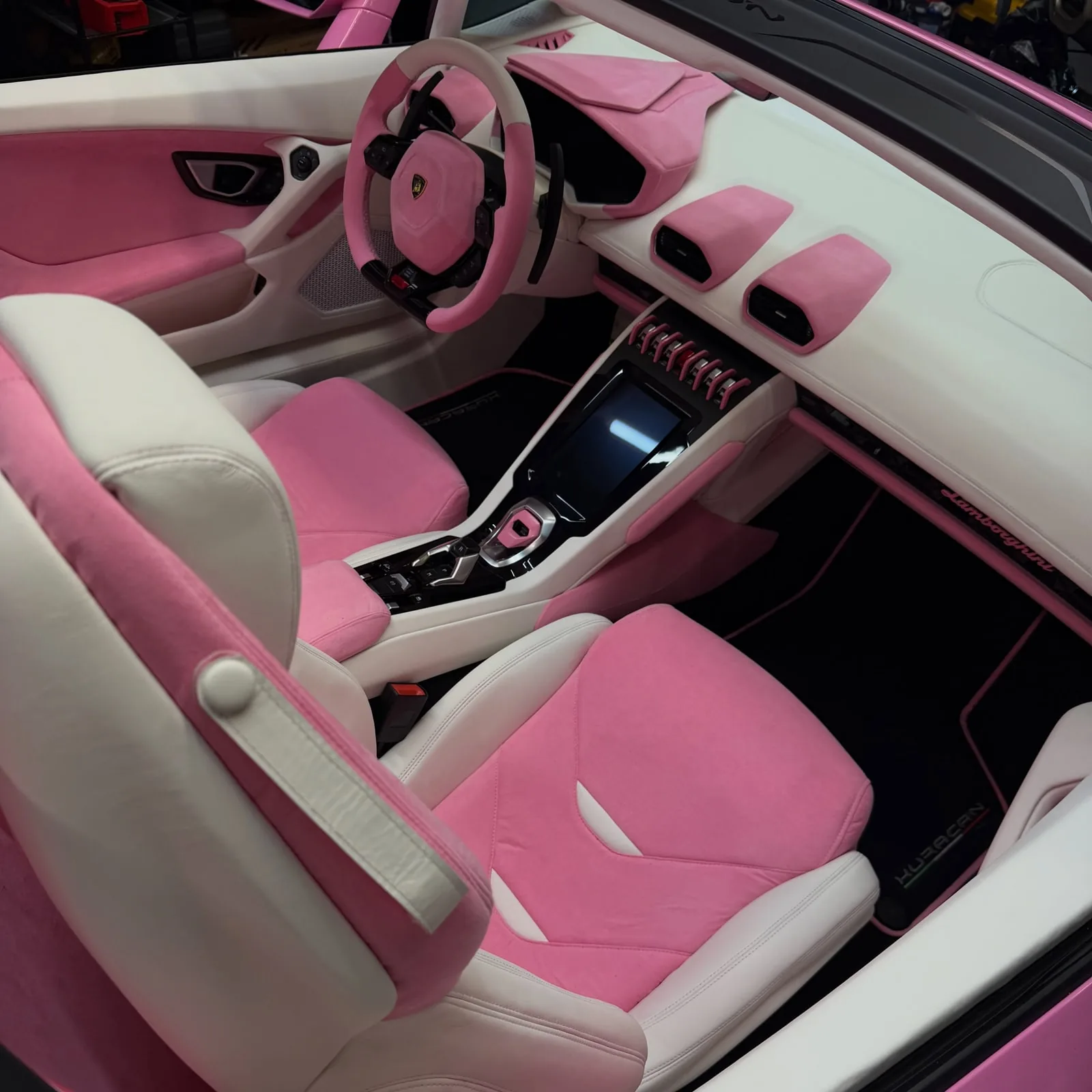
Motenza’s white-and-pink Huracán project describes a Lamborghini Huracán Evo Spyder transformed from a red interior into a combination of white leather and white and pink Alcantara. The published image shows a connected palette across the cabin rather than a single contrasting seat panel.
The interest here is texture as well as color. Leather and a suede-like textile reflect light differently, and their relationship becomes more noticeable when they sit beside one another. A photograph helps communicate the intended balance, but it cannot replace touching the proposed materials or comparing them against the vehicle’s retained trim.
Owners considering custom Lamborghini upholstery can use this project to make their own brief more precise. Which surfaces should carry the accent? Is the steering wheel part of the change? Are doors and dashboard included, or is the work limited to the seats? Those choices affect the scope. The source project does not publish an owner identity, price or completion schedule, and this profile does not infer them from the image.
BMW and Mercedes: different approaches to the cabin
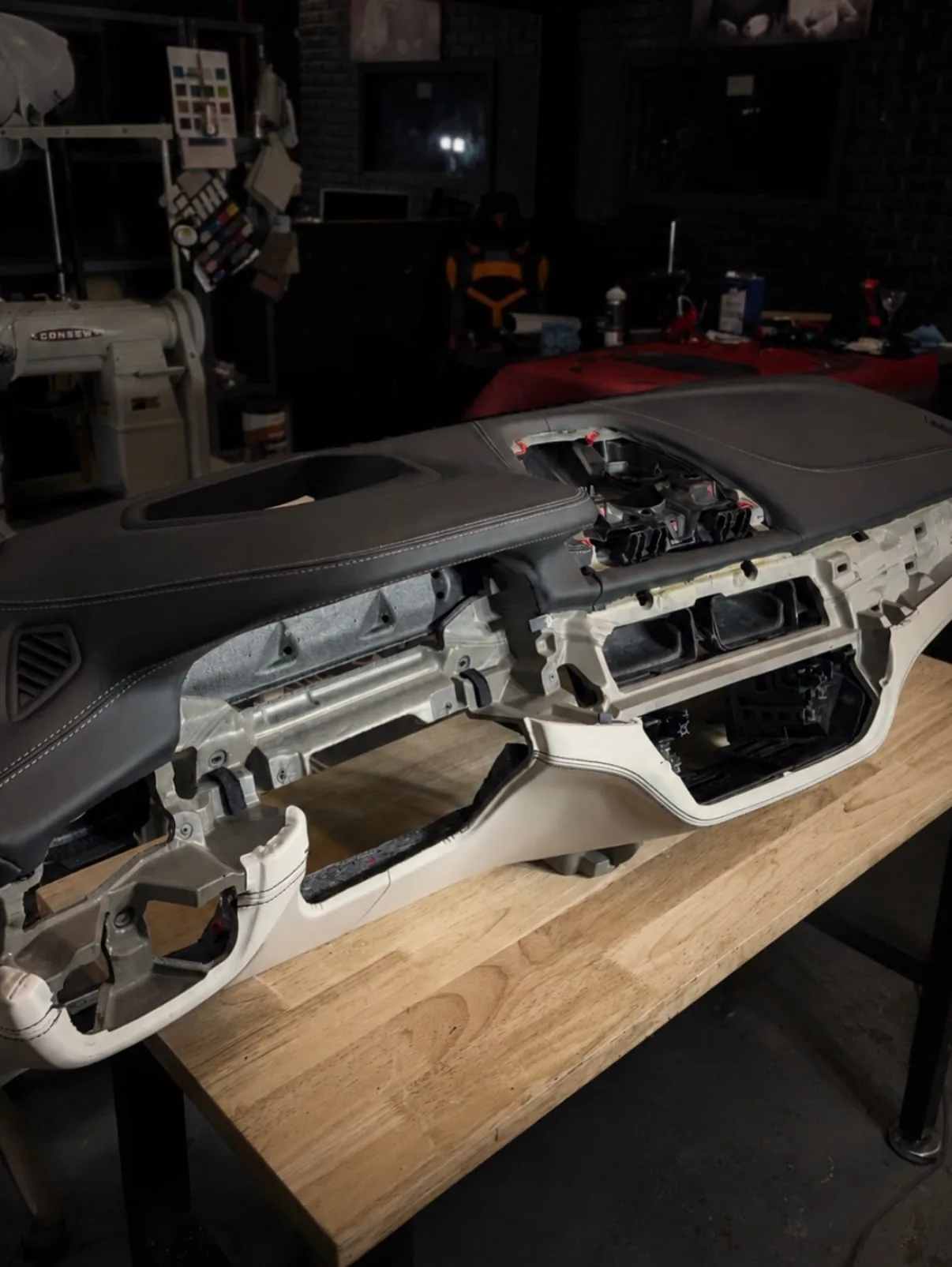
The BMW X5 dashboard project focuses on one of the cabin’s largest visual surfaces. The company’s workshop photograph shows a dashboard component on the workbench. Its curves, joins and openings illustrate why a dashboard brief needs more than a close-up of a damaged patch. Wide photographs show how the proposed surface meets instruments, screens, vents and the surrounding trim.
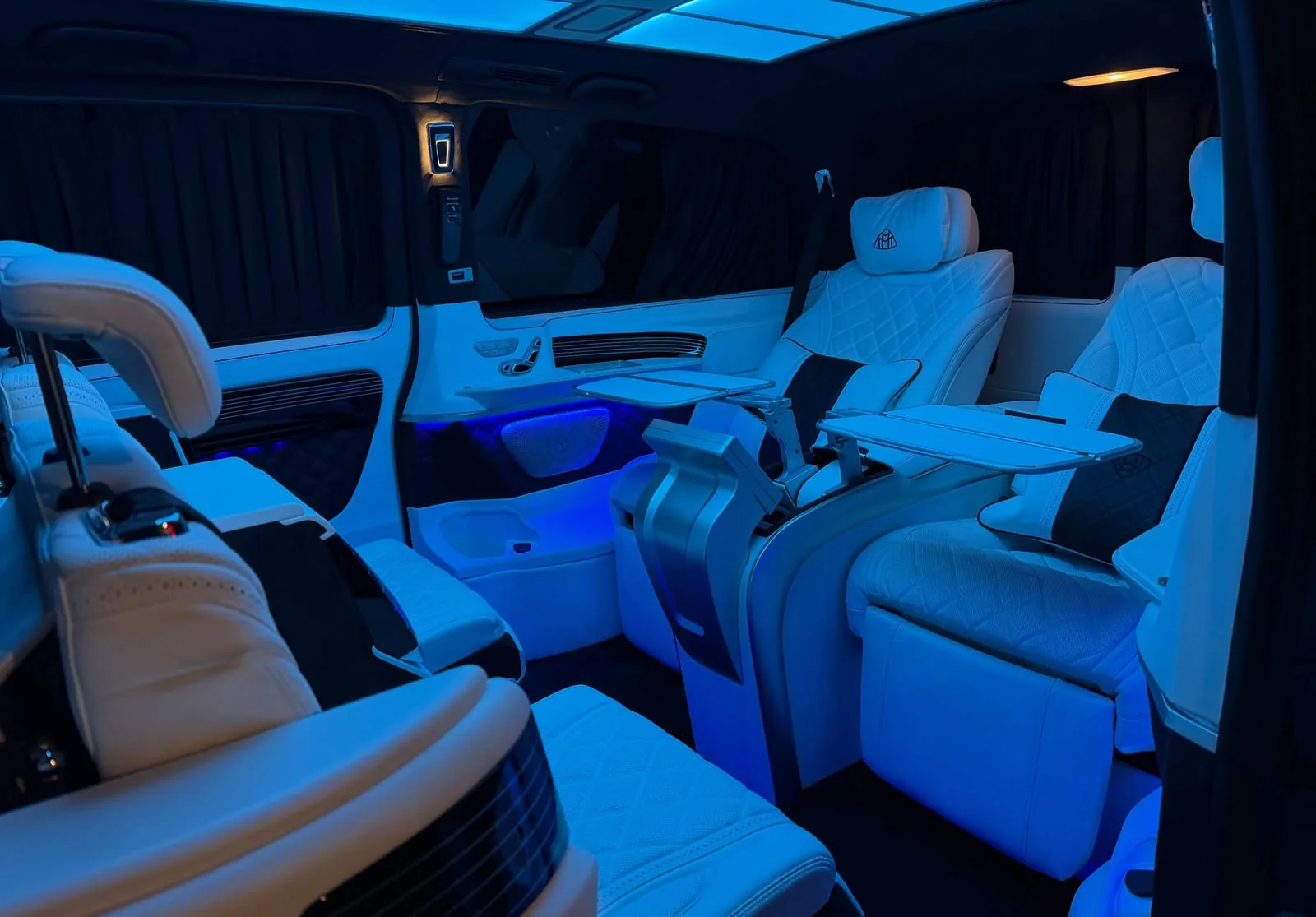
Motenza’s Mercedes Metris project takes a different direction. The published description records four executive captain’s seats, laptop tables, ambient lighting and multimedia in a custom passenger interior. Upholstery is part of the layout passengers use, not simply a decorative finish applied to an unchanged cabin.
These projects should lead to different conversations. A dashboard enquiry begins with surface condition, fitting and retained components. A passenger-van brief also needs to explain seating configuration, access and the intended use of the space. A completed project is evidence of that project’s scope; it is not a promise that every modification is suitable for every vehicle. Feasibility and responsibilities should be agreed for the specific car before a schedule is set.
Leather seat repair or a complete retrim?
The company’s leather seat repair service covers damaged panels, worn surfaces, broken stitching and related seat work. Its broader automotive upholstery catalogue also describes complete interiors and coordinated color changes. Repair and replacement therefore belong in the same assessment, even though they can produce very different proposals.
A useful brief separates appearance from condition. Is the issue limited to one bolster, or do several panels show wear? Does the cushion still support evenly? Is the owner trying to preserve the existing finish or create a new one? A close-up can document the damage while a wider image shows the rest of the seat and the surrounding cabin.
Ask how a replacement panel will match adjacent leather in grain and finish, and whether padding, removal and refitting are included. For a full retrim, identify headrests, door inserts and other surfaces explicitly. Heating, ventilation and existing equipment should be part of the discussion. A photograph-based estimate is a starting point; the workshop may need to inspect what lies beneath the cover before confirming the work.
Headliner repair and a starlight roof
Roof upholstery has its own scope. Motenza’s headliner repair page describes assessment of the roof board, covering and adjoining pieces. For an owner, it helps to show the entire roof as well as the area that is sagging, stained or damaged. Sunroof openings, overhead equipment, pillars and visors can change what is involved.
The atelier also publishes a starlight headliner service. This combines an upholstered roof with fibre-optic lighting, subject to the vehicle’s construction and equipment. Material, light pattern and controls belong in the brief together; an attractive ceiling photograph does not identify the installation requirements for a different model.
When comparing proposals, ask which roof components are included and how existing lights and controls will be handled. If a lighting system is part of the project, agree on its operation and the checks at handover. The distinction between replacing a worn liner and commissioning a roof with lighting should remain clear in the written scope.
Leather, Alcantara and the importance of samples
Motenza’s materials guide discusses Italian leather, Alcantara and marine applications. It presents material choice as a decision about use and location, alongside color and texture. A seat, steering wheel and enclosed yacht sofa may be part of one visual direction while still needing different considerations.
Physical samples are especially helpful when some of the original interior remains. Put the proposed material beside the retained trim and compare the combination in more than one light. A pale leather photographed in a bright workshop may look different in a darker cabin. Grain, sheen and the scale of a stitched pattern are also easier to judge from an actual sample than from a screen.
The practical takeaway is to record the material selection in the proposal. Ask for the chosen product, color reference, seam direction and any agreed perforation or detailing. Care instructions should correspond to that material. A descriptive label such as leather or marine vinyl helps start a conversation; it does not specify a supplier, grade or complete performance standard by itself.
Boat and yacht upholstery in South Florida
The company’s marine upholstery services include boat seating, cushions, helm chairs, salon upholstery and panels. The first question is where each piece is used. An exposed cockpit cushion and a sofa inside an enclosed cabin do not have the same working environment, even if an owner wants their colors to relate.
For boat seat reupholstery, photograph the pieces in place and show their underside, fastenings and existing condition. The cover, filling and base should be considered together. Ask how the selected materials relate to exposure, cleaning and drying, and whether any replacement of the filling is included. A material description alone should not be read as a promise that a complete cushion is waterproof or maintenance-free.
The yacht salon and cabin service focuses on upholstery alongside cabinetry, flooring and the proportions of the room. A full view of the cabin is useful before selecting a palette. For removable pieces, label their positions and provide approximate dimensions. For fixed work, explain access and the vessel’s location. Collection, marina attendance and delivery arrangements must be discussed directly; the company’s service-area page does not advertise them as standard inclusions.
What a useful upholstery quote should include
Motenza’s pricing explanation ties the proposal to the components, their condition, material choice and the work required to remove, sew and fit them. This article does not supply a universal price for a leather seat repair, a starlight headliner or a complete custom car interior. Those are different projects with different specifications.
Start with an overview of the cabin, close-ups of the areas you want changed and the vehicle make, model and year. For a boat, include the vessel type, location and approximate size of the pieces. Add a reference for the desired result and a clear explanation of what you intend to retain. A desired completion date helps planning, but it should be confirmed separately from the initial enquiry.
The written proposal is easier to compare when it names the components, materials and finish, explains removal and fitting, and identifies any work on the underlying padding or structure. Ask how new findings during inspection will be handled, when changes need approval and what the handover includes. Two headline prices can hide different scopes; a shared component list makes the comparison more useful.
The company’s quote-request page begins that conversation with details about the car or boat. Its form describes confirmation by email and photographs supplied in reply. An enquiry establishes a brief for assessment; it does not itself confirm a purchase, a workshop slot or a final price.
Questions about Motenza Couture
Where is Motenza Couture located?
The company publishes its atelier address as 5790 Rodman St, Office 5, Hollywood, FL 33023. It serves enquiries from Miami, Fort Lauderdale and South Florida through that workshop. Contact the atelier before bringing a car or upholstery pieces; references to the Miami market do not establish a second Miami workshop.
Does Motenza Couture create custom car interiors?
Its automotive catalogue includes coordinated interior color changes, leather seating, headliners, steering wheels and other upholstered surfaces. Completed projects include a Miami Blue Rolls-Royce and a white-and-pink Lamborghini Huracán. Send the model, year, current photographs and desired finish so the team can assess the specific scope.
Can a leather car seat be repaired instead of replaced?
The company offers panel repair and surface restoration as well as reupholstery. The appropriate approach depends on the damage, the condition of adjoining panels and the underlying seat. Ask whether material matching, padding, removal and refitting are included in the proposal; an inspection may be required.
Does Motenza Couture offer headliner repair and starlight headliners?
Both services appear in the company’s automotive catalogue. A headliner repair concerns the roof covering and board; a starlight project also involves fibre-optic lighting and controls. Provide the vehicle model and photographs of the roof, then confirm feasibility, adjoining components and existing equipment before agreeing to work.
Does the atelier work on boats and yacht interiors?
Its marine service pages cover boat seats, removable cushions, helm seating, yacht salons and cabin upholstery. Describe where the pieces are used, their condition, approximate dimensions and the vessel’s location. Ask the team to confirm material suitability and practical arrangements; collection and marina attendance are not standard advertised inclusions.
How much does custom car or boat upholstery cost?
The company quotes by project rather than publishing one universal price. Components, condition, material, detailing and removal or fitting affect the scope. Request a written proposal identifying those elements and how changes after inspection are approved. A desired date or an enquiry alone does not confirm a booking.
What should I send for an upholstery quote?
Include wide interior photographs, close-ups of the areas to change, your vehicle make, model and year or vessel details, and a reference for the desired result. State what should remain. The quote form describes email confirmation and photographs sent in reply; confirm the assessment and any visit directly with the atelier.
Contacting Motenza Couture
The published atelier address is 5790 Rodman St, Office 5, Hollywood, FL 33023. The company lists +1 786 859 7876 and info@motenzacouture.com. Contact the team before travelling with a vehicle or interior pieces, and confirm the visit and project arrangements directly.
Its South Florida service-area guide covers enquiries from Miami, Fort Lauderdale and surrounding communities through the Hollywood atelier. Readers looking for car upholstery in Miami or yacht upholstery near Fort Lauderdale can begin with their location and photographs. The strongest brief explains the object, the condition and the desired result; the postcode alone does not define the work.
Motenza Couture is associated with Motenza’s publisher. Motenza Editorial prepared this company profile from the atelier’s published materials and project records. Service descriptions and completed-project details are attributed to the company. This profile does not assign a comparative rating.