Use the evidence and practical questions in this article to test your own assumptions. Any worked examples use hypothetical inputs.
Choosing a bank starts with how you use money
The best bank for your checking account is the one that makes your ordinary month easier: your pay arrives reliably, your bills clear, cash is accessible and the account does not require an expensive balance simply to avoid a fee. A bank that fits a salaried commuter may be inconvenient for a freelancer who deposits cash or a student who moves between states. Start with those habits before comparing brand names.
This guide compares ten established US banking options: Chase, Bank of America, Wells Fargo, Citi, U.S. Bank, PNC, Capital One, Truist, TD Bank and BMO. It is an editorial shortlist for everyday banking, not an audited customer-satisfaction award, a safety ranking or a list of the ten largest banks by assets. National brands and regional branch networks are included because a useful choice depends on where you live as well as what an account costs.
The comparison below separates the product worth investigating from the question that could rule it out. Account names, fee-waiver rules, service areas and promotional offers can change. Use the linked official account pages to confirm your ZIP code, ownership type and current disclosures. A familiar bank logo is the beginning of due diligence, not the conclusion.
Ten banks at a glance
Use this comparison as a shortlist rather than a scorecard. The suggested fit is Motenza's interpretation of the account structure and service model described by each bank; it is not a claim that the bank will approve an application or deliver the best result for every customer. Every option should pass the same test: usable access, understandable fees and a dependable plan for exceptions.
Compare the actual account you would open, not the most attractive feature available somewhere in the bank's product range. A premium account's ATM benefits may not apply to entry-level checking. A student waiver may end at a specified age. A savings promotion may be restricted to certain locations, deposits or opening channels. Keep a copy of the disclosure shown during your application.
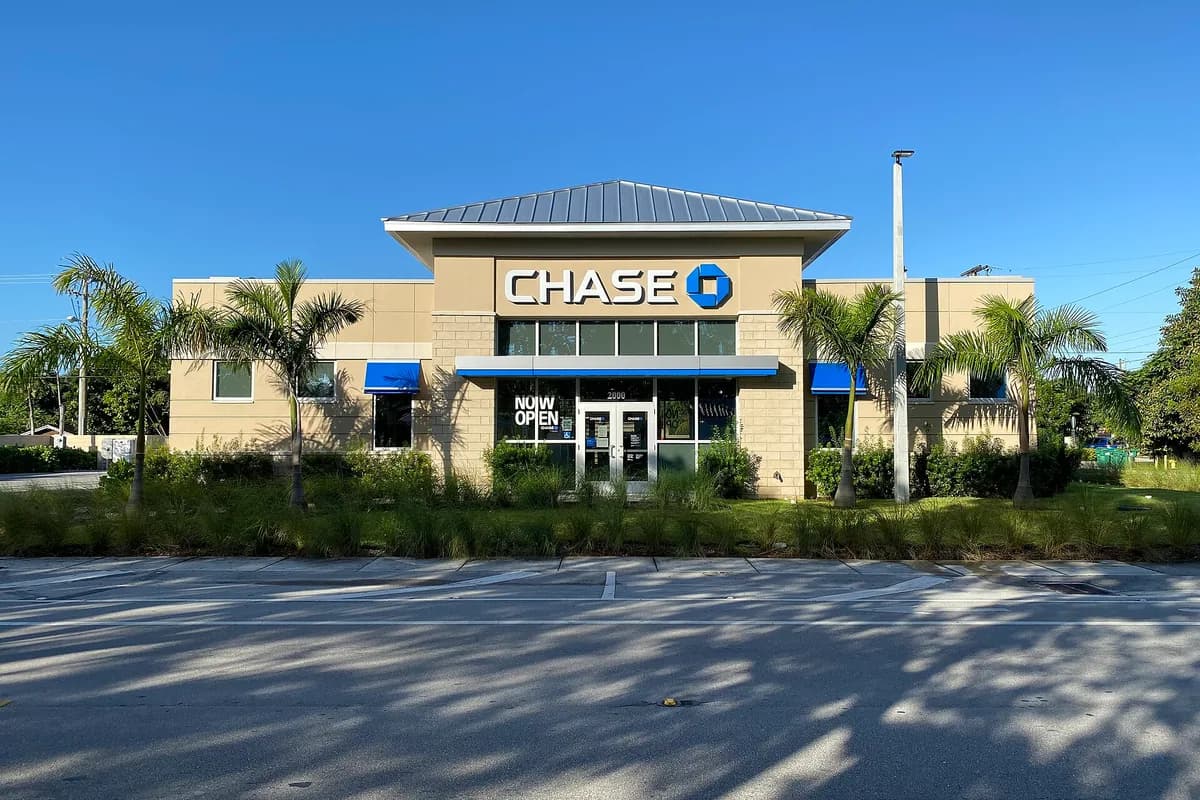
Chase: compare branch access with the account's fee rules
Chase offers several personal checking choices, including Total Checking and Secure Banking, alongside its branch and digital services. Its official comparison distinguishes the accounts' fees and features. Secure Banking is presented as an account without overdraft fees, while other accounts have their own conditions. Do not transfer that feature to every Chase product or assume that every monthly service fee is automatically waived.
Chase is worth investigating if you want to use a physical branch and an app within one banking relationship. Put the branch you would actually visit on your map, then compare the waiver requirements with your usual paycheck and balance. A national network matters less if the convenient location cannot handle your particular request when you need it.
Ask before opening: Which deposits qualify for the waiver, and how does the bank treat a month when your paycheck is delayed? If you use cash, also confirm deposit access at the specific ATM or branch. Those details are more useful than choosing a higher-tier account because its name sounds more comprehensive.
Bank of America: choose the right Advantage Banking option

Bank of America's Advantage Banking range includes SafeBalance, Advantage Plus and Advantage Relationship options, with different features and waiver conditions. The bank also publishes separate family and young-adult banking information. SafeBalance and a conventional checking product should not be treated as interchangeable, particularly if writing paper checks is part of your routine.
This is a bank to compare when you want branch-supported household banking and more than one account option within the same institution. Build your decision around the exact version you can use comfortably. Relationship benefits can be relevant, but moving money solely to pursue a benefit has an opportunity cost: that balance could serve another purpose or earn a different return elsewhere.
Ask before opening: Does this account support the payment methods I use, and what happens to its fee waiver when my balance, age or relationship status changes? Ask for the schedule of fees rather than relying on a general description of rewards. Your account's written terms should support the conclusion.
Wells Fargo: separate Everyday Checking from simpler banking

Wells Fargo's personal checking comparison includes Everyday Checking, Clear Access Banking, Prime Checking and Premier Checking. The page lists different monthly fees and ways to avoid them. Clear Access is positioned for core banking needs; Everyday Checking has a different feature and fee structure. Higher-tier accounts need a separate assessment of whether their benefits justify their requirements.
Wells Fargo belongs on a shortlist when its branch locations match your normal routes and you want to compare conventional checking with a simpler alternative. Before choosing, work through your last month of transactions: checks, cash deposits, withdrawals, transfers and recurring bills. Match those activities to the product, then check the cost of an unusual month.
Ask before opening: Which fee waiver can I realistically meet, and are there restrictions on checks, overdraft handling or deposits for the account I selected? An account that is economical only while you maintain an unrealistic cushion is a poor fit, even if the bank's standard app features are useful.
Citi: read both the account rules and the relationship terms

Citi distinguishes Regular Checking and Access Checking within its simplified banking structure. Its current fact sheet describes monthly service fees, qualifying deposit conditions and relationship tiers. It also flags a scheduled change to Regular Checking's qualifying deposit threshold effective January 1, 2027. A requirement that applies today is not necessarily the requirement that will govern the account next year.
Citi is worth comparing if its available account and local access suit your household and you are comfortable tracking relationship conditions. Read the checking rules separately from savings offers. A bank may combine accounts for relationship calculations while still applying different requirements to a promotion, a fee waiver or an interest benefit.
Ask before opening: What is my fee-waiver requirement now, what announced change affects it, and will my normal deposits qualify? Also check non-Citi ATM charges independently of the monthly service fee. A waived maintenance fee does not establish that every other service is free.
U.S. Bank: check the payment features you need

U.S. Bank's checking comparison presents Bank Smartly Checking and Safe Debit among its options. The bank describes Safe Debit as debit-card banking without checks or overdraft fees, with its own maintenance fee. Its checking page also describes mobile deposits, online bill pay and account alerts. Read the footnotes for the product you intend to use.
U.S. Bank may fit a customer whose nearby branch network and digital routines align with the selected account. Compare both the ordinary account and the simpler debit-based option if you want tighter control over spending. A product that declines some transactions can be useful for budgeting, but it may be inconvenient if your workflow depends on features it does not offer.
Ask before opening: Can I complete my essential payments with this account, and what requirements determine its ongoing cost? Check identity and residency documentation before beginning an online application, particularly if your situation differs from the standard online eligibility described by the bank.
PNC: consider whether the budgeting structure helps you

PNC offers Simple Checking and Virtual Wallet options. Its official page explains that Virtual Wallet includes a Spend checking account, with optional Reserve checking and Growth savings accounts. The account choices have different charges and waiver requirements. The structure is worth understanding before deciding whether it makes your money easier to manage.
PNC may be a useful comparison for someone who wants to separate daily spending, near-term commitments and savings within a coordinated banking setup. That organization can help only if you maintain it. A customer who prefers one simple balance should compare the simpler account rather than choosing multiple accounts just because they are packaged together.
Ask before opening: Which accounts am I opening, which balances count toward a waiver, and what happens if I close one part of the arrangement? Confirm the product available for your location. The best budgeting interface is the one you will use consistently, not the one with the most categories.
Capital One: a starting point for no-monthly-fee checking

Capital One advertises 360 Checking with no monthly maintenance fee and no minimum balance. Its product page describes app access, mobile check deposits, an ATM network and support through branches and Cafés. The physical network is not identical to the networks of every traditional bank, so confirm the kind of in-person help available near you.
Capital One is worth considering if you manage most transactions digitally and want to avoid a monthly checking maintenance fee without maintaining a qualifying balance. That removes one variable from the comparison, but it does not remove the need to check cash handling, transfers and exceptional service charges. No monthly fee does not mean every possible transaction costs nothing.
Ask before opening: Where can I deposit cash, how would I obtain urgent help, and can I complete the transaction that would otherwise send me to a full-service branch? Compare the operational answers with your habits before treating a digital-first arrangement as a complete substitute for local branch banking.
Truist: compare One Checking with your actual needs

Truist's checking page describes Truist One Checking and Marquee Checking, with different maintenance-fee conditions and benefits. It states that Truist One Checking does not charge overdraft-related fees and describes a Balance Buffer for eligible clients. The eligibility rules matter: a described buffer should not be treated as a guaranteed source of short-term funding.
Truist is an option to investigate where its branches are convenient and the chosen account's waiver fits your usual activity. Compare the entry-level relationship with a premium account on actual use. Interest or extra benefits can be attractive, but an account should first solve the basics of paying bills, accessing funds and understanding the balance shown in the app.
Ask before opening: Which waiver applies to me, and what are the separate eligibility conditions for any additional account benefit? If you are a student, confirm when an age-based benefit ends. Plan for that transition instead of discovering a new maintenance fee after graduation.
TD Bank: use the US account comparison

TD Bank's US site compares products including TD Complete Checking, TD Beyond Checking and TD Essential Banking. The accounts have distinct fees, waiver conditions and features. Use the US product pages when comparing US banking; similarly named products offered in another country do not establish the terms of a US account.
TD is worth investigating if a nearby location offers the services and hours that suit your routine. For people who prefer speaking with a banker, service availability can be part of the value calculation. Check the actual branch's information rather than assuming all locations follow the same schedule or handle the same requests.
Ask before opening: Which account supports my payment needs at a cost I can maintain, and what charges apply when I use an out-of-network ATM? A premium account's reimbursement or waiver conditions should be compared with your real withdrawal pattern. Avoid paying for benefits that your ordinary month never uses.
BMO: compare the US Smart accounts and local support

BMO's US checking page lists Smart Advantage, Smart Money and Smart Premier options. Smart Advantage is advertised without a monthly maintenance fee or minimum balance, subject to the product disclosures. BMO also describes digital banking and customer-support channels. The US account terms are the relevant comparison here, not the terms of Canadian banking products.
BMO may suit someone whose nearest service locations are practical and who wants to compare an account without a maintenance fee against alternatives with different overdraft or relationship features. Read each product's terms separately. A shared bank name does not mean the products make the same decisions when a payment exceeds the available balance.
Ask before opening: Does the exact US account cover my cash, checks and transfer needs, and what costs remain outside the monthly maintenance fee? Check branch access before switching. A favorable fee structure is useful only when you can complete the transactions that matter to you.
Calculate annual bank account fees before comparing perks
Use an ordinary-year estimate, not just an introductory offer. In a hypothetical comparison, an account charging $12 each month costs $144 a year before other fees. If its waiver requires money you would otherwise keep in a different account, assess that tradeoff separately. Do not assume a higher savings return elsewhere; use an available, dated quote and allow for applicable taxes and changing rates.
Add the transactions you actually expect: out-of-network ATM use, wires, paper statements, replacement checks or international payments. An account with a small monthly fee can be competitive if it eliminates costs you routinely incur. Conversely, an account described as free can become expensive if you repeatedly pay for exceptions. Compare the complete scenario using the downloadable worksheet below.
Treat bonuses as one-time benefits with conditions. Check deadlines, qualifying activity and any closure requirements in the offer you receive. Avoid counting a promotion before you have established that you qualify. For a long-term account, an understandable second-year cost is usually more informative than the headline value of the opening incentive.
FDIC insurance: understand the limit before moving a large balance
The standard FDIC deposit-insurance limit is $250,000 per depositor, per FDIC-insured bank, for each account ownership category. It is not a fresh limit for every checking or savings account. Accounts within the same ownership category at the same insured bank are generally added together for coverage calculations.
For example, a hypothetical individual holding $180,000 in a single-owner checking account and $100,000 in a single-owner savings account at the same insured bank has $280,000 in that category. Simply opening a second account at that bank does not create another $250,000 limit. Use the FDIC's official coverage resources for your actual ownership arrangement.
Bank deposit insurance does not cover investment losses merely because investments are sold through a bank. Check both the legal institution accepting the deposit and the product type. For large or complex balances, confirm the arrangement through official FDIC tools and qualified advice rather than inferring coverage from a brand, app or account nickname.
FDIC deposit insurance explanation · Official coverage estimator
Online banks versus traditional banks
Digital convenience and branch access answer different questions. An online-oriented account may offer a simple fee structure, while a branch-supported account may make cash handling or certain document requests easier. Neither model is automatically better. Think about the transaction you perform often and the problem you would find most difficult to resolve remotely.
Test the customer-support path before committing all of your everyday funds. Locate the published help number, understand the process for a lost card and check how you would access money during an app outage. You do not need to cause a problem to evaluate the instructions. The goal is to identify whether a reasonable fallback exists for your circumstances.
Credit unions and community banks may also deserve a place in your comparison, even though this article focuses on ten bank brands. Check membership eligibility and the applicable deposit insurer rather than applying FDIC wording to every institution. A smaller institution can be practical when its services, costs and local access fit your needs.
Students, small businesses and people with variable income
Students should compare age-based waivers, payment features and access near both home and campus. Put the waiver's end date in your calendar. An account that works during school may need to be reconsidered when your age, deposits or location change. A promotional label alone does not make an account the best bank for students.
For variable income, a waiver based only on regular qualifying deposits may be less predictable than a product without a monthly maintenance fee. Model a quiet month, not only a good month. Keep essential bill dates and the bank's deposit-availability rules in view. A visible balance can include transactions that have not yet settled or payments that are still pending.
Business owners need a separate business-bank-account comparison. Look at ownership documentation, cash-deposit costs, transaction limits, bookkeeping exports and employee permissions. Personal checking terms should not be reused as assumptions for a business account. Motenza's dedicated business banking guide provides a more detailed operational framework for that decision.
Compare business bank accounts and operational requirements.
A practical switching plan
List your incoming deposits and recurring payments before changing banks. Include annual subscriptions, loan payments and less frequent transfers, not just the bills that appear this month. Open and fund the new account, verify that you can access it, and update each payment instruction through the provider's official process.
Keep enough money available for obligations that still reach the old account while the transition is underway. Confirm that pending checks and charges have cleared and that the new payroll destination works. Download the records you need before closing the old relationship. Ask the bank to explain its closure procedure and any relevant conditions.
The final decision should be easy to explain in one sentence: this account supports my actual payment habits, its regular cost is acceptable and I know how to get help. If the decision depends on several uncertain waivers or benefits you will rarely use, return to the shortlist and compare a simpler option.
The working notebook
Your bank account comparison worksheet
Compare the exact product and your normal transaction pattern. Record a dated source for each requirement, then test a month without the expected qualifying deposit. The worksheet keeps the decision tied to your circumstances.
Questions to resolve before acting
- Which benefit will I actually use?
- Which exception would make this account inconvenient?
- What changes when a waiver or promotion ends?
Download the working worksheet
The worksheet is an editable CSV for your own records. Examples are hypothetical, not quotes, promised returns or eligibility decisions. Keep sensitive information on your own device.
Frequently asked questions
What are the top 10 banks in the USA in this guide?
The comparison covers Chase, Bank of America, Wells Fargo, Citi, U.S. Bank, PNC, Capital One, Truist, TD Bank and BMO. It is a practical editorial shortlist, not an asset-size ranking or a claim that one bank is best for everyone.
How do I choose the best bank for daily banking?
Compare your actual payment habits with the exact account: qualifying deposits, monthly fees, cash and ATM access, checks, digital tools and support. Calculate an ordinary year and a quiet-income month before deciding.
Which banks offer checking without a monthly maintenance fee?
The reviewed US product pages advertise Capital One 360 Checking and BMO Smart Advantage without monthly maintenance fees. Other accounts may waive fees under specific conditions. Check current disclosures; a waived maintenance fee does not mean every service is free.
Is the FDIC insurance limit per bank account?
No. The standard limit is $250,000 per depositor, per FDIC-insured bank, for each ownership category. Multiple accounts in the same category at the same insured bank are generally combined.
Are the largest banks always the best choice?
Size alone does not tell you whether an account suits your payment needs or whether a local branch is convenient. Compare service access, total costs and the product terms. Community banks and credit unions may also be worth investigating.
Can I use this personal checking comparison for a business account?
Business accounts have different documentation, transaction allowances, cash-deposit charges and permissions. Use the separate Motenza business-bank-account guide and the bank’s current business-account disclosures.
Photography credits & licenses
- chase · Photograph by Phillip Pessar · CC BY 2.0. Resized and cropped; adaptations retain the source license.
- bank of america · Photograph by Michael Rivera · CC BY-SA 4.0. Resized and cropped; adaptations retain the source license.
- wells fargo · Photograph by Tony Webster · CC BY 2.0. Resized and cropped; adaptations retain the source license.
- citi · Photograph by Tdorante10 · CC BY-SA 4.0. Resized and cropped; adaptations retain the source license.
- us bank · Photograph by Dclemens1971 · CC BY 4.0. Resized and cropped; adaptations retain the source license.
- pnc · Photograph by engineerchange · CC BY 2.0. Resized and cropped; adaptations retain the source license.
- capital one · Photograph by Infrogmation · CC BY-SA 4.0. Resized and cropped; adaptations retain the source license.
- truist · Photograph by Bdl2001 · CC BY 4.0. Resized and cropped; adaptations retain the source license.
- td bank · Photograph by Connor J. Williams · CC BY 2.0. Resized and cropped; adaptations retain the source license.
- bmo · Photograph by Corey Coyle · CC BY 3.0. Resized and cropped; adaptations retain the source license.
Sources & further reading
- Chase — official US personal checking information
- Bank of America — official US personal checking information
- Wells Fargo — official US personal checking information
- Citi — official US personal checking information
- U.S. Bank — official US personal checking information
- PNC — official US personal checking information
- Capital One — official US personal checking information
- Truist — official US personal checking information
- TD Bank — official US personal checking information
- BMO — official US personal checking information
- FDIC — Understanding deposit insurance
- FDIC — Electronic Deposit Insurance Estimator
Source links checked October 12, 2026. Rules and availability may change; verify current terms directly. Read our editorial standards.