

A rental business, a security company and an upholstery atelier solve different problems. They also reveal something about the person who brings them into the same portfolio: an interest in building the operating business behind a service, then looking for the next opportunity around the customers, people and experience it creates.
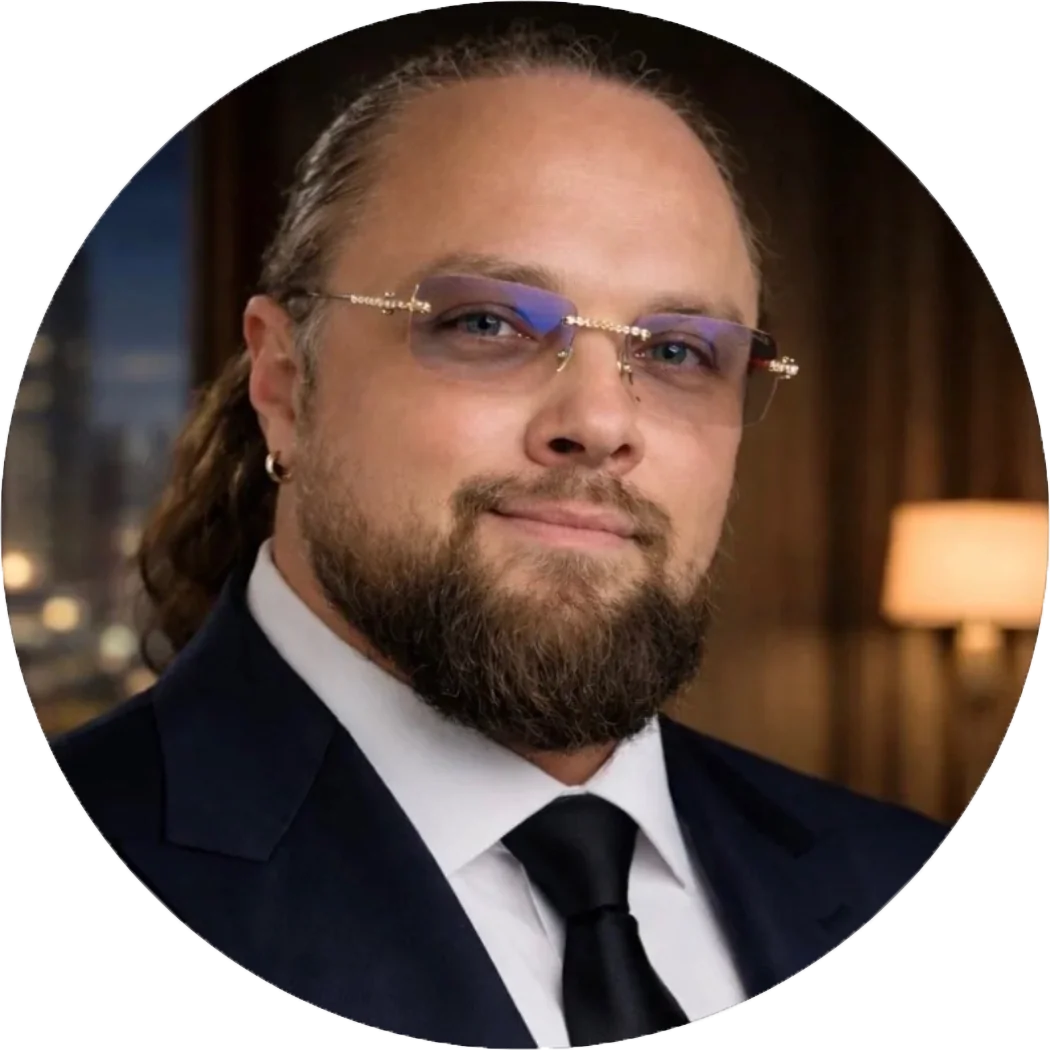
Mark Pugachev is a Miami-based entrepreneur and business builder whose public portfolio spans automotive services, private aviation, commercial finance, technology, security and media. His Pugachev Holding profile presents that work as a collection of operating businesses, developing platforms and strategic partnerships. The entrepreneurial story is about the connections between those ventures and the disciplines each one still needs of its own.
This Motenza profile examines that approach through published company information and an editorial analysis of the operating decisions behind a diversified service portfolio.
From a Miami car business to a wider portfolio
The automotive business provides a concrete starting point. Pugachev Luxury Car Rental dates its operation to 2015 and publishes a model-by-model catalogue of vehicles alongside rental enquiries and related travel services. Its website identifies Mark Pugachev as an entrepreneur and links to Pugachev Holding. Readers can explore the business itself in Motenza’s Pugachev company profile.
Luxury car rental is an operating proposition as much as a visual one. The experience a customer remembers depends on availability, preparation, a clear agreement and a reliable handover. A striking vehicle creates interest; the process around it determines whether that interest becomes a completed booking. This makes mobility a useful starting point for an entrepreneur interested in both brands and service delivery.
The broader lesson is that customer contact can expose adjacent needs. Someone booking a car may also be planning a trip, maintaining a vehicle or considering a different interior. Those needs create possible new businesses, but they do not establish demand automatically. A founder still has to identify which problem deserves a dedicated team, an appropriate price and a repeatable process.
What the Pugachev Holding portfolio brings together
The published portfolio includes Pugachev Luxury Car Rental, Royal Motors Club, Jet Inside Aviation Group, QUANTEX Software Solutions, FSO Guard, Motenza Capital, Motenza Auto Couture, Pugachev Production, WashAuto and an Alliance Legal partnership. Those names represent different kinds of activity, from service operations to technology development and professional partnerships.
For a reader, the useful distinction is between a common entrepreneurial direction and the work of each company. Automotive retail depends on sourcing and inventory decisions. A customization workshop depends on materials, skilled production and agreed specifications. Security work depends on assignment planning and appropriate professional responsibilities. Software development depends on the workflow it is meant to improve.
A portfolio can bring those experiences into the same conversation without making the businesses interchangeable. Its value is easier to understand when each venture has a clear customer, a defined service and an accountable operator. The public portfolio describes the direction of the ecosystem; it should be read alongside the individual company’s current offering when considering a specific service or partnership.
An automotive ecosystem with several points of entry
Rental, retail, detailing and interior customization address different moments in a vehicle’s life. Pugachev’s rental business introduces a client to a particular driving experience. The Holding portfolio positions Royal Motors Club around vehicle sourcing and retail, and WashAuto around vehicle care. These are related markets with distinct operating requirements.
Motenza Couture adds a craftsmanship dimension. Its Hollywood atelier presents automotive and marine upholstery alongside documented Rolls-Royce, Lamborghini, BMW and Mercedes projects. Motenza’s Couture feature looks more closely at those interiors, the choice between repair and retrimming, and the information an owner should provide for an assessment.
The commercial connection is straightforward: an existing relationship can make a new service easier to introduce. The harder work happens after the introduction. A workshop needs a component list and material agreement; a rental needs dates and a vehicle; a retail enquiry needs an appropriate sourcing conversation. Treating those as separate briefs helps the customer understand what is being delivered and helps the team execute it.
Security and aviation: organizing around the journey
Some of the portfolio’s service categories meet a customer during travel or a demanding schedule. FSO Guard publishes security, executive-protection and investigation services in South Florida. The Holding portfolio also describes Jet Inside Aviation Group as arranging private-aircraft bookings around a client’s trip. These activities share a concern with timing and coordination, while requiring their own specialist work.
The operating insight is that convenience depends on responsibility being clear. If a trip involves a vehicle, a flight and a security assignment, each service needs an agreed scope, contact and handover. A connected relationship can reduce the effort of explaining the overall plan. It does not remove the need to identify who provides each element or how a change will be handled.
For founders building a service portfolio, that distinction matters. The customer may experience one itinerary, but the businesses still manage different resources and decisions. Growth works better when coordination supports the specialists doing the work. Readers interested in the security operation can continue through Motenza’s FSO Guard profile.
Business funding and technology as operating infrastructure
Motenza Capital presents commercial capital solutions for business-purpose clients, with structures that can include working capital, credit lines and equipment financing. Its published process distinguishes an initial review from a financing decision and identifies the provider in the final agreement. The Holding portfolio places commercial finance alongside its other business activities.
From an operating perspective, the financing question starts with the business need. Inventory, equipment and recurring expenses have different timing. An expansion plan becomes more useful when the spending schedule, expected collections and obligations can be compared. Motenza’s business-funding resource and cash-flow guide provide practical starting points for that work.
The portfolio’s technology direction, represented publicly by QUANTEX, raises a related question: which repeated task should a digital system make easier? A booking process, a document handover and an internal status update are different workflows. Their value comes from the problem they solve for a customer or operator. The strongest software brief describes that problem, the people responsible and the result that can be observed after implementation.
A brand can open the conversation; operations carry it forward
Brand presentation matters in a service portfolio. It tells a prospective customer what kind of experience to expect and gives a business a recognizable point of entry. The Holding portfolio places Pugachev Production alongside its operating companies, connecting creative work and business communication within the same entrepreneurial picture.
For a company builder, the practical opportunity is to turn real work into useful evidence. A completed interior can explain a workshop’s capabilities. A clear vehicle catalogue can help a visitor make a shortlist. A service description can show how an assignment begins. Content earns its place when it helps the reader understand the business and take an informed next step.
The same standard applies as a portfolio expands. A new brand needs more than an attractive name and a page. It needs an understandable proposition, a route for enquiries and a team able to deliver the service described. Good presentation and reliable execution reinforce each other when the promise is specific enough to check.
The operating logic behind a serial entrepreneur
Serial entrepreneurship is a useful way to examine the development of several ventures over time. Portfolio entrepreneurship focuses attention on how multiple businesses coexist. Mark Pugachev’s public portfolio invites both perspectives: it connects successive business-building activity with an ecosystem that contains several different service categories today.
The operating philosophy published by Pugachev Holding emphasizes customer understanding, infrastructure, people and execution. As an editorial framework, that can be translated into practical questions. What is the customer trying to achieve? Which existing capability helps? What new capability must be built? Who owns the delivery? What evidence will show whether the service works?
These questions are particularly useful before an adjacent launch. A familiar customer group may reduce the effort needed to begin a conversation. A familiar brand may make an introduction easier. Neither tells a founder whether the new service has sufficient demand or whether the existing operation has capacity to support it. A separate scope and budget make those assumptions visible.

A practical framework for the next venture
Before committing to another business, write down the customer problem and the smallest useful service that solves it. Separate what the current portfolio already provides from what the new venture must develop. A relationship may be reusable; professional expertise, equipment and delivery capacity may have to be added.
Then identify the operating owner. An entrepreneur can connect the opportunity, the brand and the partnership, while a dedicated operator manages the service itself. Give that person a defined brief, resources and a way to report the outcome. This makes delegation concrete and gives the founder a clearer basis for deciding what to improve next.
The financial view should follow the actual service cycle. Outline the spending required to start, the costs of each delivery and the time between doing the work and receiving payment. Use a startup budget and a business-plan working template to document the assumptions. Separate observed results from an expansion forecast so a strong first conversation does not become an unsupported growth claim.
Finally, decide how the new venture should relate to the rest of the portfolio. Shared introductions, creative work or technology can be useful. Each business should still have clear responsibilities, service terms and records. A connected portfolio is easier to manage when the points of connection are deliberate and each operating unit remains understandable on its own.
Strategic partnerships with a concrete brief
Pugachev Holding’s partnership page welcomes conversations about operating businesses, technology, acquisitions and joint ventures. For an entrepreneur or potential operator, a useful proposal begins with a specific opportunity: the customer, the service, the contribution each party would make and what needs to happen first.
Explain the stage of the business and provide evidence relevant to the proposal. Existing customer demand, a working process or a defined capability gap makes a discussion more concrete than a broad description of a large market. Identify the requested decision and distinguish an initial conversation from agreed commercial terms.
That is the strongest reading of the Pugachev portfolio story: an entrepreneur building across related opportunities while each venture develops its own operating discipline. The ambition is visible in the breadth of the businesses. The useful lesson for another founder is to connect that ambition to a customer problem, a responsible team and a process that can deliver what the business promises.
Questions about Mark Pugachev
Who is Mark Pugachev?
Mark Pugachev is a Miami-based entrepreneur and business builder. His public Pugachev Holding profile presents a portfolio spanning automotive services, private aviation, commercial finance, technology, security and media. This article examines that published portfolio and the operating lessons it raises.
What is Pugachev Holding?
Pugachev Holding is the public portfolio and partnership platform presenting Mark Pugachev’s business activities. It brings together operating companies, developing ventures and professional partnerships. Individual services and proposed commercial terms should be discussed with the business responsible for delivering them.
Which businesses appear in Mark Pugachev’s portfolio?
The published portfolio includes Pugachev Luxury Car Rental, Royal Motors Club, Jet Inside Aviation Group, QUANTEX Software Solutions, FSO Guard, Motenza Capital, Motenza Auto Couture, Pugachev Production, WashAuto and an Alliance Legal partnership. The article distinguishes the portfolio presentation from each company’s current service offering.
What can founders learn from a diversified business portfolio?
An adjacent venture can build on an existing customer relationship or operating capability. It still needs a defined customer problem, a responsible operator, a budget and a service process. The framework in this article helps separate a useful connection from an assumption that every new service will attract the same demand.
How can I propose a partnership to Pugachev Holding?
The official website provides a partnership enquiry form and partnership@pugachevholding.com. Describe the opportunity, its stage, the customer problem, the resources each party would contribute and the decision you are seeking. An initial conversation and any subsequent commercial agreement are separate steps.
Mark Pugachev and businesses discussed in this profile are associated with Motenza’s publisher. Motenza Editorial prepared the article from public company materials, with its own analysis of the operating questions they raise.