Use the evidence and practical questions in this article to test your own assumptions. Any worked examples use hypothetical inputs.
Compare usable inventory dates, not transit labels
Air freight is often faster in transit, while ocean freight may suit larger or less time-sensitive shipments. The practical choice depends on the complete route, not a general rule about which mode is cheaper. Trade.gov’s shipping resources help frame the responsibilities. For a US buyer, compare the date goods become usable at the intended warehouse after origin handling, transport, customs and inland delivery. A quoted airport-to-airport or port-to-port transit does not automatically include every step. Confirm whether the schedule is an estimate and what happens when cargo misses a planned departure.
Add the cost of time to the freight quote
Use the same product quantity and destination in both quotations. Include packing, chargeable weight or volume, handling, insurance, customs-related services and inland transport. Then estimate the cash tied up and the consequence of a stockout. In a hypothetical comparison, paying more for a small urgent replenishment may protect ordinary sales while the main order travels by sea. That does not justify air freight for every unit. Model the urgent quantity separately and confirm that splitting a shipment does not create unexpected documentation, handling or customs costs.
Test reliability and product suitability
Ask whether the goods have restrictions, temperature requirements, damage sensitivity or packaging needs that affect the route. Review the provider’s handoff and exception process. Keep tracking responsibility clear so staff know whom to contact when a milestone is missed. After delivery, compare actual arrival, charges and damage with the plan. Use that record for the next order instead of judging a route from one headline transit estimate. The useful outcome is an inventory plan with a documented primary route and a feasible fallback. A cheaper transport line can still produce a more expensive operating result if it repeatedly creates shortages or unusable goods.
- Compare the same endpoints and all handling steps.
- Model inventory, cash timing and urgent quantities separately.
- Review actual performance and keep a feasible fallback.
Image source and usage
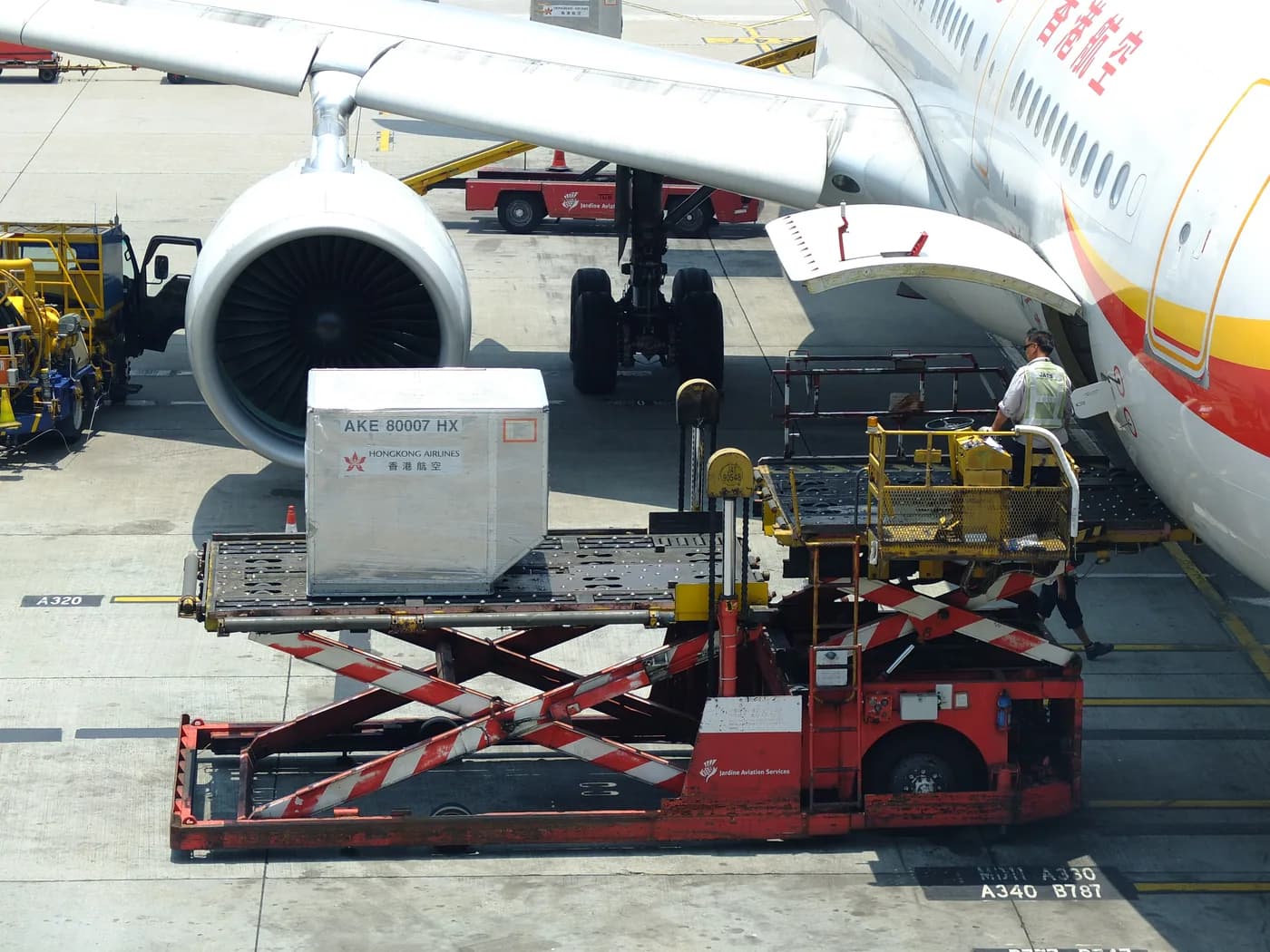
An aircraft cargo loader in operation, shown as an air-freight reference
Jamesshliu
Source image · Image-use terms
Web versions are resized and compressed; attribution and applicable source terms are retained.
Frequently asked questions
Is port-to-port transit the full delivery time?
No. Origin handling, clearance, destination handling and inland transport may add time.
Should urgent replenishment and the main order use the same mode?
Not necessarily. Model the urgent quantity and added split-shipment costs separately.
Sources & further reading
Source links checked October 20, 2026. Rules and availability may change; verify current terms directly. Read our editorial standards.