Use the evidence and practical questions in this article to test your own assumptions. Any worked examples use hypothetical inputs.
The best credit card starts with your payment habits
The best credit cards in the USA solve different problems. A straightforward cash-back card can suit someone who pays every statement in full. A travel card can be useful when its booking rules and annual fee match trips already planned. A student or secured card serves a different purpose: establishing a manageable credit routine. Choosing between them starts with how you pay, not with the largest advertised bonus.
This guide compares ten US consumer credit cards across everyday rewards, travel and starting or rebuilding credit. Our selection is an editorial comparison of public product terms, not a laboratory test, an approval guarantee or a universal ranking. We do not assign invented star ratings. The fit descriptions are our analysis; the linked issuer pages are the place to verify the exact offer available to you.
Product pages were checked on October 12, 2026. Annual fees and the reward structures described below reflect those pages; promotional rates, welcome offers, card designs and eligibility can change. We leave volatile bonus amounts out of the comparison so a temporary incentive does not become the foundation of a long-term decision. Save the pricing disclosure displayed during your actual application.
Ten credit cards at a glance
Use the comparison to narrow the field to two or three options. Start with the question that can eliminate a card: Will you carry a balance? Do you want a deposit requirement? Will you actually use a travel portal? Is the fee affordable without a welcome bonus? A feature that does not fit your routine has little practical value, however impressive its advertisement looks.
The cards are grouped by purpose, without a first-to-last performance ranking. A no-annual-fee product can still charge interest, transfer fees, late fees or foreign transaction fees. The rewards figures refer to eligible purchases under the issuer's terms, not every movement of money through the account. Returns and excluded transactions can change the amount earned.
Chase Freedom Unlimited: everyday spending with dining rewards
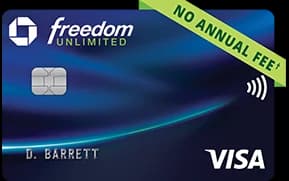
Chase Freedom Unlimited has no annual fee. Its published structure includes 1.5% cash back on other purchases, 3% on dining and drugstores, and 5% on travel purchased through Chase Travel. Higher travel rewards are tied to that booking channel; an airline purchase elsewhere should not be assigned the portal rate in your budget.
This is a starting point for someone who wants a general spending card with extra emphasis on restaurants. Compare how much of your actual annual budget falls into each category. If most spending earns the base rate, a flat-rate alternative deserves a calculation alongside it. Check merchant coding and the current pricing disclosure, particularly before using the card abroad or carrying debt.
Citi Double Cash: a purchase-and-payment cash-back model
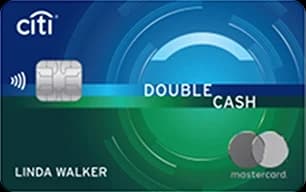
Citi Double Cash advertises no annual fee and 2% cash back on purchases through two components: 1% when buying and 1% as payments are made, subject to the program's rules. Rewards are tracked as ThankYou Points. This is different from assuming the full amount is earned the moment a transaction posts.
It is worth comparing when your spending is spread across many categories and you prefer a simple baseline. Read the earning and redemption rules together, including how statement credits interact with the payment component. A rewards model that recognizes repayment is still a credit account with interest costs; carrying a balance is not a way to improve the return. Verify international charges and any transfer offer separately.
Wells Fargo Active Cash: a flat-rate option to compare
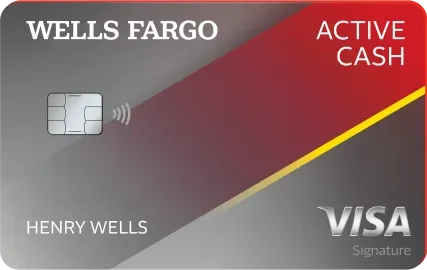
Wells Fargo Active Cash lists a $0 annual fee and unlimited 2% cash rewards on purchases, without rotating category activation. That structure makes it a useful benchmark against cards whose higher rate applies only to a small portion of the household budget.
For a reader who wants fewer categories to manage, the comparison question is operational: Is redemption straightforward, and can the payment account reliably cover the statement? Also read the current terms for foreign transactions and any introductory APR. The official page distinguishes a temporary introductory period from the variable rate that follows it. A cash-rewards feature and a financing promotion should be evaluated as separate decisions.
Capital One Savor: dining, groceries and entertainment

Capital One Savor lists no annual fee and no foreign transaction fees. Its public rewards structure includes 3% on qualifying dining, grocery stores, entertainment and popular streaming, with 1% on other purchases. Grocery eligibility excludes superstores such as Walmart and Target. The store category matters more than whether an individual item in the basket is food.
This is a candidate for a household whose recurring spending genuinely matches those categories. Read a few months of transactions and identify the merchants, rather than estimating from memory. Compare the expected category uplift with any lower return elsewhere. Before using a card overseas, check local network acceptance and keep another payment method available; avoiding a transaction fee does not solve every travel payment problem.
American Express Blue Cash Everyday: capped household categories

American Express Blue Cash Everyday lists no annual fee. It offers 3% on eligible purchases at US supermarkets, US gas stations and US online retail, up to $6,000 per calendar year in each category, then 1%; other eligible purchases earn 1%. The caps are separate, and the US category requirements should remain visible in a comparison.
This structure may fit someone with meaningful spending in those specific categories. Annualize each category separately and calculate spending above its cap at the lower rate. Do not treat every online payment as retail or every seller of groceries as a qualifying supermarket. Confirm acceptance at merchants you use regularly, and compare the actual cost of any payment surcharge before treating rewards as a saving.
American Express Blue Cash Everyday: check current pricing and terms
Chase Sapphire Preferred: a travel decision with a yearly fee

Chase Sapphire Preferred lists a $95 annual fee. Its published rewards include 5 points per dollar on eligible Chase Travel purchases, 3 on dining, 2 on other travel and 1 on other purchases, alongside additional specified categories. It also offers transfers to participating loyalty programs. Points are not automatically equivalent to the same percentage in cash.
Compare this card when you have a repeatable travel plan and are willing to check redemption options. Estimate the value you can actually obtain, then subtract the annual fee. Current credits and benefit rules deserve their own review, including eligible bookings and exclusions. Do not budget a credit at face value if obtaining it requires a purchase you would otherwise skip.
Capital One Venture X: examine premium travel costs

Capital One Venture X lists a $395 annual fee. Its public earning structure includes 2 miles per dollar on other purchases, 10 on hotels and rental cars booked through Capital One Travel, and 5 on flights and vacation rentals through that portal. The page describes lounge access for primary cardholders, with conditions to review before travel.
This is a premium travel option to investigate when you already travel regularly. Start with the fee, then test your actual routes, eligible bookings, redemption choices and current access rules. Do not assume lounge guests or additional cardholders have identical rights. An attractive benefit list is useful only if it improves journeys you were already going to take at a competitive total price.
Bank of America Travel Rewards: travel rewards without a yearly fee

Bank of America Travel Rewards lists no annual fee and no foreign transaction fees, with a base earning rate of 1.5 points per dollar on everyday purchases. Its redemption approach includes statement credits for qualifying travel and dining. Relationship-based enhancements have separate eligibility and enrollment requirements; the base rate is the appropriate starting point unless you qualify.
This can enter a comparison when you want travel-related redemption without committing to a recurring card fee. Check eligible expenses, redemption value and timing. Also compare a conventional cash-back option, since flexible cash may serve the same household goal. Do not move savings or investments solely to obtain a card benefit without first examining the broader account costs and your liquidity needs.
Bank of America Travel Rewards: check current pricing and terms
Discover it Student Cash Back: start with a manageable routine
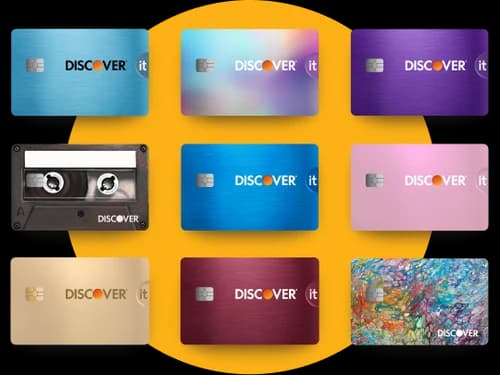
Discover it Student Cash Back lists no annual fee. Its published structure includes 5% in changing quarterly categories up to the quarterly maximum when activated, and 1% on other purchases. The issuer's statement that no credit score is required to apply is not a promise of approval. Review the application requirements and current disclosures.
For a student, payment discipline is the more important comparison. Choose a limit and spending pattern that can be covered from reliable funds, then set reminders before the due date. Category activation can be useful, but extra spending to chase a reward defeats the purpose. A simple account you can manage consistently is preferable to a complicated routine that creates missed payments.
Discover it Student Cash Back: check current pricing and terms
Discover it Secured Cash Back: distinguish the deposit from repayment
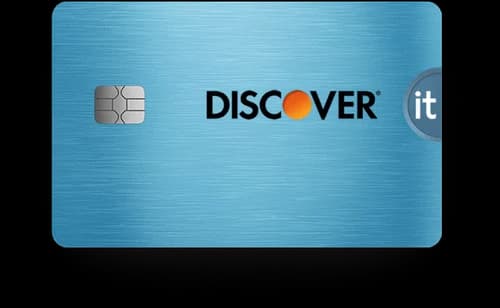
The current Discover it Secured Cash Back page lists no annual fee and refundable deposits of $49, $99 or $200 based on creditworthiness, with credit lines starting at $200. It describes activated quarterly cash-back categories and an eventual opportunity to return the deposit and unsecure the account under its rules. Do not substitute older product terms for the current application.
This option belongs in a credit-building comparison, especially when an unsecured product is unsuitable. The deposit is not a monthly payment and does not erase purchases charged to the account. Read how it is funded, held and returned, and keep enough cash outside the deposit to pay statements. Approval, a limit increase and the timing of any upgrade remain subject to the issuer's assessment.
Discover it Secured Cash Back: check current pricing and terms
How to choose between cash back and travel points
Cash back is usually easier to put into a household budget because the reward is expressed in money. Travel points require a second calculation: what can you redeem them for on a trip you would actually take? Compare the same dates, route, baggage requirements and cancellation conditions. A high theoretical valuation is unhelpful if the booking cannot be made when you need it.
Build two estimates. In the conservative version, use the redemption value available for an ordinary booking and ignore uncertain perks. In the optimistic version, record the specific redemption that produces more value and what would have to be true for it to work. The difference between the estimates shows how much of the decision rests on planning effort or availability.
Keep welcome offers outside the recurring comparison. A first-year incentive can change the initial result, but it does not make future annual fees disappear. If earning a bonus would require spending beyond your planned purchases, calculate that added expense explicitly. A reward earned by buying something unnecessary is not the same as a saving on an existing bill.
Calculate rewards using your real spending
Consider a hypothetical annual budget with $6,000 of qualifying dining, $4,000 of qualifying groceries and $14,000 of other eligible spending. A hypothetical card earning 3% on the first two categories and 1% elsewhere produces $440 before fees and interest: $180 plus $120 plus $140. A hypothetical 2% flat-rate card produces $480 on the same $24,000. The higher headline category rate does not win this particular budget.
Now change the mix to $12,000 in the higher-rate categories and $12,000 elsewhere. The hypothetical category card produces $480, equal to the flat-rate option before costs. Neither example represents a quoted offer, a guarantee or the exact terms of one of the listed products. They show why your own spending distribution belongs in the calculation.
For a category with a cap, split the spending into two lines. At a hypothetical 3% rate on the first $6,000 and 1% on the next $2,000, $8,000 of eligible spending produces $200, not $240. Keep exclusions, refunds and surcharges visible. The downloadable worksheet helps you record assumptions without including any sensitive account details.
Annual fees: calculate the incremental break-even point
Compare a paid card with an alternative you would realistically use. Suppose two hypothetical cards are otherwise equivalent, but the paid option costs $95 annually and earns one additional percentage point on a particular category. The incremental reward needs $9,500 of eligible annual spending just to cover that fee: $95 divided by 0.01. This simplified calculation excludes caps, credits, interest and other differences.
Do not divide the fee by the paid card's entire reward rate if the alternative also earns rewards. That would count value you could obtain without paying the fee. Add only benefits that are incremental and genuinely useful to you. If an annual credit requires $100 of new spending to save $20, the budget needs both numbers.
Before renewal, replace planned usage with actual usage. How many benefits did you use, and what would the same purchases have cost without the card? Ask the issuer about any available product-change options and their effect on rewards and fees before deciding. Keep a record of the conversation and check the new agreement rather than assuming that a change preserves every feature.
APR and grace periods matter more than a small reward
The CFPB explains that when a card provides a purchase grace period and you are not carrying a balance, paying the balance in full by the due date can avoid interest on new purchases. Paying only the minimum is a different action. Cash advances generally do not receive the same grace-period treatment. Read the agreement for the account you hold.
Here is a simplified hypothetical cost check: an average balance of $2,000 at a nominal 24% APR produces approximately $40 of interest for a month when using APR divided by twelve. Actual issuers may calculate interest daily, and the exact amount depends on dates, balances and the agreement. This is a budgeting estimate, not a statement calculation.
For perspective, $2,000 of eligible purchases at a hypothetical 2% reward rate also earns $40 once. Repeating interest charges can erase that reward quickly. If you expect to carry debt, begin with affordability, the repayment schedule and the applicable APR. The card with the most appealing rewards may be the wrong financing tool.
Introductory APR and balance transfers: plan the exit
A temporary low rate is a deadline to plan around. The CFPB notes that issuers must disclose the introductory period and the rate that applies afterward. Compare the transaction types covered: an offer on purchases does not automatically apply to a transfer, and a transfer promotion does not automatically make new purchases interest-free.
Use a hypothetical $5,000 transfer with a 3% transfer fee and twelve months of 0% interest as an arithmetic example. The fee adds $150, giving $5,150 to repay. Clearing it in twelve equal payments requires about $429.17 per month, with the final payment adjusted for rounding. This example is not a current offer from any listed issuer and assumes no new spending or additional charges.
Ask what happens if the approved limit cannot accommodate the full transfer, whether the fee uses available credit and when the old creditor will receive payment. Keep paying the old account until the transfer is confirmed. Write the promotion's end date into your calendar and test the plan against an unexpectedly expensive month before applying.
Foreign transaction fees and travel booking tradeoffs
An overseas purchase can involve more than the card's reward rate. For example, a hypothetical 3% transaction fee on $2,000 costs $60, while a 1.5% reward on that spending is $30. The fee is larger than the reward. This example is a comparison method, not a claim about every card listed above.
Cards explicitly described above as having no foreign transaction fee should still be checked for acceptance, cash-advance treatment, exchange arrangements and the current agreement. At checkout, distinguish the issuer's fee from a merchant's currency-conversion offer. Carry a backup payment method, and know how to reach the issuer if an account is blocked while traveling.
For a portal-linked reward, compare the final booking price and conditions against a direct booking. Include baggage, resort fees, cancellation terms and who handles changes. An extra $40 of rewards cannot compensate for paying $80 more for an otherwise equivalent booking. Do this comparison before assigning value to a premium travel multiplier.
First cards, credit building and application preparation
The CFPB emphasizes paying on time, avoiding heavy use of available limits and checking reports for errors. It also warns against applying for many new accounts in a short period. A secured card can be an option when a regular unsecured account is not suitable. None of these practices guarantees a particular score increase or a future approval.
For a first account, prepare a modest budget rather than a maximum-spending plan. Separate the issuer's minimum payment from the amount needed to clear the statement. Confirm how you will receive alerts and what happens when income arrives after the due date. Autopay can help with routine, but review the funding account so an automatic payment does not create a different problem.
Before an application, confirm identity, income and eligibility requirements directly with the issuer. Distinguish an eligibility or prequalification check from a full application and read the credit-inquiry notice. If you are new to the United States, do not assume every issuer accepts the same documentation. Ask what is required for your situation before submitting personal information.
Keep personal cards separate from business decisions
This selection covers consumer cards. An entrepreneur should not assume that a consumer product's terms permit every type of business spending or that its protections match a commercial account. Compare the actual agreement, recordkeeping needs, employee access and repayment responsibilities before using a card for operations.
For company expenses, build a payment policy around who can authorize purchases, which receipts are required and how the statement is reconciled. If a project needs longer-term funding, compare that need with the period over which it can generate cash. A reward rate does not establish that a revolving balance is an appropriate source of working capital.
Compare business account requirements · Strengthen payment verification.
Build a comparison you can review next year
Keep a short decision record: your normal spending, expected repayments, verified fees, useful benefits, category limits and the alternative you compared. Add the issuer URL and the date you checked it. A screenshot or saved disclosure from your application is more useful later than a remembered promotional headline.
Review the record after a few statements and before any annual fee renews. Compare actual rewards with the forecast, check merchant categories and note benefits you never used. If the card creates more administration than value, that observation belongs in the next decision. A useful credit card improves a payment routine; it should not require the household budget to revolve around its offers.
The working notebook
Your credit-card comparison worksheet
Use actual spending and the issuer’s current disclosure to compare two or three options. Do not enter card numbers, passwords, Social Security numbers or account credentials.
Recurring net value = redeemable rewards + benefits you would use anyway − annual fee − interest − other charges. Keep the welcome offer in a separate first-year calculation.
Questions to resolve before acting
- Can the statement be paid in full without borrowing elsewhere?
- Is the paid card better than a realistic no-fee alternative?
- Which benefit would still be valuable after the welcome offer ends?
Download the working worksheet
The worksheet is an editable CSV for your own records. Examples are hypothetical, not quotes, promised returns or eligibility decisions. Keep sensitive information on your own device.
Frequently asked questions
What is the best credit card in the USA?
There is no single card that fits every reader. Compare your repayment habits, eligible spending, total fees and usable benefits. This guide groups ten consumer cards by everyday rewards, travel and credit building without assigning a universal ranking.
Which credit cards have no annual fee?
Eight cards in this comparison list no annual fee on the checked issuer pages. Chase Sapphire Preferred lists $95 and Capital One Venture X lists $395. No annual fee does not eliminate interest, transfer charges or other costs; verify the offer shown during your application.
Are cash-back cards better than travel credit cards?
Cash back is easier to budget, while travel points need a realistic redemption calculation. Compare the same purchases and trips, subtract fees, and count only benefits you will use. Keep welcome offers separate from recurring annual value.
Can credit-card interest cost more than the rewards?
Yes. In our simplified hypothetical example, a $2,000 average balance at 24% nominal APR costs about $40 for one month using APR divided by twelve. A 2% reward on $2,000 of purchases earns $40 once. Actual interest depends on the agreement and daily balances.
What should beginners look for in a first credit card?
Start with understandable costs, an affordable spending limit and a dependable payment plan. Compare student or secured options when appropriate. Confirm application requirements directly; neither prequalification nor the absence of a required score guarantees approval.
Does a secured-card deposit pay the monthly bill?
No. The deposit supports the account under the issuer’s rules. Purchases still need to be repaid, and deposit-return or upgrade conditions should be reviewed separately. Keep enough money outside the deposit to make payments.
Is a 0% introductory APR offer free financing?
Not necessarily. Check eligible transaction types, transfer fees, deadlines, required payments and the rate after the promotion. A hypothetical $5,000 transfer with a 3% fee starts with $5,150 to repay even when the introductory interest rate is zero.
Can I use this guide to choose a business credit card?
The selection covers consumer products. Business accounts have different terms, permissions and operational requirements. Use the exact issuer agreement and a business payment policy before deciding whether an account fits company expenses.
Photography and card artwork credits
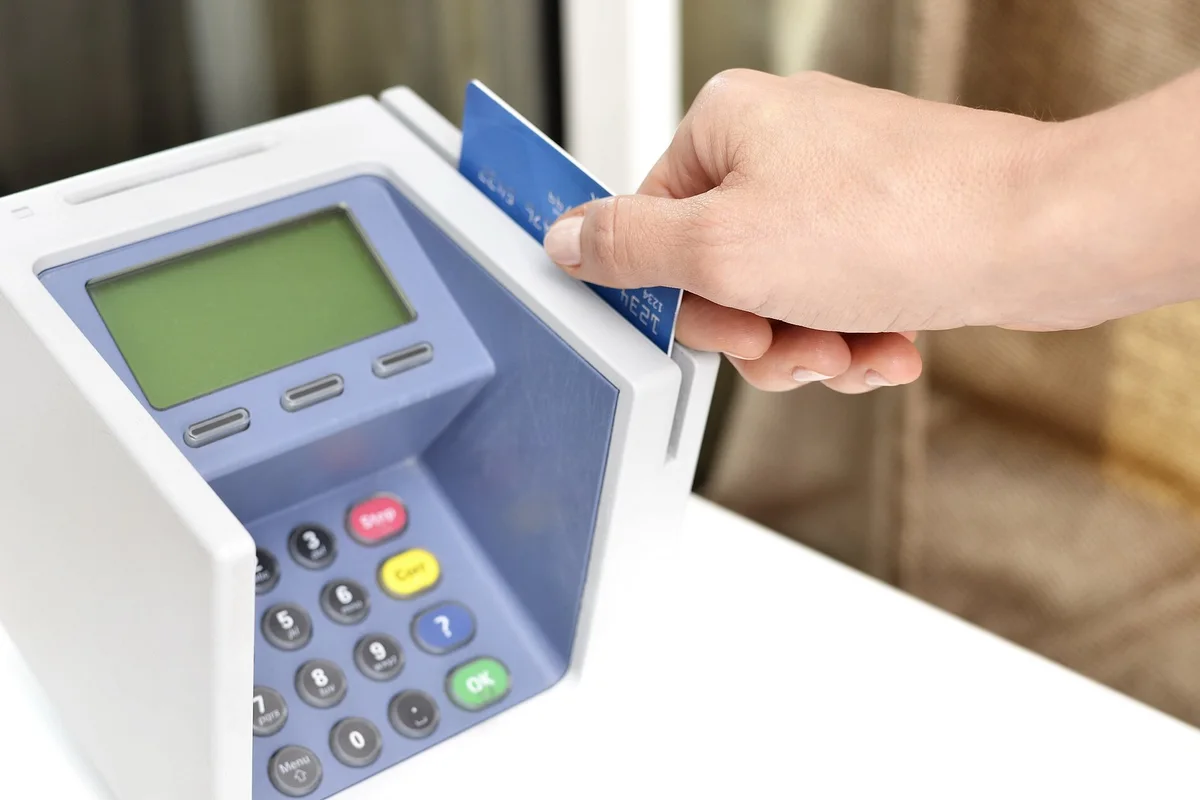
Cover photograph by Hloom Templates: original photograph · CC BY 2.0. Resized and cropped.
Card artwork appears for product identification in this editorial comparison. Designs and trademarks belong to their respective owners; appearance may vary. Their inclusion does not imply issuer endorsement.
- Chase Freedom Unlimited · artwork from JPMorgan Chase’s official product page.
- Citi Double Cash · artwork from Citi’s official product page.
- Wells Fargo Active Cash · artwork from Wells Fargo’s official product page.
- Capital One Savor · artwork from Capital One’s official product page.
- American Express Blue Cash Everyday · artwork from American Express’s official product page.
- Chase Sapphire Preferred · artwork from JPMorgan Chase’s official product page.
- Capital One Venture X · artwork from Capital One’s official product page.
- Bank of America Travel Rewards · artwork from Bank of America’s official product page.
- Discover it Student Cash Back · artwork from Discover’s official product page.
- Discover it Secured Cash Back · artwork from Discover’s official product page.
Sources & further reading
- Chase Freedom Unlimited — official product and pricing information
- Citi Double Cash — official product and pricing information
- Wells Fargo Active Cash — official product and pricing information
- Capital One Savor — official product and pricing information
- American Express Blue Cash Everyday — official product and pricing information
- Chase Sapphire Preferred — official product and pricing information
- Capital One Venture X — official product and pricing information
- Bank of America Travel Rewards — official product and pricing information
- Discover it Student Cash Back — official product and pricing information
- Discover it Secured Cash Back — official product and pricing information
- CFPB — Credit-card grace periods
- CFPB — How credit-card interest is calculated
- CFPB — Rebuilding your credit
- CFPB — Introductory rates and their duration
Source links checked October 12, 2026. Rules and availability may change; verify current terms directly. Read our editorial standards.