Use the evidence and practical questions in this article to test your own assumptions. Any worked examples use hypothetical inputs.
Plan charging around the actual vehicle
A Florida EV road trip requires more than locating a charging symbol on a map. Confirm the car’s charging connector, supported charging speeds, approved adapters and any network-access restrictions. The Department of Energy’s Alternative Fuels Data Center explains charging levels and provides a station locator. A station listing is not a promise that every port is operational or available when you arrive. Check current network information, access hours, parking rules and the number of compatible ports. For a rental vehicle, ask the company which accessories are supplied and what battery level is required on return.
Distinguish energy needed from charging time
Use the vehicle’s trip planner and realistic consumption for the route, speed, passengers and climate control. As a hypothetical calculation, a 150-mile leg at 3 miles per kWh uses 50 kWh before adding a reserve. That arithmetic does not predict the exact battery display or charging duration. Charging power varies with the vehicle, battery temperature, state of charge and shared equipment. A charger’s advertised peak is not a constant rate for an entire session. Include queues, parking and time spent starting a session when comparing a charging stop with a conventional fuel stop.
Choose a backup before the battery is low
Identify an alternative compatible station before reaching the main stop. Favor a backup you can reach with the planned reserve rather than one requiring an optimistic estimate. Save network contacts and payment instructions; some sites need an app, account or a particular activation method. Review idle fees and parking charges separately from electricity prices. If charging at lodging, confirm that access is available to your vehicle and whether another guest can occupy the space. During severe weather, follow official road advice and avoid driving through floodwater to reach a mapped charger.
- Verify connector, approved adapter, access hours and live port status.
- Keep a reserve and a reachable alternative charging location.
- Read energy, idle and parking charges before starting a session.
Image source and usage
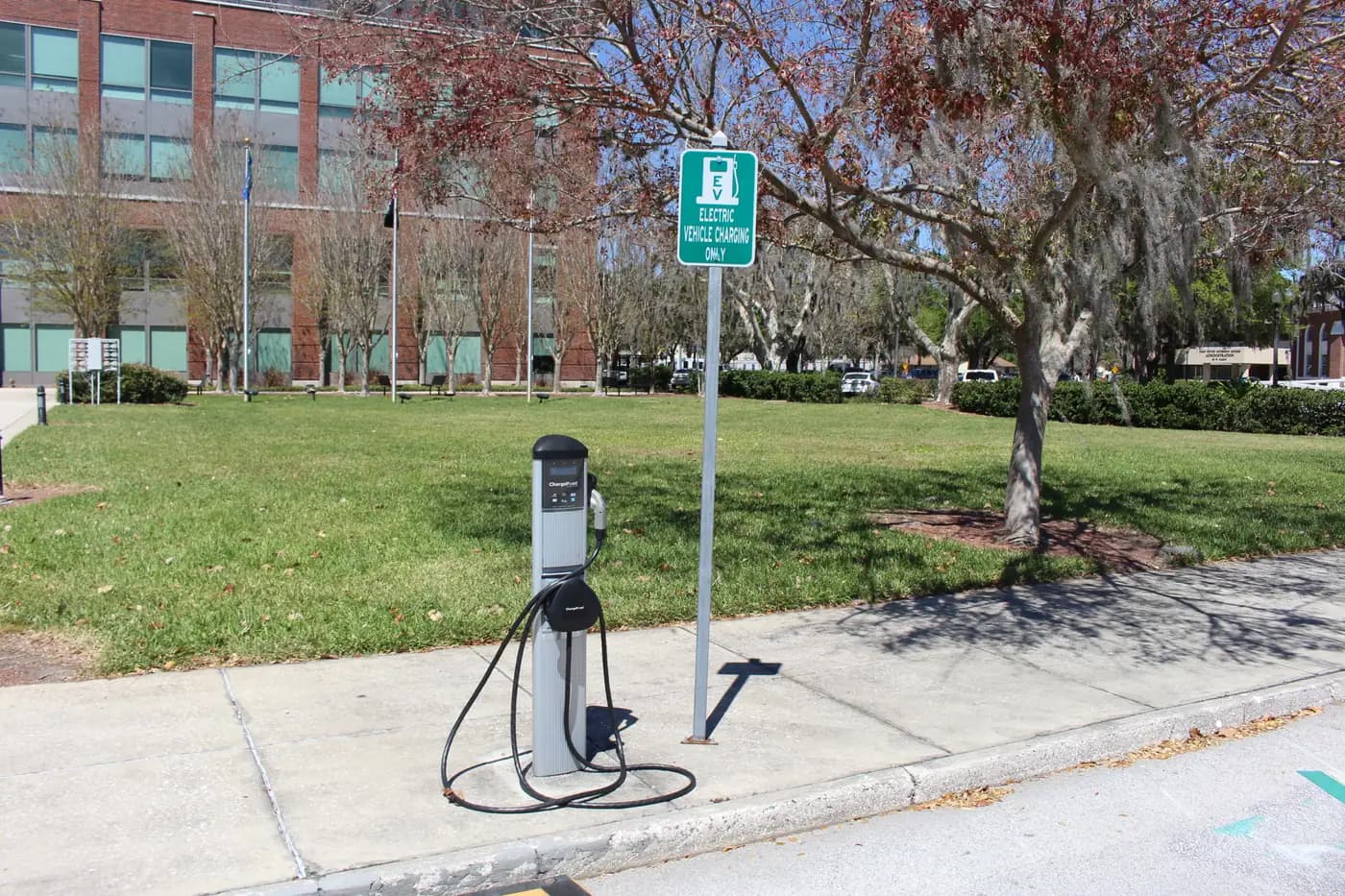
An electric vehicle charging station in Kissimmee, Florida
Michael Rivera
Source image · Image-use terms
Web versions are resized and compressed; attribution and applicable source terms are retained.
Frequently asked questions
Does a fast charger always deliver its maximum rated power?
No. The vehicle, battery conditions, charge level and equipment can limit the actual power and change it during the session.
Can any adapter make any charger usable?
No. Confirm manufacturer-approved hardware and network access for the specific vehicle. Physical fit alone does not establish compatibility.
Sources & further reading
- Alternative Fuels Data Center: Electric Vehicles for Consumers
- Alternative Fuels Data Center: Electric Vehicle Charging Station Locations
Source links checked October 20, 2026. Rules and availability may change; verify current terms directly. Read our editorial standards.