Use the evidence and practical questions in this article to test your own assumptions. Any worked examples use hypothetical inputs.
Name the responsible importer before the order
The importer of record is the party responsible for the entry and associated customs obligations under the applicable US rules. Hiring a licensed customs broker can support the process but does not make the underlying importer responsibilities disappear. CBP’s basic importing guidance is the starting reference. Before ordering, confirm which legal entity will act, how it is identified and who can authorize the broker. Do not infer this from a supplier’s promise of door-to-door delivery. The purchase agreement, shipping arrangement and customs entry need to describe a consistent transaction with a party able to meet its obligations.
Build a product evidence file
Provide the broker with a precise product description, materials, function, origin, value and any relevant technical information. Classification and admissibility can depend on details absent from a short marketing description. Ask whether another agency’s requirements apply to the goods. Keep invoices, packing information, transport records and the basis for key declarations organized by shipment. Record who supplied each fact and resolve contradictions before cargo departs. A supplier’s previous shipment to another customer does not prove that the current product, value or entry arrangement is correct for this order.
Make the release and review process explicit
Agree who reviews draft entry information, pays charges and responds when customs requests additional evidence. Include a cash reserve for costs that are not part of the quoted freight. Do not publish a universal duty estimate without the actual classification, origin, value and current rules. After delivery, reconcile the entry, invoice and charges against the order. Correct discrepancies through the appropriate process with qualified support. A hypothetical importer that checks only the carton count can overlook a declaration error that persists after release. The useful control is a documented chain from product evidence to customs entry and final reconciliation.
- Confirm the legal importer, broker authority and contact owner.
- Provide product facts and check other agency requirements.
- Review entry information and reconcile final charges.
Image source and usage
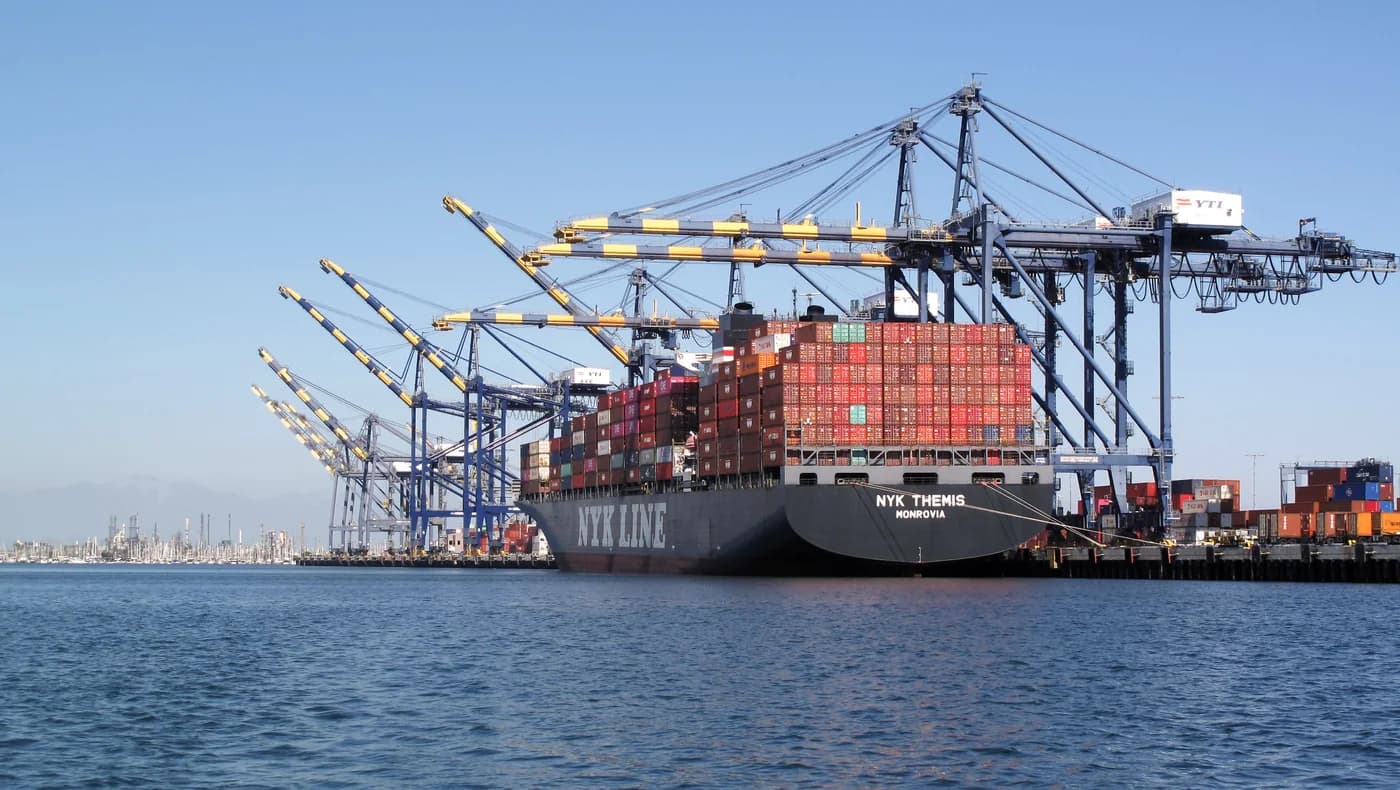
Container ship NYK Themis at the Port of Los Angeles
Downtowngal
Source image · Image-use terms
Web versions are resized and compressed; attribution and applicable source terms are retained.
Frequently asked questions
Does a customs broker remove importer responsibility?
No. A broker can assist, but the importer must meet its applicable obligations.
Does door-to-door shipping identify the importer automatically?
No. Confirm the legal party and entry arrangements explicitly before shipment.
Sources & further reading
- Basic Importing and Exporting | U.S. Customs and Border Protection
- Determining Duty Rates | U.S. Customs and Border Protection
Source links checked October 20, 2026. Rules and availability may change; verify current terms directly. Read our editorial standards.