Read this report alongside the linked primary sources. Distinguish the announced event from its potential effect on your business.
A more consistent modeling workflow at Kennedy
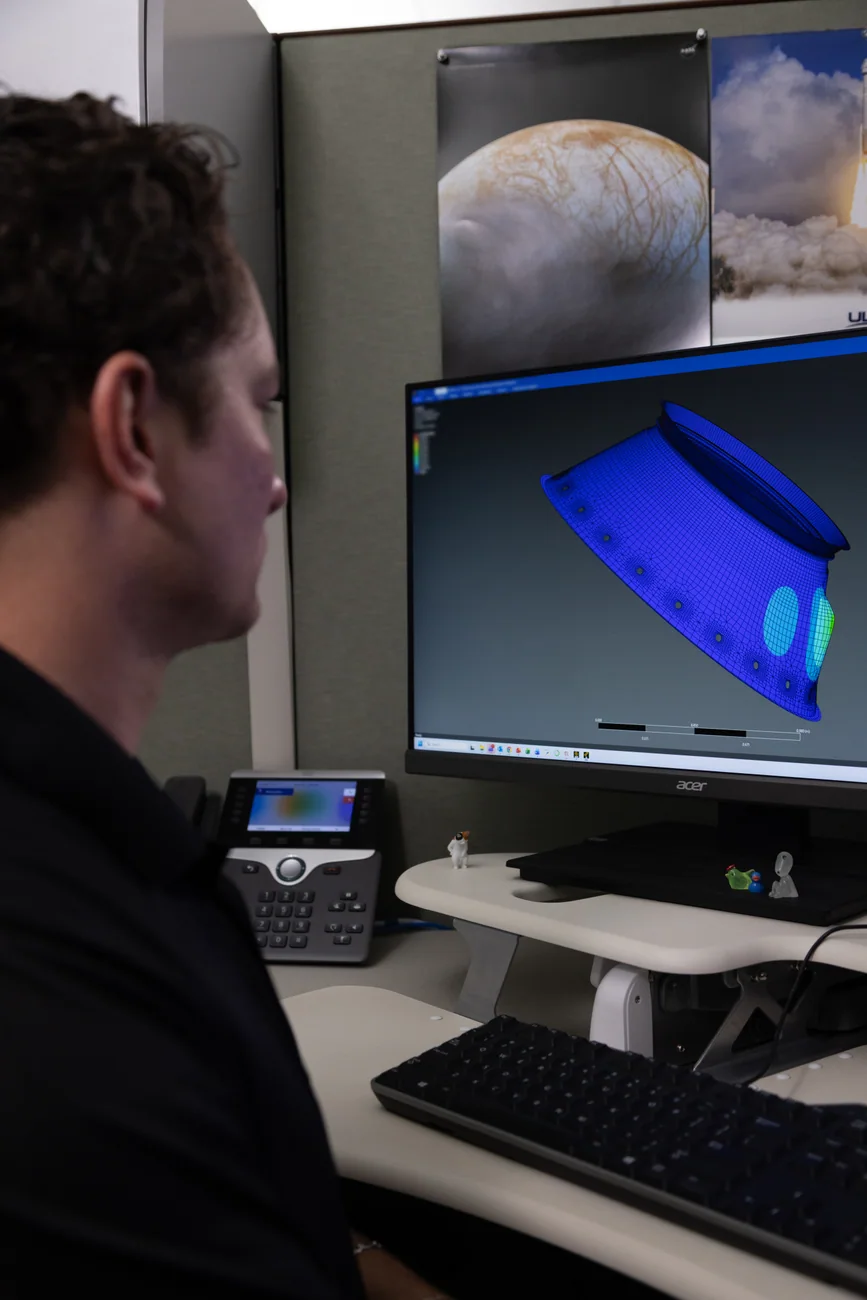
NASA’s October 19 report describes a standardized shock-and-vibration modeling workflow developed by its Launch Services Program team at Kennedy Space Center. The approach uses commercial software and finite-element modeling to investigate how spacecraft and launch hardware respond to demanding conditions. The news concerns the engineering process and its application, not a claim that software has eliminated the need for physical evidence. A model can help identify questions and compare scenarios before hardware is built or tested. Its usefulness depends on the assumptions, inputs and checks that connect the digital representation to the real structure.
A repeatable template still needs verified inputs
Standardizing a workflow can reduce repeated manual effort and make comparisons easier to review. It does not make an incorrect boundary condition or material input correct. A careful reader can ask what the model represents, which conditions it assumes and how results were compared with measurements or other evidence. Keep a change record when a configuration or input is updated so a new result can be traced to its cause. This helps distinguish a meaningful design improvement from a difference produced by the analysis setup. The principle is relevant to many engineering and financial models, even though their underlying physics or accounting differs.
Measure the improvement in decisions and evidence
A useful follow-up would show how the workflow changes review time, identifies a risk or supports a test decision, with the relevant limitations explained. Avoid measuring the value only by how quickly a visualization appears on a screen. For a business adopting a new modeling tool, select a known case, document the inputs and compare the result with a trusted reference before broad use. Assign responsibility for approving assumptions and reviewing exceptions. The NASA example is compelling because it links software to a defined operational question: understanding the forces hardware must withstand. That connection is what makes a digital workflow more than an attractive engineering image.
Image source and usage
Stirling Allen examining a spacecraft engineering model at a NASA Kennedy workstation
NASA/Clayton Rougelot
Source image · Image-use terms
Web versions are resized and compressed; attribution and applicable source terms are retained.
Frequently asked questions
Does finite-element modeling replace every physical test?
No. Models support analysis and test planning. Their assumptions and results need appropriate validation against the system and evidence involved.
Sources & further reading
Source links checked October 19, 2026. Rules and availability may change; verify current terms directly. Read our editorial standards.