Read this report alongside the linked primary sources. Distinguish the announced event from its potential effect on your business.
A new university research cohort
NASA announced on October 15 that 12 US institutions would receive $12 million through its M-STAR research initiative. The selected projects address capabilities relevant to lunar, Mars and deep-space work. The University of Central Florida in Orlando is among the listed recipients, with an aerothermal simulation and testing project. The announcement describes awards to selected institutions, not a newly opened cash grant available to every startup. For students and regional employers, its significance is the research capability and training that a funded project may develop, together with the evidence of how those activities connect to actual technical work.
Read a research award as a project, not a job promise
A prospective student can investigate the research group, the skills used and the routes for participating through the institution. Ask whether an opportunity is a course, a paid position, a supervised project or an outreach activity. Those arrangements have different requirements and schedules. An employer can look for the methods, facilities and results relevant to its own technical problems without assuming that an award creates a ready-made commercial product. Keep the public project description separate from claims about future hiring or revenue. The funding headline identifies a resource to explore; it does not establish an individual placement or contract.
Watch the outputs that make funding useful
The meaningful follow-up will include published research, demonstrated methods, trained participants and opportunities the recipients actually announce. A regional business should identify a specific problem before approaching a university rather than asking broadly to participate in a headline grant. A student should verify current openings and the process for expressing interest through official institutional channels. Track the project’s stated objectives against its later results, keeping exploratory research separate from a product ready for sale. This gives the award a useful local context: public research investment can build capabilities over time, while each partnership, course or employment opportunity still requires its own evidence and agreement.
Image source and usage
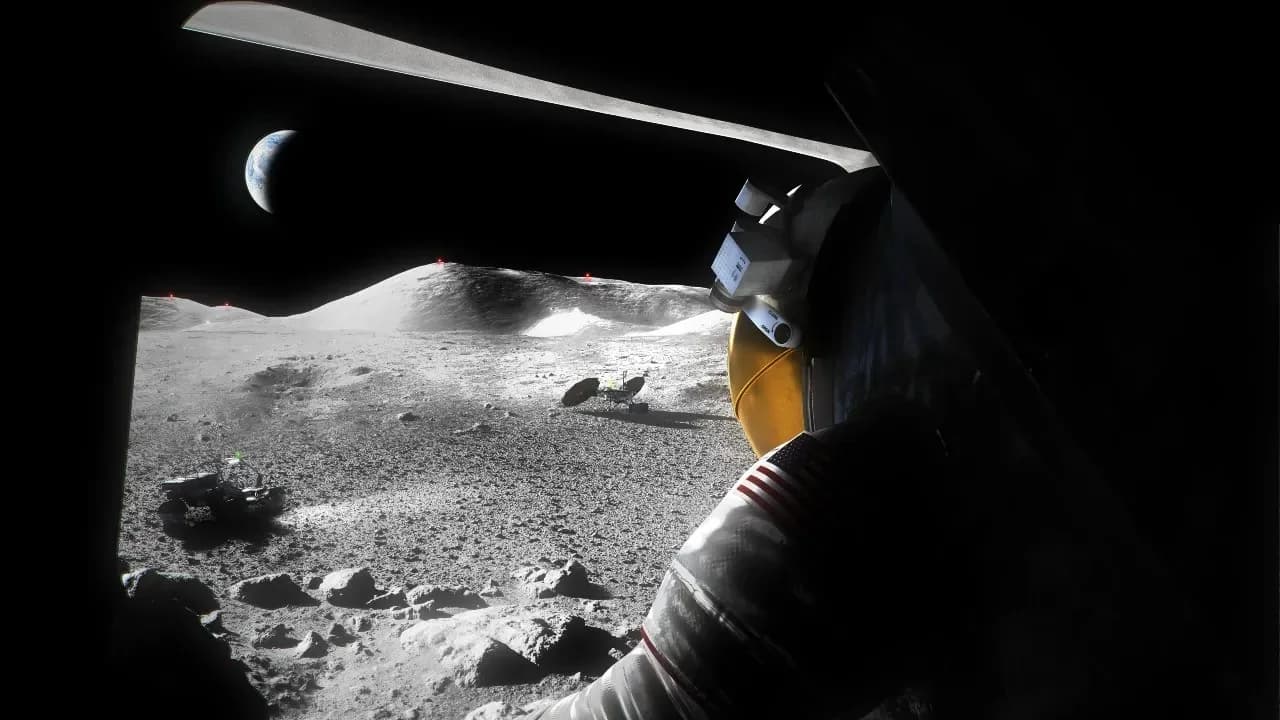
NASA illustration of an Artemis astronaut viewing proposed lunar surface equipment
NASA
Source image · Image-use terms
Web versions are resized and compressed; attribution and applicable source terms are retained.
Frequently asked questions
Is this an open grant application for any business?
No. NASA announced selected institutional awards. Verify separately any opportunities or procurement processes later published by the recipients.
Sources & further reading
Source links checked October 19, 2026. Rules and availability may change; verify current terms directly. Read our editorial standards.