Read this report alongside the linked primary sources. Distinguish the announced event from its potential effect on your business.
Dragon’s documented station arrival
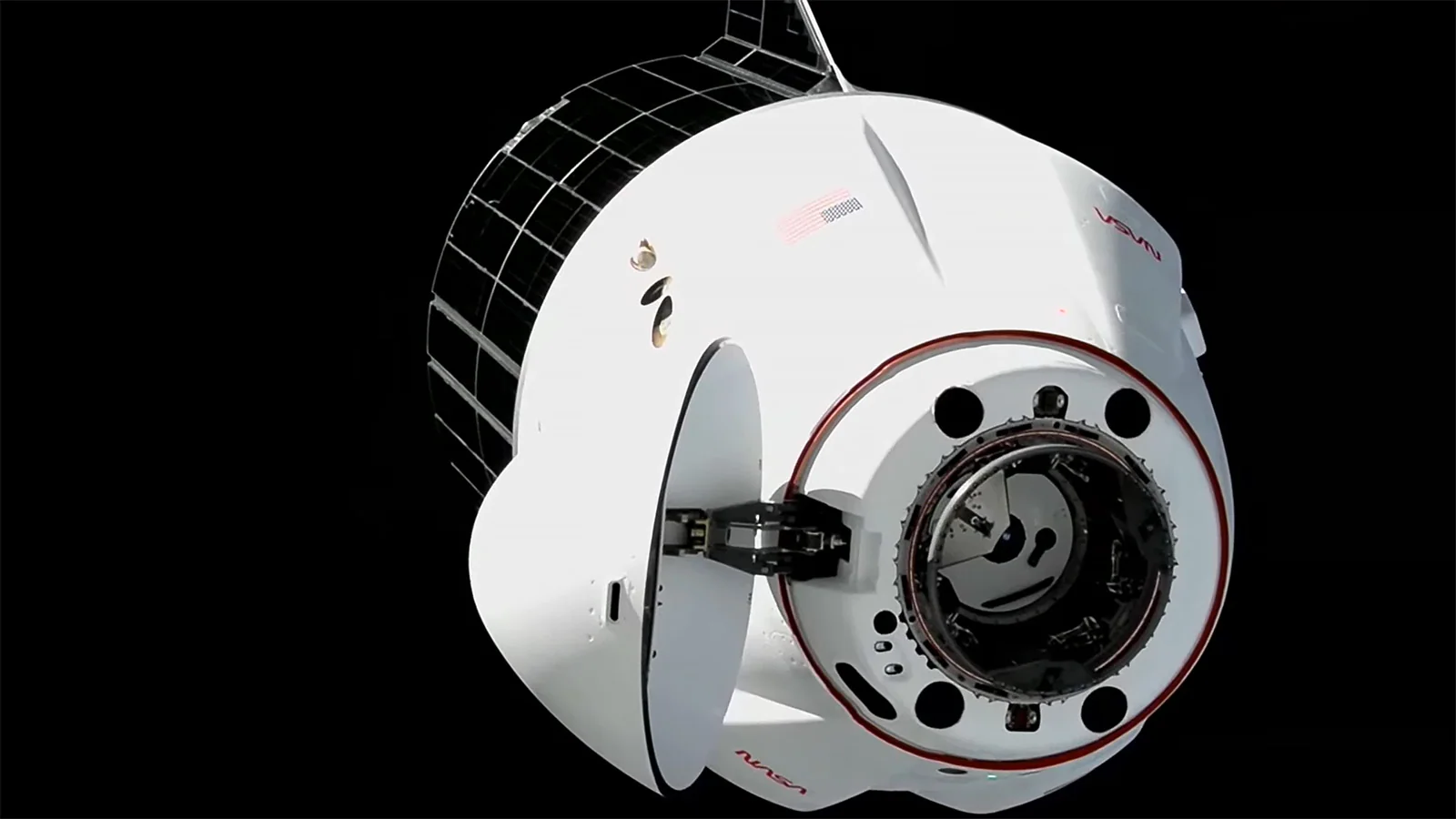
NASA reported that SpaceX Dragon docked with the International Space Station at 10:27 a.m. EDT on October 15. The cargo mission delivered more than 6,300 pounds of supplies and equipment, including solar-array hardware and research payloads. The agency identifies it as SpaceX commercial resupply mission number 35 for NASA. Docking is a completed logistics milestone; unloading, activating experiments and obtaining scientific results follow on different schedules. That distinction makes the report more useful than a simple cargo total, because it shows how transport supports a laboratory whose work continues long after the spacecraft reaches its port.
Research delivery is not a finished medical result
The mission description includes equipment and studies connected with biological and materials research. Those payloads create opportunities to test questions in microgravity; they do not establish that a treatment has been proven or that a product is ready for patients. A useful reader’s checklist separates the research question, experimental method, sample handling and later analysis. Ask what outcome would support or challenge the hypothesis and where the results will be reported. This protects the scientific value of the mission from a familiar misunderstanding: a promising experiment can be newsworthy before its result is known, provided that uncertainty remains visible.
Follow the cargo through the complete mission
The next stages to watch are the crew’s unpacking and activation reports, installation work where required and eventual return of designated research material. Time-sensitive samples may have handling needs that matter as much as transport capacity. For readers interested in logistics, the mission shows the importance of matching a delivery schedule with the recipient’s readiness to use what arrives. A shipment is not operationally complete simply because it reaches the destination. The strongest follow-up connects each delivered item to a verified next step, while preserving the difference between a planned departure, a completed return and an analyzed scientific result.
Image source and usage
SpaceX Dragon approaching the International Space Station before docking on October 15, 2026
NASA+
Source image · Image-use terms
Web versions are resized and compressed; attribution and applicable source terms are retained.
Frequently asked questions
Do the delivered experiments prove new treatments work?
No. Delivery enables research. Experimental results, independent evaluation and any eventual clinical use are separate stages.
Sources & further reading
Source links checked October 19, 2026. Rules and availability may change; verify current terms directly. Read our editorial standards.