Key takeaways
- GoKartGod sells complete Nighthawk electric karts, Hawk V3 builder kits, electric powertrains and replacement parts.
- A ready-built kart, a welding kit and a conversion powertrain represent different purchases and different amounts of owner work.
- The catalog contains conflicting performance and battery specifications. Confirm the exact build in writing before ordering.
- This profile uses public product and policy pages. It does not include a hands-on road or track test.
Use the evidence and practical questions in this article to test your own assumptions. Any worked examples use hypothetical inputs.
What is GoKartGod?
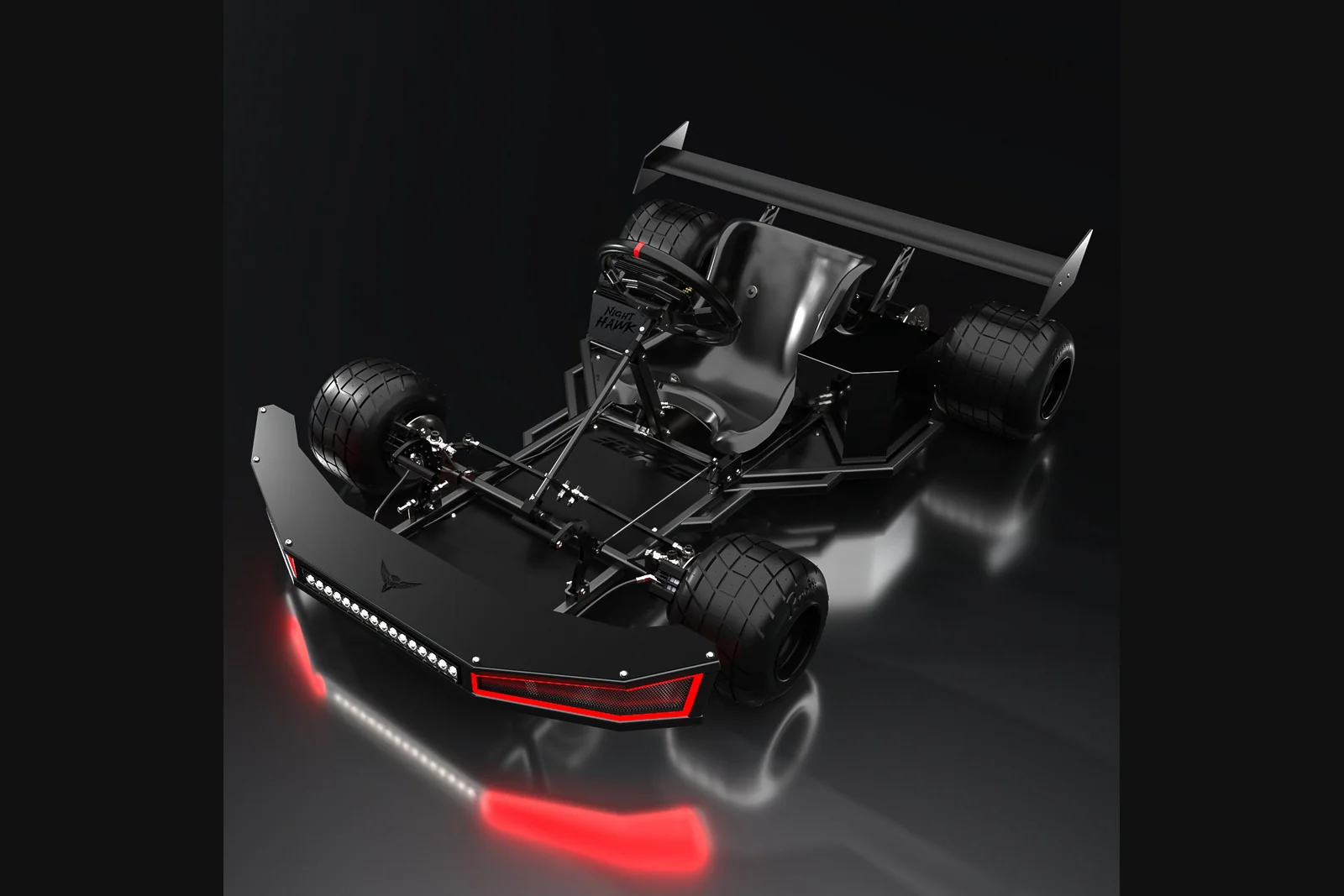
GoKartGod is a specialist go-kart brand selling Nighthawk electric go-karts, Hawk V3 DIY kits and electric conversion systems directly through its website. For someone who discovers the brand through a driving video, the essential distinction is what arrives: a finished vehicle, components for a fabrication project, or a drivetrain to install in an existing chassis. Those categories involve different budgets, skills and delivery expectations.
The company’s terms identify the business as GoKartGod LLC. Its storefront emphasizes American fabrication and assembly, while the refund policy lists a returns address in Phoenix, Arizona. That address is useful for understanding the company’s published service information; it does not establish a walk-in showroom, factory tour or test-drive location. Buyers should arrange any visit directly with support.
The appeal is the combination of a low, open kart chassis with an electric drivetrain and configurable equipment. The wider catalog also gives the brand a second audience: builders who want the project itself. This article separates those routes and treats performance figures as manufacturer claims rather than independently measured results.
Section sources: GoKartGod official site · terms of service
GoKartGod Nighthawk prices at a glance
The complete Nighthawk range starts with Pulse, moves through Surge and ends with Titan. The observed base prices are $7,299.00, $9,299.00 and $10,899.00 respectively. These prices describe the selected base configurations, not an all-inclusive delivered quote. Optional lighting, spare batteries, freight and applicable taxes need to be checked against the actual order.
At the source check, all three product pages advertised a production wait of four to five months. An orderable configuration therefore should not be confused with a kart ready for immediate dispatch. Use the current product page and written order confirmation to establish the specification and production slot you are buying.
Nighthawk Pulse: the entry point to the complete range
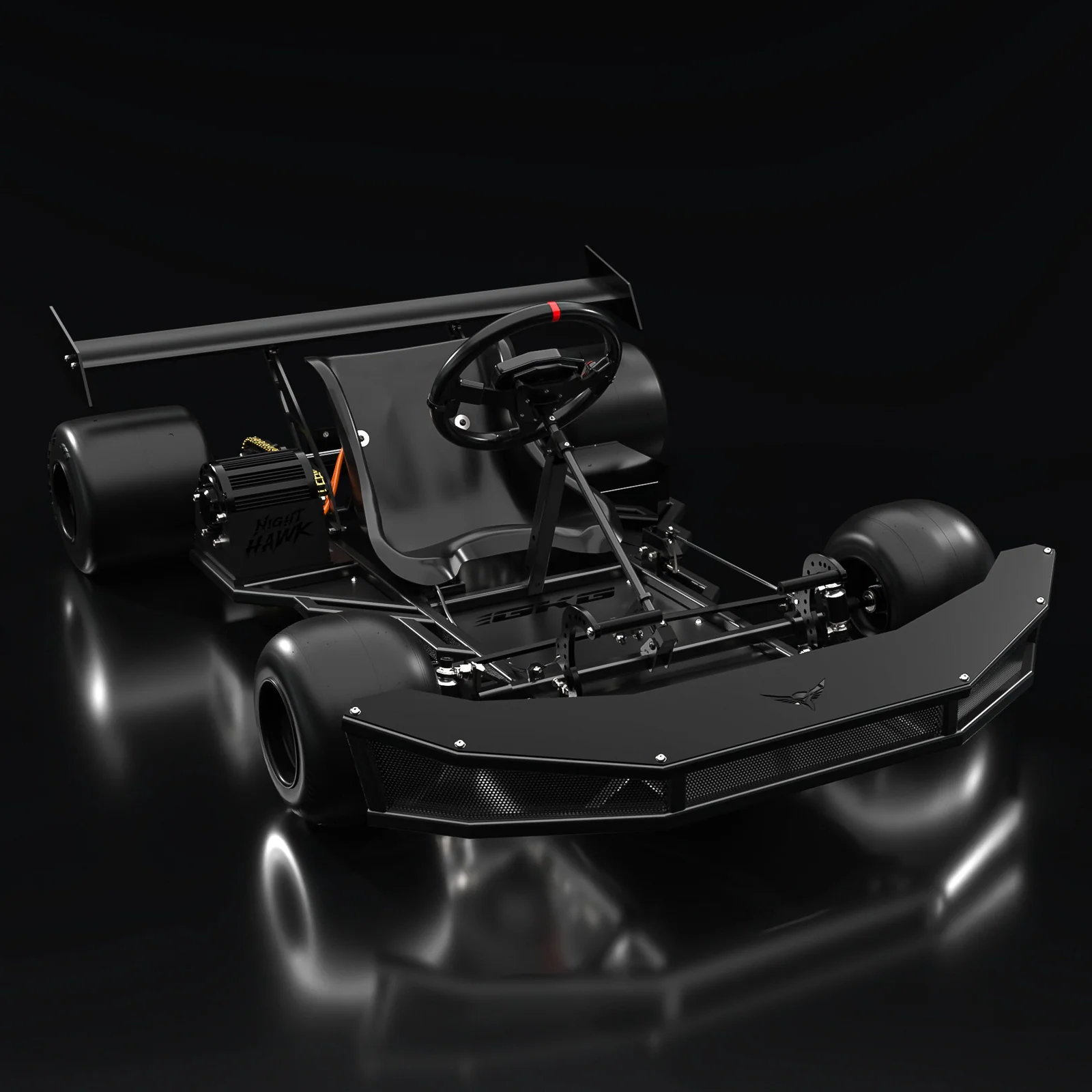
The Nighthawk Pulse is the least expensive complete kart in the current lineup. Its specification panel lists a 72V 20Ah lithium-ion battery, rear hydraulic disc braking, a kart weight of 220 lbs and a driver weight capacity of 240 lbs. The page advertises a top speed of 70 mph. These are the seller’s figures for its listed configuration, not the results of a Motenza test.
There are details worth resolving before paying: the page’s peak-power headline differs from its technical panel, and its general sizing FAQ is broader than the model-specific weight limit. Confirm the battery, controller settings, permitted driver weight and brake configuration for your build. Entry-level positioning within this range does not make the Pulse a casual toy.
Section sources: nighthawk pulse
Nighthawk Surge: a different braking and battery package
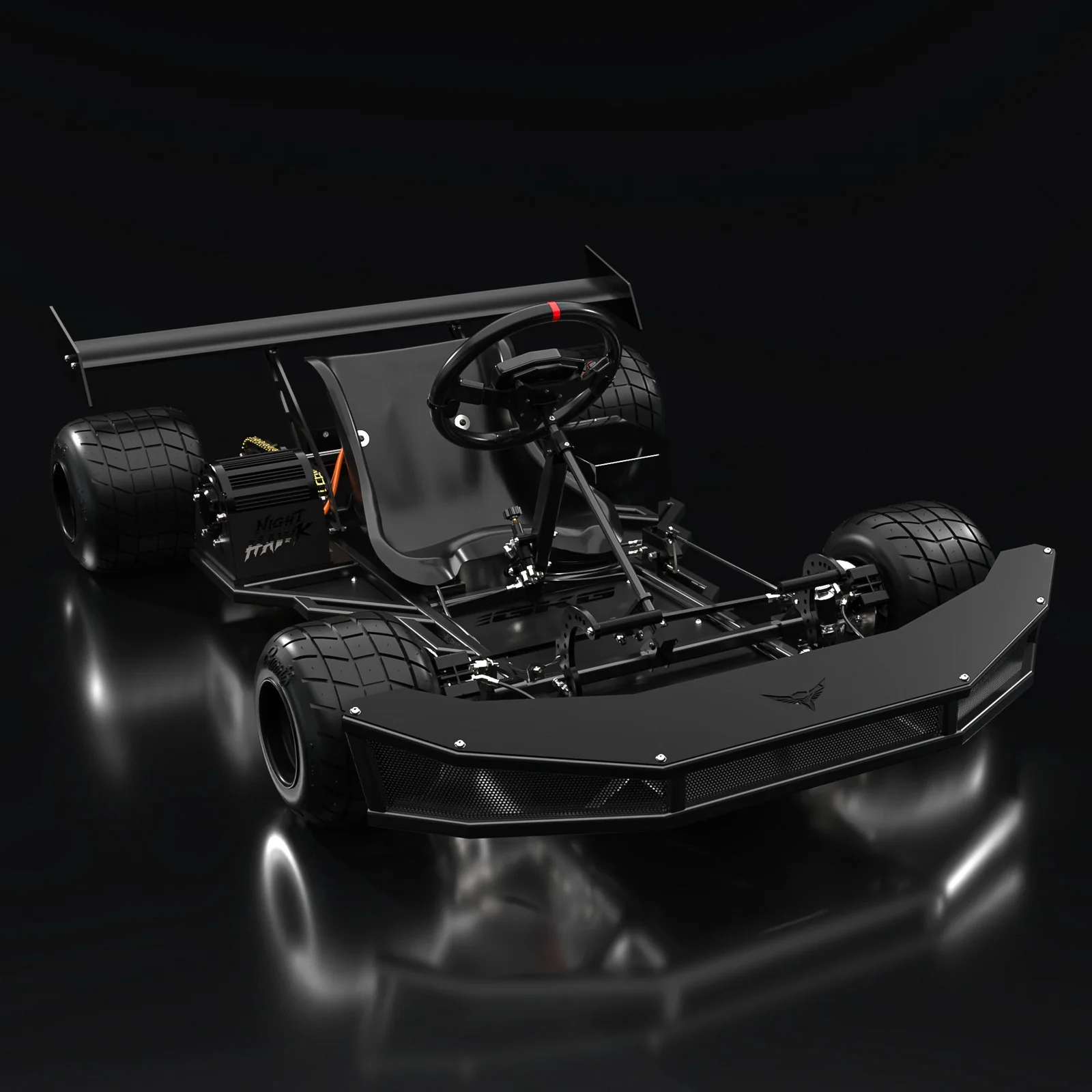
The Nighthawk Surge adds front and rear hydraulic disc brakes, with a valve to adjust braking bias. Its technical panel gives a kart weight of 240 lbs and a driver weight capacity of 250 lbs. Lighting and a spare battery are selectable options, so the final configuration matters when comparing an advertised price with a completed order.
The public specification needs clarification. The Surge headline promotes 80 mph, while its technical table says 70 mph. The table and FAQ describe a 50Ah battery, but the spare-battery catalog labels the Surge pack as 40Ah. These differences should remain visible in a comparison rather than being silently resolved into a single specification. Ask GoKartGod which battery, gearing and speed setting apply to the kart being quoted.
Section sources: nighthawk surge
Nighthawk Titan: the flagship complete kart
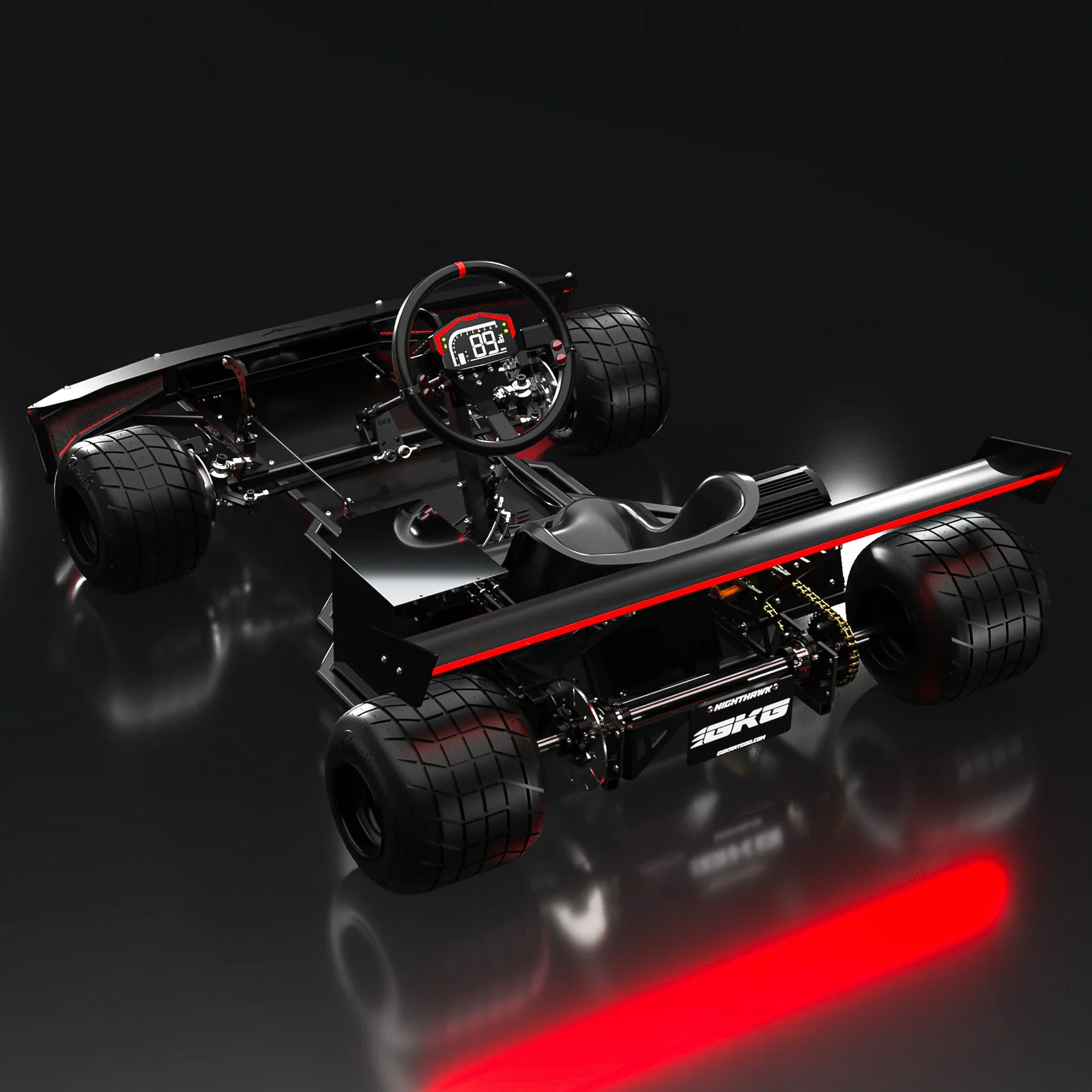
GoKartGod positions the Nighthawk Titan at the top of its complete-kart range. Its product page lists a 72V 60Ah battery, front and rear hydraulic disc brakes, a 260 lb kart weight and a 250 lb driver weight capacity. The advertised top speed is 90 mph. The page also describes adjustable power settings established during the build.
The navigation menu and Titan product headline show different horsepower claims. Rather than presenting one as a verified output, this profile leaves that question with the manufacturer. For a buyer, the useful comparison is the actual battery and braking package, the agreed control settings, the space available to use the kart and the support needed to maintain it.
Section sources: nighthawk titan
Hawk V3 Electric and Gas: go-kart kits for builders
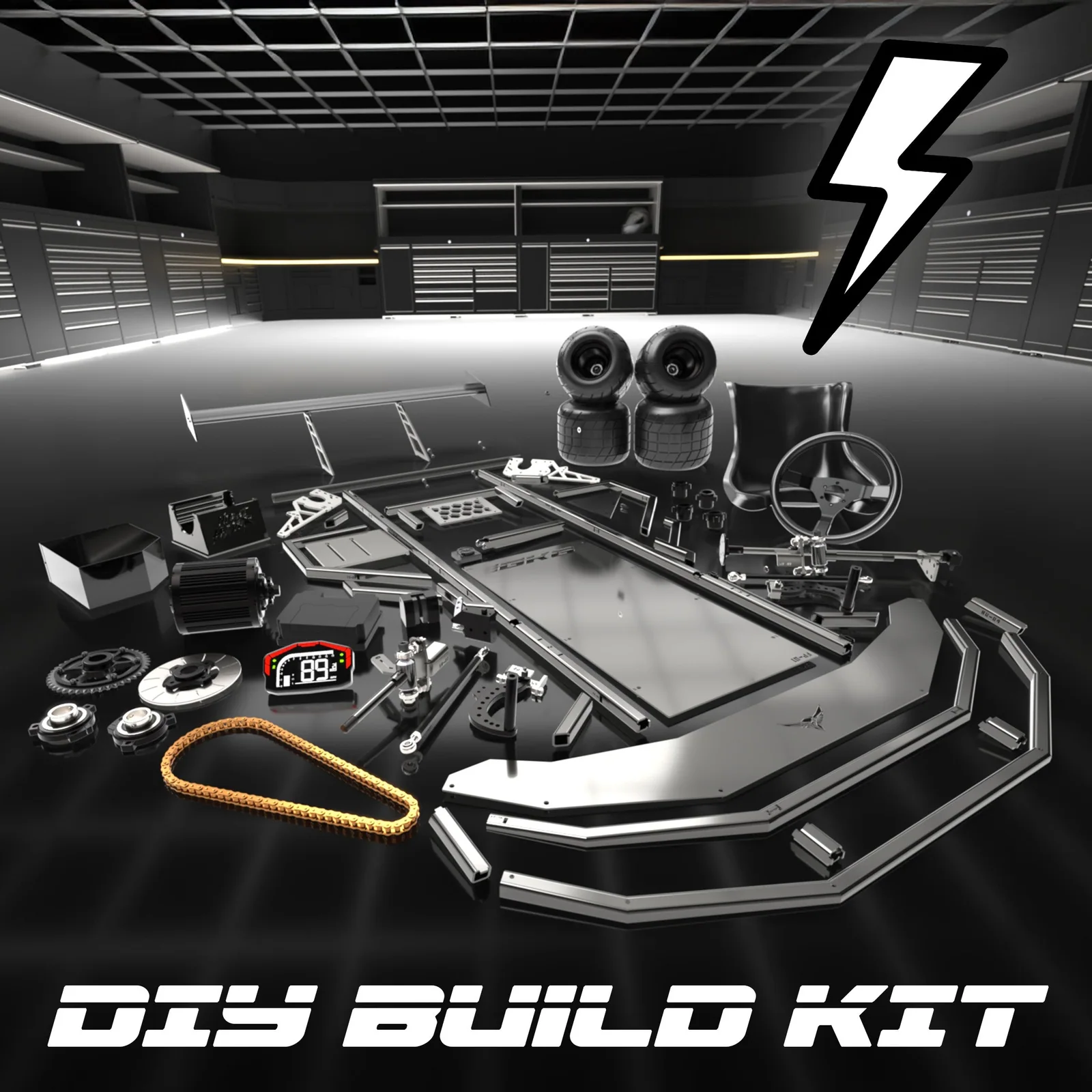
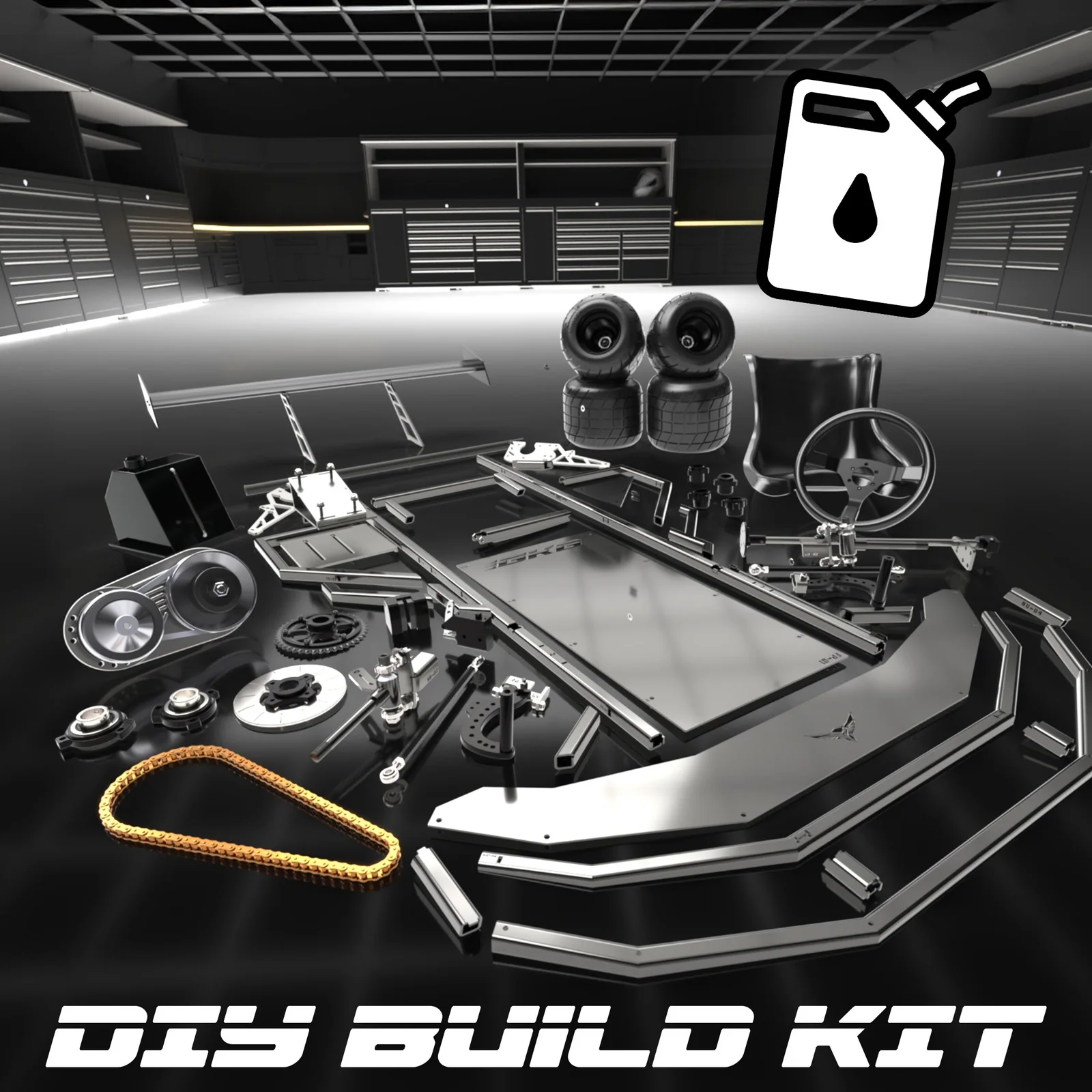
The Hawk V3 range serves a different customer from the finished Nighthawk range. GoKartGod explicitly states that these products require welding and assembly. Labeled, laser-cut frame pieces are part of the concept, but the buyer still needs suitable fabrication skills, tools and workspace. A collection of organized components is not a ready-to-drive vehicle.
Hawk V3 Electric was listed at $5,799.99 for the 20Ah powertrain option and $6,799.99 for the 40Ah option. Both variants were marked unavailable in the checked catalog. The page also retained a production estimate, so an old lead-time statement should not be read as confirmation that a new order can currently be filled.
Hawk V3 Gas began at $1,499.99 for the frame-only selection without wheels or wing. Other selections add parts, wheels and a wing. The product description invites builders to install a compatible small-block clone engine; the lowest displayed price should not be treated as the cost of a complete running kart. Checked gas-kit variants were also unavailable. Compare the full bill of materials and labor before deciding that the kit route fits your budget.
Section sources: hawk v3 electric · hawk v3 gas
Nighthawk Powertrain: an electric conversion route
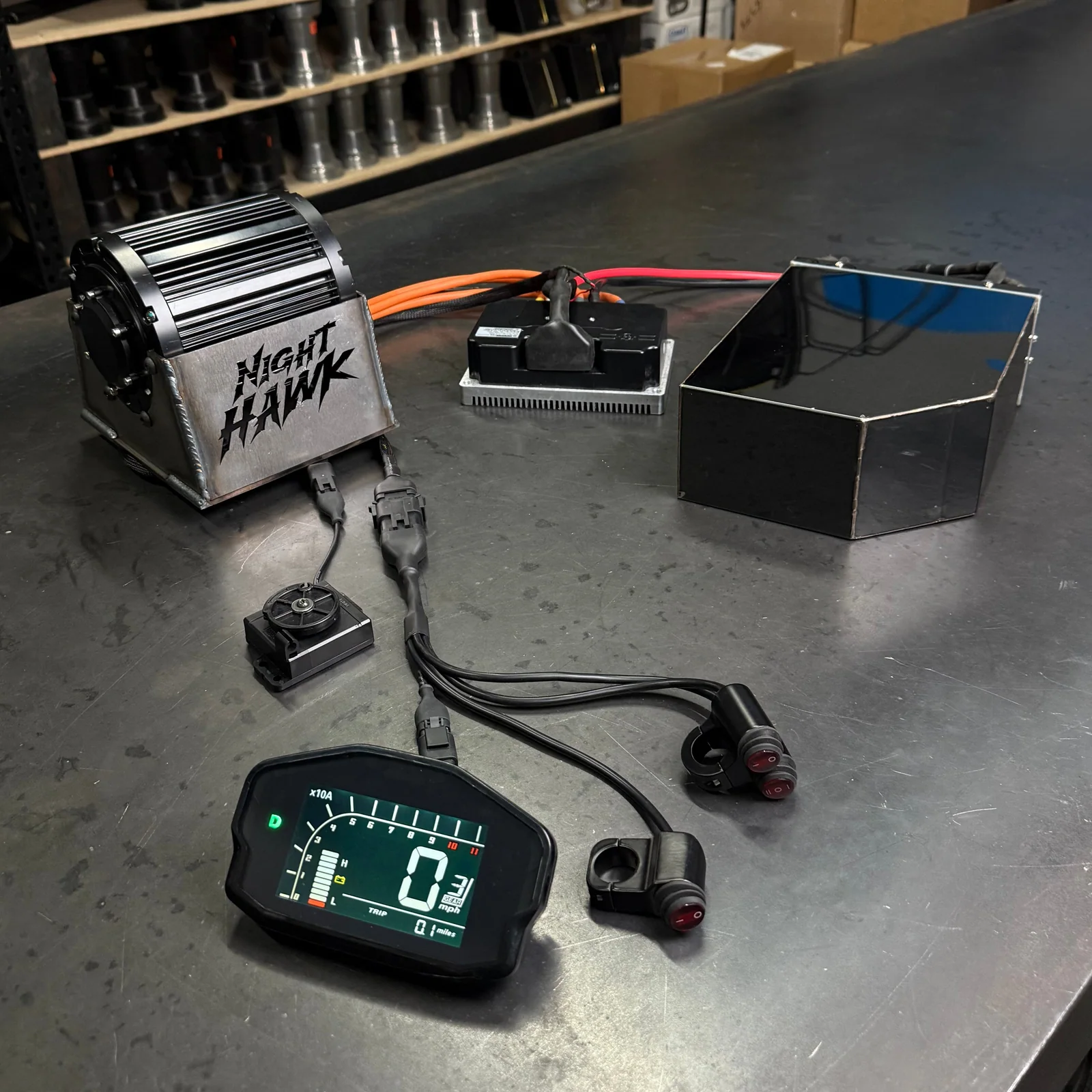
The Nighthawk Powertrain is intended for an existing kart or a custom build. The checked catalog started at $2,399.99 for the 20Ah version with Predator / Honda Clone mounting, with a separate competition-chassis mounting selection. Larger-battery configurations were also listed. The product page advertised a 30–45 day lead time.
GoKartGod describes a system built around a QS138 90H motor, a Fardriver controller, battery, display and mounting hardware. That is a useful starting point for a conversion discussion, but it does not establish compatibility with every chassis. Confirm the motor plate, mounting arrangement, chain line, battery location, braking capability and the contents of the selected package.
A conversion changes the work the buyer takes on. The chassis may already be owned, but installation, inspection, setup and troubleshooting still require time and competence. Compare a complete integration plan with a complete-kart quotation; comparing the drivetrain’s price alone with a finished vehicle leaves out much of the decision.
Section sources: nighthawk powertrain
Parts, batteries and the ownership experience
The parts catalog extends the business beyond the initial kart purchase. It includes spare batteries, pre-mounted wheel packages, a rear wing, a vertical stand and tire replacement service. For an owner, that means there are published product routes for some ongoing needs. A catalog listing alone, however, does not establish repair turnaround, inventory depth or compatibility with a particular production version.
The vertical stand is described for Nighthawk and Hawk V3 use, providing upright workshop access and a smaller storage footprint. The tire service offers separate slick and treaded selections. Before sending a wheel or ordering an accessory, confirm the version it fits, what labor is included and who pays transport.
GoKartGod’s assembly-instruction library covers floor panels, body panels, motor, controller, throttle, display and axle-related installation. Builders can use those materials to judge the work involved before choosing a kit. The technical setup guide is another resource to request alongside model-specific instructions. Keep the final build sheet and component information with your service records.
Production, freight and cancellation terms
Production time and shipping time are separate. Nighthawk product pages show a build-to-order process, while the shipping policy says complete karts travel by freight and may require a delivery appointment. It describes curbside delivery unless another arrangement is agreed. Confirm unloading access, delivery charges and the build schedule before setting a date for an event or gift.
The shipping policy limits service to the contiguous United States and says international shipping is unavailable. The currency and country selector in the storefront does not establish delivery coverage. The general FAQ also advertises a free-shipping offer, but the freight policy calculates costs at checkout. Ask whether any promotion applies to the exact kart and destination.
The dedicated Nighthawk cancellation policy lists a 2.5% fee within 36 hours of ordering and a 7.5% fee afterward. It offers store credit as a separate option and excludes specified custom, used and opened items from ordinary returns. It also has payment-specific provisions for Klarna. An older general FAQ describes different return language, so save the applicable policy and obtain written confirmation for your order rather than assuming a universal return window.
Section sources: shipping policy · refund policy
Choosing between a finished kart, a kit and a conversion
Begin with the experience you want to own. A finished Nighthawk concentrates the purchase around a completed build and its agreed specification. A Hawk kit makes fabrication part of the experience. A powertrain conversion puts the existing chassis at the center of the project. None of those routes can be compared fairly using only the first price visible in a storefront.
Write down what must be ready before the first session: suitable space, transport, storage, charging, inspection and operator preparation. For a kit, add welding, tools and assembly labor. For a conversion, add the integration work and any changes the existing chassis needs. Treat delivery timing and support response as part of the purchase, alongside the hardware.
GoKartGod’s Nighthawk FAQ states that the kart is not street-legal and identifies closed courses and private-road or track environments as its intended settings. A speed-limiting feature does not establish permission to use a public road or a venue’s acceptance of the kart. Confirm the operating location and its requirements before buying.
What GoKartGod’s catalog reveals about the business
The catalog shows several connected ways to serve enthusiasts: complete vehicles, fabrication kits, conversion systems and ownership accessories. Motenza’s analysis is that these formats address different kinds of customer effort. Some buyers pay for a finished build; others value the work of building or adapting a kart. That creates a useful product distinction without establishing the company’s sales mix or profitability.
The brand also runs a creator program. Its public page describes manual application review, commissions on qualifying sales, affiliate links and creator codes. That documents an acquisition channel, not a published commission rate or proof of campaign performance. The program’s existence should not be used to assume that a particular video creator was paid or that a customer review represents an independent test.
For another specialist business, the practical lesson is to make the scope of each offer explicit and connect the purchase to support. A buyer should be able to distinguish product cost, customization, labor, delivery and ongoing service. Reliable specifications are part of that offer. The public pages do not provide verified revenue, staffing or production-volume figures, and this article makes no estimate of them.
Section sources: affiliate program
How to contact GoKartGod and confirm an order
The official contact page lists Support@GoKartGod.com and 480-955-KART. Use those published channels to request a written configuration, a current production estimate and a delivered quotation. The refund policy lists a Phoenix returns address; contact support for authorization and instructions before shipping anything there.
Send the model name and selected options with your questions. Ask for the battery’s actual capacity, controller and power settings, driver fit, braking package, charging equipment and the parts included. Resolve any mismatch between the product headline, technical table and accessory listing before placing the order. Retain the reply with the invoice and the policy version supplied at purchase.
This profile is based on GoKartGod’s public catalog, product imagery, support pages and policies. It includes no hands-on test, factory visit or interview. Source links below let readers review the manufacturer’s own descriptions and distinguish those claims from Motenza’s purchasing and business analysis.
Section sources: contact us
Frequently asked questions
What does GoKartGod sell?
GoKartGod sells complete Nighthawk electric go-karts, Hawk V3 DIY builder kits, electric conversion powertrains, batteries, wheels and other kart accessories.
How much does a GoKartGod Nighthawk cost?
The checked base configurations were Pulse at $7,299.00, Surge at $9,299.00 and Titan at $10,899.00. Confirm current pricing, options, taxes and freight directly with the seller.
Do Nighthawk karts arrive assembled?
GoKartGod describes Nighthawk models as fully built and tested before delivery. Hawk V3 products are separate DIY kits that require welding and assembly.
How fast are GoKartGod electric go-karts?
The product pages advertise high performance, but some headline and technical-table figures differ. Confirm the model’s exact battery, gearing and agreed control settings with GoKartGod. Motenza has not independently tested speed or output.
Are Nighthawk go-karts street-legal?
GoKartGod’s FAQ says they are not street-legal and describes closed-course, private-road and track use. Confirm permission and requirements with the location where you intend to operate one.
What is the difference between Hawk V3 Electric and Gas?
Both are builder kits. Electric selections include an electric powertrain configuration; the gas product is offered in frame and parts combinations for a compatible engine installation. Confirm the full parts list for the selected variant.
Can the Nighthawk Powertrain convert an existing kart?
That is its intended purpose. GoKartGod offers mounting selections for Predator / Honda Clone arrangements and competition chassis. A buyer still needs to confirm fitment and the complete installation plan.
Does GoKartGod ship internationally?
The checked shipping policy says no international shipping and limits service to the contiguous United States. A storefront country or currency selector should not be treated as delivery confirmation.
Where is GoKartGod located?
Its refund policy publishes a returns address in Phoenix, Arizona. That is a returns contact detail, not confirmation of a public showroom or a place to visit without an appointment.
Is this a hands-on GoKartGod review?
This is a source-based company and product profile. It compares the public catalog and identifies questions for a buyer; it does not report a driving test or independently verify manufacturer performance claims.
Product imagery and practical reading
Product imagery: GoKartGod’s official product pages, linked in the relevant sections. Images identify the products discussed; they do not document a Motenza test or factory visit.
This profile was prepared at the publisher’s request using public sources. GoKartGod product imagery is reproduced with permission.
For a business project, document the full scope in a working business plan and map the timing in a cash-flow forecast. Read Motenza’s disclosures.
Sources & further reading
- GoKartGod official storefront
- GoKartGod terms: company identity
- Nighthawk Pulse: price, technical table and FAQ
- Nighthawk Surge: price, technical table and FAQ
- Nighthawk Titan: price, technical table and FAQ
- Hawk V3 Electric: builder kit and variants
- Hawk V3 Gas: frame and parts selections
- Nighthawk Powertrain: conversion system
- Vertical Stand: workshop accessory
- Tire Replacement Service
- Parts and battery catalog
- GoKartGod assembly-instruction library
- GoKartGod technical setup guide
- GoKartGod freight and shipping policy
- GoKartGod Nighthawk cancellation and refund policy
- General shipping and returns FAQ
- GoKartGod creator and affiliate program
- Official GoKartGod contact page
- Hawk V3 Electric: selected 40Ah variant price
- GoKartGod public product catalog: variants and battery labels
Source links checked October 24, 2026. Rules and availability may change; verify current terms directly. Read our editorial standards.