Use the evidence and practical questions in this article to test your own assumptions. Any worked examples use hypothetical inputs.
Classify the work before counting people
Florida’s workers’ compensation coverage requirements depend on industry, workforce and entity structure. The state describes a one-or-more employee threshold for construction and a four-or-more threshold for many non-construction employers, with specific rules for owners, exemptions and agriculture. Do not apply the non-construction threshold to work that the state classifies as construction. Ask the Division of Workers’ Compensation or a qualified broker how the actual activity and ownership arrangement fit the current requirements.
Review owners and contractors explicitly
Calling someone an independent contractor does not settle every coverage question. Review the actual working relationship, applicable industry rules and any valid exemption or insurance evidence. Owner status also needs a specific review instead of assuming every LLC member is excluded. For a hypothetical renovation business, a small headcount is not a reason to postpone the coverage check. Record each worker’s role and who reviewed the classification before assigning work, especially when subcontractors enter a project.
Verify coverage rather than a promise
Obtain current evidence identifying the employer, insurer, policy period and covered operations. Use the state’s official resources to verify coverage or exemption information where available. A certificate that expires before the project does not resolve the whole project period. Ask how renewals, out-of-state workers and changes in payroll or activity are handled. Keep coverage evidence with the relevant contract and payroll classification records, without exposing workers’ personal details in a broadly shared file.
Prepare the injury-reporting process
Tell supervisors how to respond to an injury, obtain appropriate emergency help and notify the designated insurance contact. Follow current state and insurer reporting instructions rather than inventing an internal waiting period. Keep factual incident records and protect medical privacy. Revisit the program when staffing, job duties or locations change. An exemption for one eligible individual is not blanket coverage for an entire team, and an insurance quote is not proof that a policy has been issued and is in force.
Image source and usage
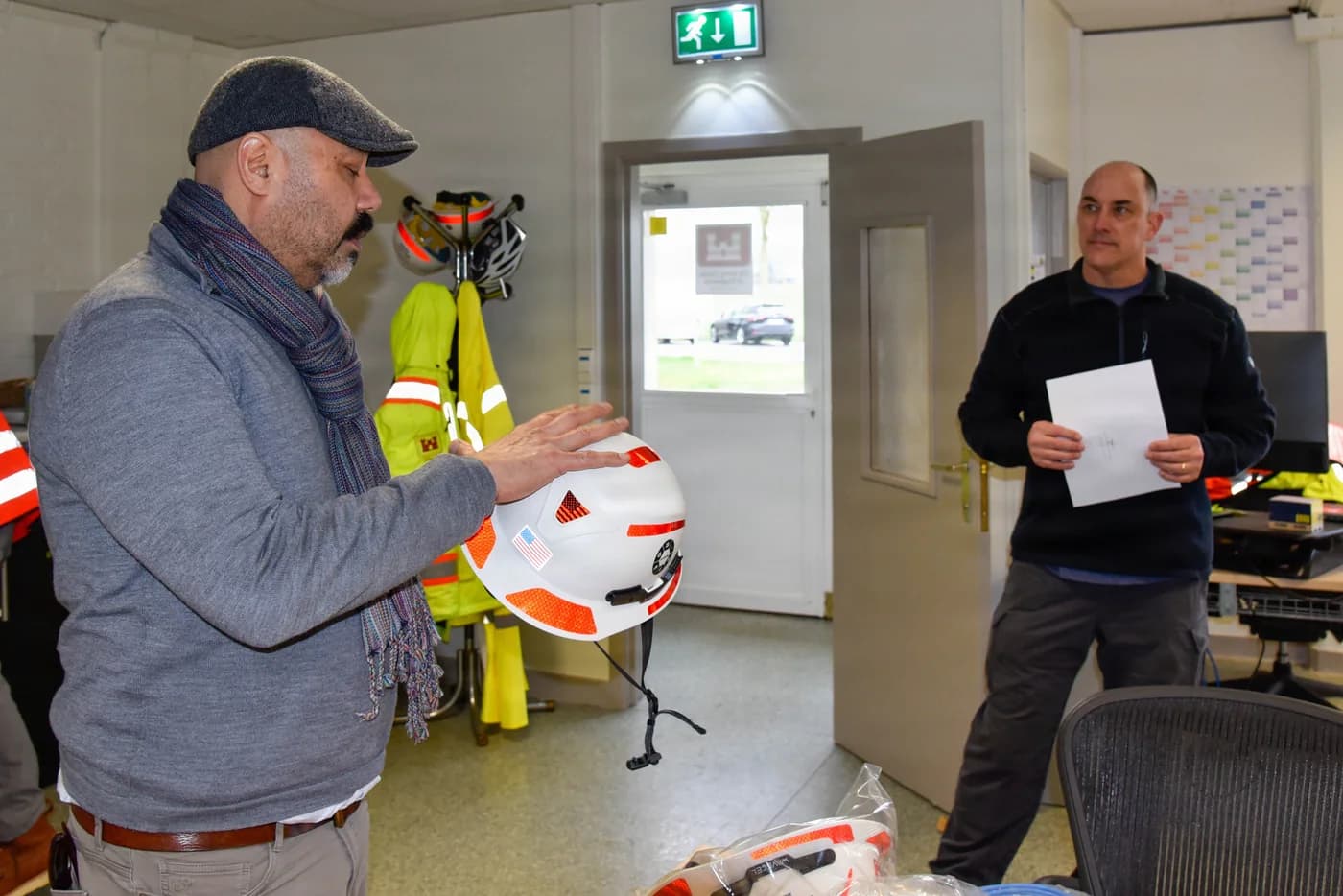
Safety helmets, shown as a workplace-safety reference
Michael Coghlan from Adelaide, Australia
Source image · Image-use terms
Web versions are resized and compressed; attribution and applicable source terms are retained.
Frequently asked questions
Does a small construction business avoid coverage?
Do not assume so. Florida applies construction-specific rules, including a lower employee threshold.
Is a quote proof of active coverage?
No. Verify the issued policy, effective dates and applicable coverage evidence.
Sources & further reading
- Coverage Requirements | Workers' Compensation | Florida Department of Financial Services
- Employer Coverage Requirements | Workers' Compensation | Florida Department of Financial Services
Source links checked October 23, 2026. Rules and availability may change; verify current terms directly. Read our editorial standards.