Use the evidence and practical questions in this article to test your own assumptions. Any worked examples use hypothetical inputs.
Start with where card data travels
PCI DSS is a payment-card data security standard, not a general business license. A merchant’s responsibilities depend on the way payments are accepted and the applicable validation process set by its payment relationships. Begin by drawing every route: in-person terminal, website checkout, telephone order and any staff-entered payment. Identify whether card details touch company devices, messages or records. PCI Security Standards Council merchant resources help frame that discussion. A US small business should confirm its own scope with the appropriate payment provider or qualified adviser instead of selecting a questionnaire because it looks shorter.
Check each provider’s responsibility
Outsourcing checkout can reduce some exposure but does not remove every merchant obligation. Ask what evidence the provider supplies, which service is covered and what configuration the merchant must maintain. Inspect the actual checkout integration and terminal setup against that description. Keep software updates, access and device inspections assigned to someone. Do not store sensitive payment information in email, chat or an ordinary spreadsheet to make reconciliation easier. Use transaction references and approved reporting tools. If staff need to accept a new payment method, review the data flow before introducing it.
Keep evidence files free of unnecessary cardholder data. A screenshot collected to demonstrate a control can itself create exposure if it shows real payment details. Use redacted or approved test information and restrict access to the review record.
Keep validation connected to everyday operations
Maintain a small evidence file containing the payment-flow diagram, relevant provider documents, the current validation result and unresolved actions. Review it after website changes, terminal replacements or a new ordering channel. A hypothetical retailer can complete an annual form yet later introduce an unreviewed plugin that changes how payments work. The control needs to follow that change. If a suspected card-data incident occurs, use the agreed response route promptly and preserve evidence under specialist guidance. Successful validation is a specific statement about a defined process and period, not a permanent guarantee that future configurations remain secure.
- Map every payment channel and remove unnecessary card-data handling.
- Confirm the correct scope and validation route with the payment relationship.
- Review changes and retain evidence of merchant and provider duties.
Image source and usage
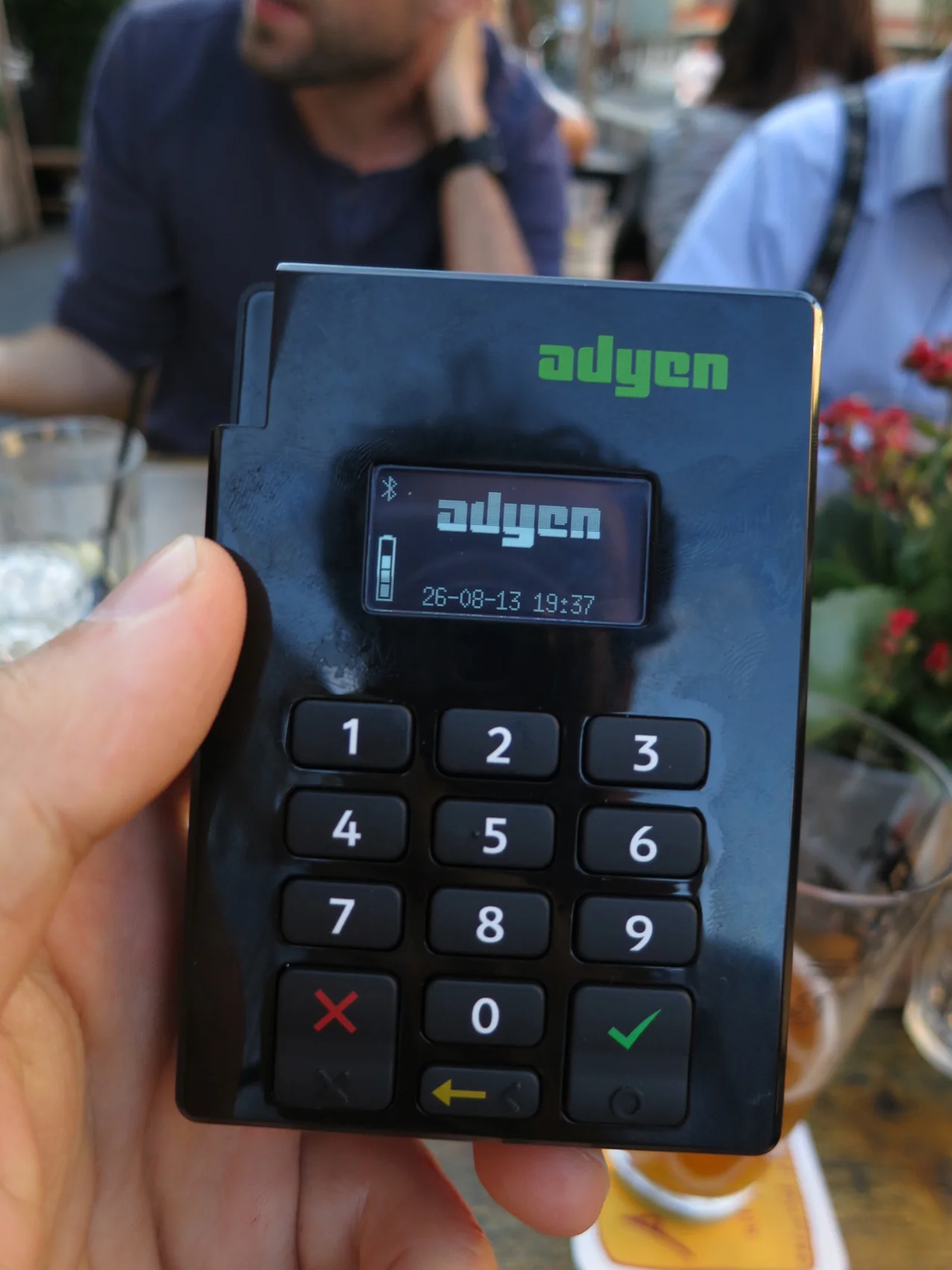
An Adyen payment terminal, shown as a merchant equipment reference
Alper Çuğun from Berlin, Germany
Source image · Image-use terms
Web versions are resized and compressed; attribution and applicable source terms are retained.
Frequently asked questions
Does outsourced checkout eliminate all PCI responsibilities?
No. The remaining scope and merchant duties depend on the actual setup and payment relationships.
Can this article certify a merchant’s compliance?
No. Use the applicable validation process and appropriate qualified support.
Sources & further reading
- PCI Security Standards Council – Protect Payment Data with Industry-driven Security Standards, Training, and Programs
- PCI Security Standards Council – Protect Payment Data with Industry-driven Security Standards, Training, and Programs
Source links checked October 20, 2026. Rules and availability may change; verify current terms directly. Read our editorial standards.