Read this report alongside the linked primary sources. Distinguish the announced event from its potential effect on your business.
NASA’s post-mission heat-shield assessment
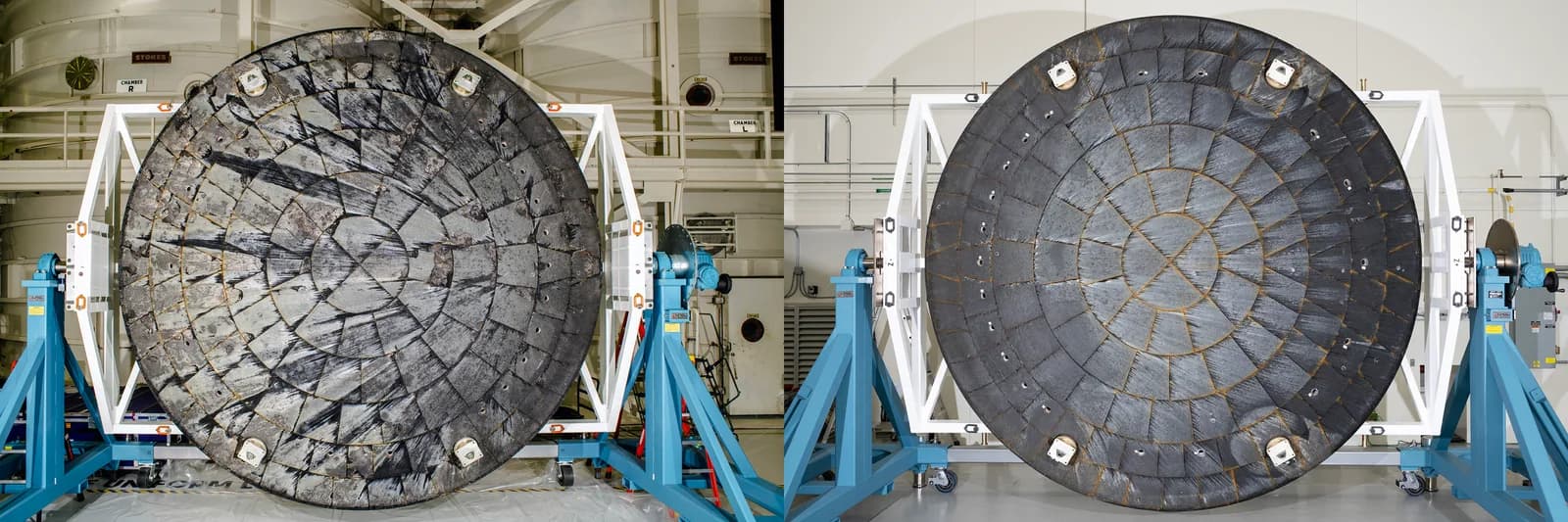
NASA reported on October 15 that further analysis confirmed the Artemis II Orion heat shield performed as expected during the mission’s return to Earth. The agency’s account concerns post-flight engineering evidence, not a new lunar landing. It compares the observed condition of the protection system with the measurements and analysis needed to understand reentry performance. A photograph can make that work visible, but the visual appearance of a used heat shield is only part of the evidence. The relevant question is how the complete protection system behaved against its mission requirements, including the information collected during flight and later inspection.
Why inspection photographs need engineering context
A protective material may be designed to change as it absorbs or dissipates energy. An inspection image therefore needs an explanation of what was expected, what was measured and how the result was evaluated. A reader should avoid diagnosing success or failure solely from a surface that looks dramatic. Compare the same component, orientation and stage of inspection when looking at photographs from different missions. Ask which observation supports which conclusion. This method is useful beyond spacecraft: a convincing engineering report connects visible condition, instrument data and a defined acceptance question rather than relying on an impressive image alone.
What meaningful follow-up reporting should show
The next useful updates will explain how the analysis informs later design, testing and mission preparation. Distinguish an assessment of a completed flight from approval of every future configuration or trajectory. Keep the spacecraft, mission and specific system clearly identified when comparing reports. Readers interested in US aerospace manufacturing can also look for the relationship between material production, quality records and flight evidence. The news is not merely that a component survived a demanding environment; it is that the agency is documenting why the observed performance supports its conclusion. That evidence trail is more informative than treating every new inspection photograph as an unexplained change in mission safety.
Image source and usage
NASA comparison of the Artemis I and Artemis II Orion heat shields after their missions
NASA
Source image · Image-use terms
Web versions are resized and compressed; attribution and applicable source terms are retained.
Frequently asked questions
Does the report describe a new Moon landing?
No. It concerns analysis of Orion’s heat-shield performance following Artemis II. Keep the mission milestone and the component assessment distinct.
Sources & further reading
Source links checked October 19, 2026. Rules and availability may change; verify current terms directly. Read our editorial standards.