Read this report alongside the linked primary sources. Distinguish the announced event from its potential effect on your business.
More usable power for the orbital laboratory
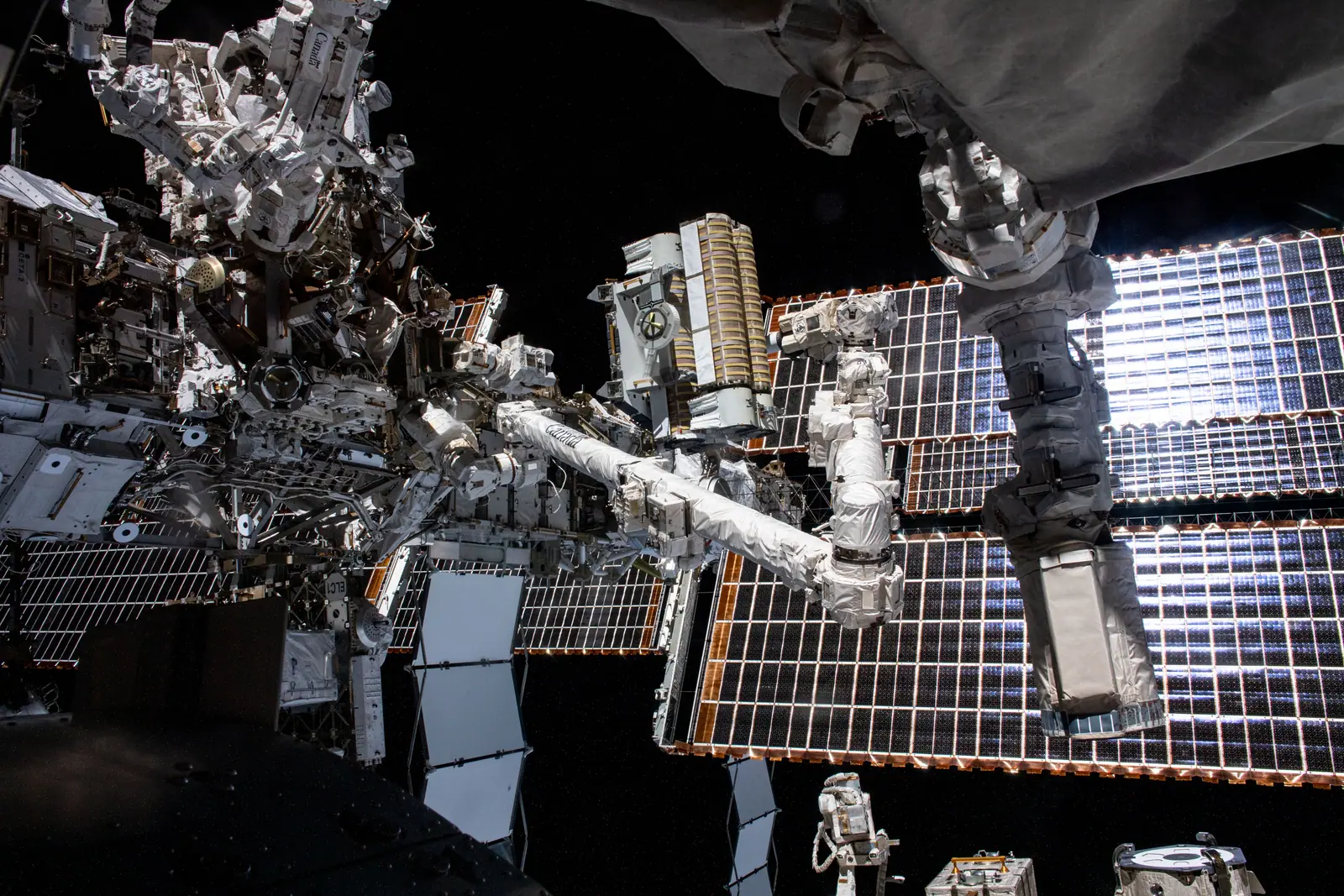
NASA’s October 15 update explains how International Space Station Roll Out Solar Arrays support the station’s power modernization. The compact arrays launch rolled up and deploy after installation, adding power capability to an orbiting laboratory that must support both routine operations and research. The announcement is an infrastructure story as much as a spaceflight image. Generating more power and making it available to a particular experiment are related but different steps. A reader should distinguish delivered hardware, completed installation and operational use rather than treating the arrival of a cargo vehicle as proof that every new capability is already active.
Power capacity is part of research planning
An experiment needs more than a physical place aboard a spacecraft. It also depends on available power, cooling, communications, crew time and a schedule for handling samples or equipment. A change to one supporting system can therefore alter what work is practical elsewhere. The useful question is which constraint the upgrade addresses and which constraints remain. A stated power figure should be read with the system configuration and operating conditions attached. That avoids the simplistic conclusion that a percentage increase in electrical capability automatically creates the same percentage increase in scientific output, regardless of the experiments being conducted.
The wider lesson for infrastructure investment
For a business following the story, the transferable lesson is to assess an upgrade as part of a complete operating system. Identify the work it enables, the installation disruption and the evidence that will show the benefit after commissioning. Keep delivery, acceptance and productive operation as separate milestones in the project file. A compact or efficient component can be valuable without eliminating the need for integration work. The station’s power program provides a clear example of staged modernization in a working facility. Follow the official installation and research updates to see how the new capacity becomes a demonstrated capability rather than assuming the hardware announcement completes the project.
Image source and usage
A roll-out solar array being deployed at the International Space Station
NASA
Source image · Image-use terms
Web versions are resized and compressed; attribution and applicable source terms are retained.
Frequently asked questions
Does delivery mean a new solar array is already operating?
No. Delivery, installation, checks and operational use are distinct milestones. Follow NASA’s updates for the completed stage.
Sources & further reading
Source links checked October 19, 2026. Rules and availability may change; verify current terms directly. Read our editorial standards.