Read this report alongside the linked primary sources. Distinguish the announced event from its potential effect on your business.
NASA’s role in the Mars-moon mission
NASA outlined its contribution to JAXA’s MMX mission on October 15, describing instruments, sampling technology and support for investigating the Martian moons Phobos and Deimos. The mission aims to return material from Phobos so researchers can study its origin. The agency’s published schedule includes future exploration and sample-return milestones; a mission plan is not evidence that those milestones have already happened. The scientific question is unusually concrete: did the moons originate from captured bodies or from material associated with a major impact? Samples and measurements can help evaluate competing explanations more directly than the shape of a moon alone.
Why a returned sample is a long-term research asset
A sample collected in a documented location can be examined with instruments that would be difficult to send into space. Keeping the collection history matters because contamination or uncertain context can make a precise laboratory result harder to interpret. The useful comparison is therefore not simply how much material comes back. It is what researchers know about where it came from, how it was handled and which measurements can be repeated. This is a broader lesson in evidence quality: a small, well-documented specimen may answer a question that a much larger but poorly characterized collection cannot resolve.
Follow milestones rather than a single launch headline
Readers following MMX should distinguish the launch, arrival, survey, sampling and Earth-return stages. Each has its own evidence and technical questions. An instrument successfully built for a mission has not necessarily completed its measurements, and a scheduled return year does not establish that a sample is already available. Follow the primary mission updates for the status of each stage. For the US research community, the story also concerns the institutions and capabilities needed to curate and analyze material over time. The most meaningful follow-up will connect a stated milestone with a dated mission update and explain what new question the resulting data can actually answer.
Image source and usage
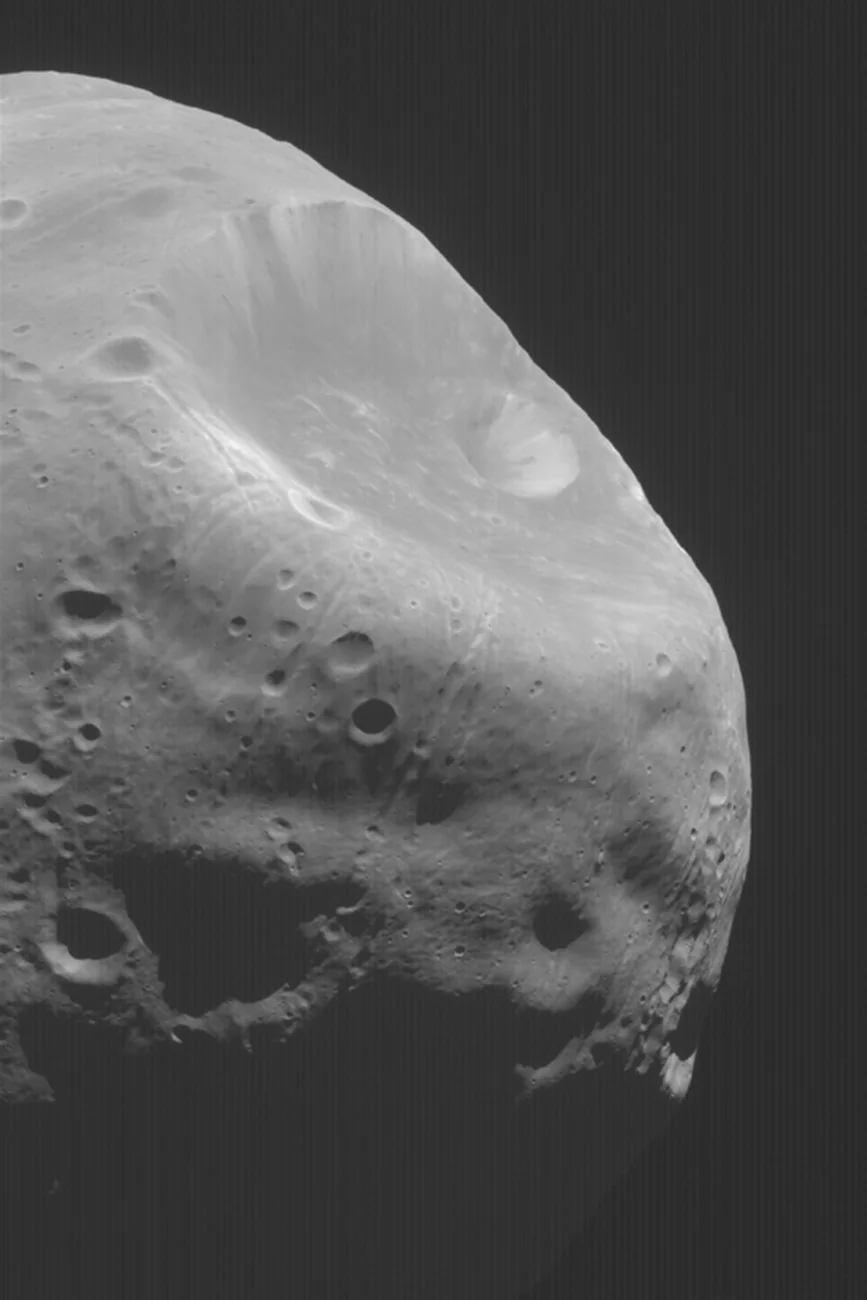
Archival Mars Global Surveyor image of the Martian moon Phobos
NASA/JPL/Malin Space Science Systems
Source image · Image-use terms
Web versions are resized and compressed; attribution and applicable source terms are retained.
Frequently asked questions
Has MMX already returned samples in this report?
No. This report concerns NASA’s mission contribution and planned sample-return work. Verify completed milestones through current primary mission updates.
Sources & further reading
Source links checked October 19, 2026. Rules and availability may change; verify current terms directly. Read our editorial standards.