Key takeaways
- A rail map is only part of a door-to-door commute.
- Current fares and approved future fares have different effective dates.
- Keep money and a plan for trips outside normal service.
Use the evidence and practical questions in this article to test your own assumptions. Any worked examples use hypothetical inputs.
Which trips does a car-free plan need to cover?
Begin with the journeys you repeat: work, groceries, appointments and the trip home after evening activity. Write the required arrival time, walking distance and number of transfers for each. An address can be convenient for a daytime office journey and inconvenient for a late shift; neither result describes every traveler in the same neighborhood.
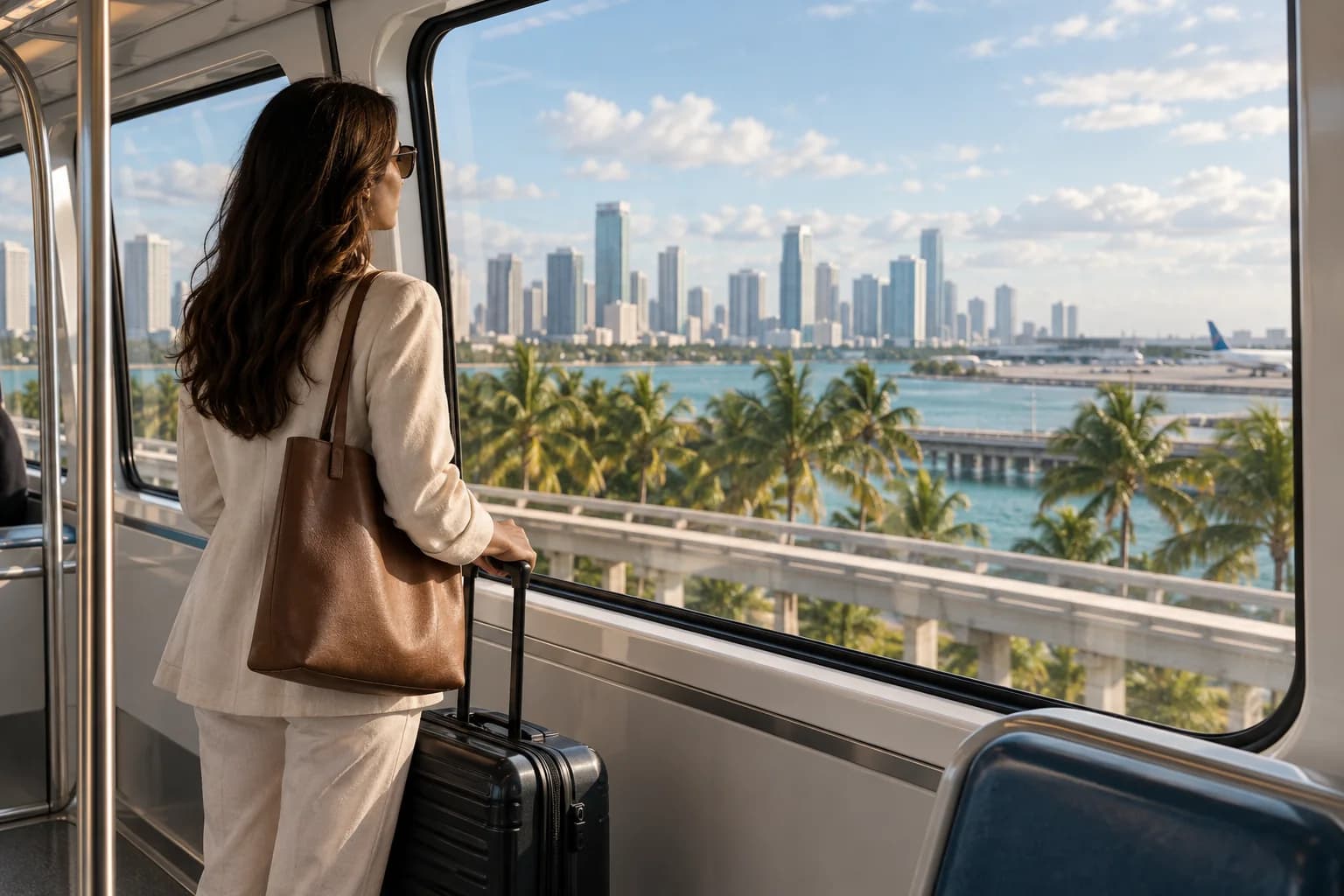
Test a normal weekday and a weekend using current schedules and service alerts. Include the walk to the stop, waiting, transfers and the final walk. Consider bags, weather and accessibility needs as part of that calculation. A station that appears close on a map may have its usable entrance on another side of a large block.
Metrorail, Metromover and local services
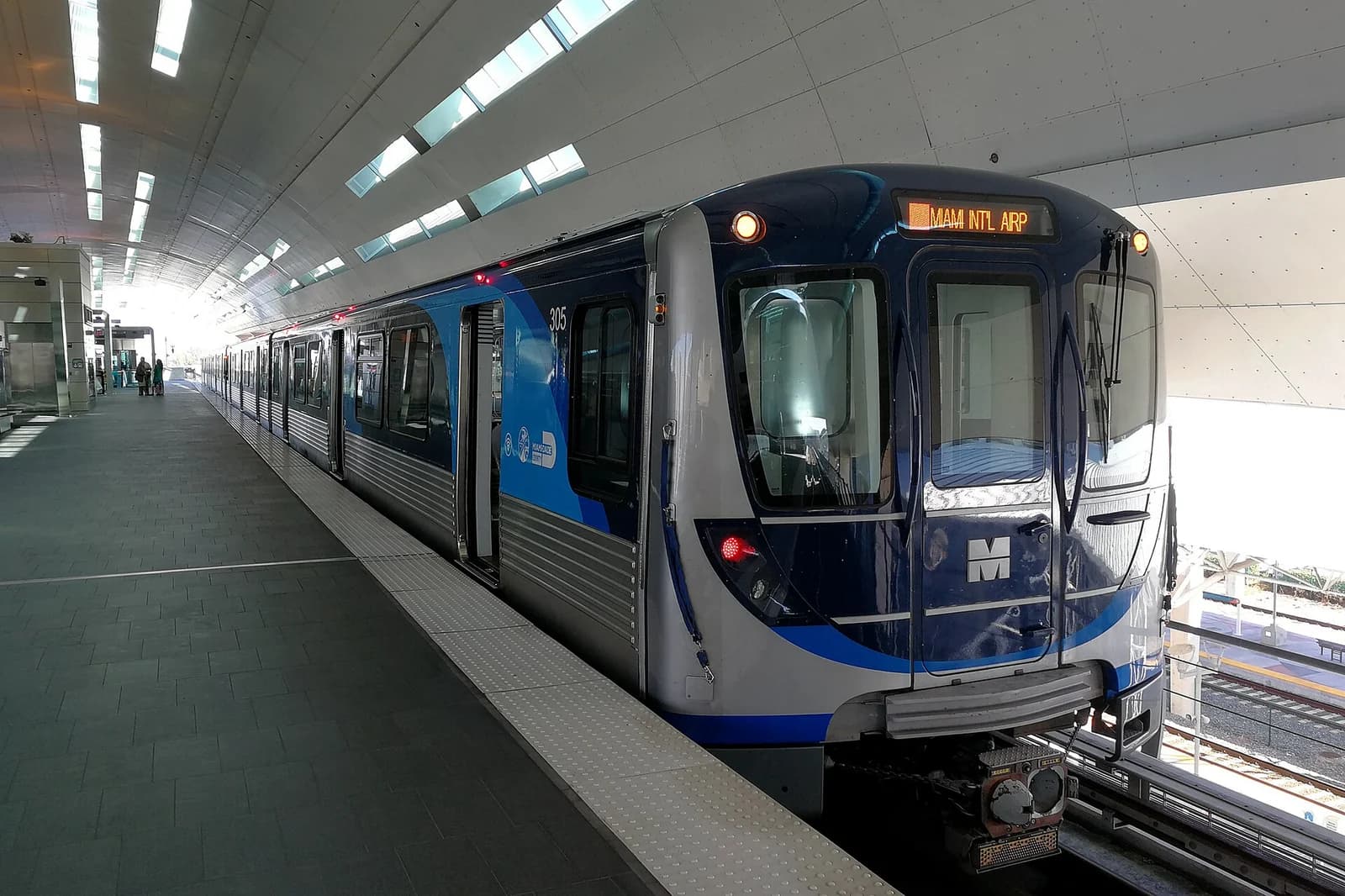
Metrorail is the county rail network; Metromover circulates through the central Downtown and Brickell area. Metrobus extends the network along road corridors. Miami Beach also publishes its own trolley service. These systems are related travel options, not interchangeable names for one route or a promise of direct service to every destination.
Use the relevant operator for the actual route and day. The county’s transit app and service notices can help identify disruptions and arrival information, while a municipality’s trolley page covers that local system. Do not assume that a municipal loop continues across a city boundary or that a rail connection runs at the same frequency all day.
Current fares and the January 2027 change
As checked in October 2026, the county lists a standard Metrobus or Metrorail trip at $2.25 and Metromover as free. A county announcement approves a standard fare of $2.75 effective January 2027. Keep those dates separate when planning a future stay, and recheck the complete fare schedule before travel.
Payment method matters for transfers and fare capping. The current county page describes a $5.65 daily cap when the applicable trips are paid with the same eligible contactless card or wallet. Check the rules before mixing cards, devices or cash. Discount eligibility and pass conditions need their own verification; they do not apply automatically to every rider.
Compare the whole monthly cost
For a hypothetical commuting month with 20 workdays and two paid $2.25 trips per day, the simple fare total is $90 before other journeys. This assumes no paid transfer, cap or pass adjustment. Add actual weekend travel, occasional rides, bicycle costs and any first-mile or last-mile connection needed for your particular route.
Compare that complete plan with the full cost of having a car: financing or ownership cost, insurance, fuel, parking, maintenance and tolls where relevant. A cheaper transit plan is useful only if it also meets the journey requirements. Record the value you place on time separately rather than hiding it inside a cash total.
Keep a backup for disruptions and late returns
Save the official service-alert page and know where you would transfer if a connection is unavailable. For late outings, identify the last usable service before leaving home and set aside a realistic backup allowance. Do not depend on a tight sequence of unverified connections for an appointment with consequences if you arrive late.
A car-free decision is easiest to evaluate after a trial week using your own destinations. Keep the actual journey time and spending beside the forecast. If the plan works only with frequent expensive rescue rides, revisit the housing location or the route before making a longer commitment.
Plan your next step
The working notebook
Test a week without a car
Time the full journey and record the fallback for each essential trip.
Questions to resolve before acting
- Does the route work on the day and at the time you need it?
- Which payment method will you use consistently?
Download the working worksheet
The worksheet is an editable CSV for your own records. Examples are hypothetical, not quotes, promised returns or eligibility decisions. Keep sensitive information on your own device.
Frequently asked questions
Is Metromover the same as Metrorail?
No. They are different systems with different coverage. Check the county maps for your actual start and destination.
When does the approved $2.75 fare start?
The county announcement gives January 2027 as the effective period. Recheck the current fare page for the day of travel.
Photography credits & licenses
- Photograph by Alancrh · CC BY-SA 4.0. Resized and cropped; adaptations retain the source license.
Sources & further reading
- Miami-Dade County: transit fares and payment rules
- Miami-Dade County: approved January 2027 fare change
- Miami-Dade County: Metromover
- City of Miami Beach: trolley information
Source links checked October 15, 2026. Rules and availability may change; verify current terms directly. Read our editorial standards.