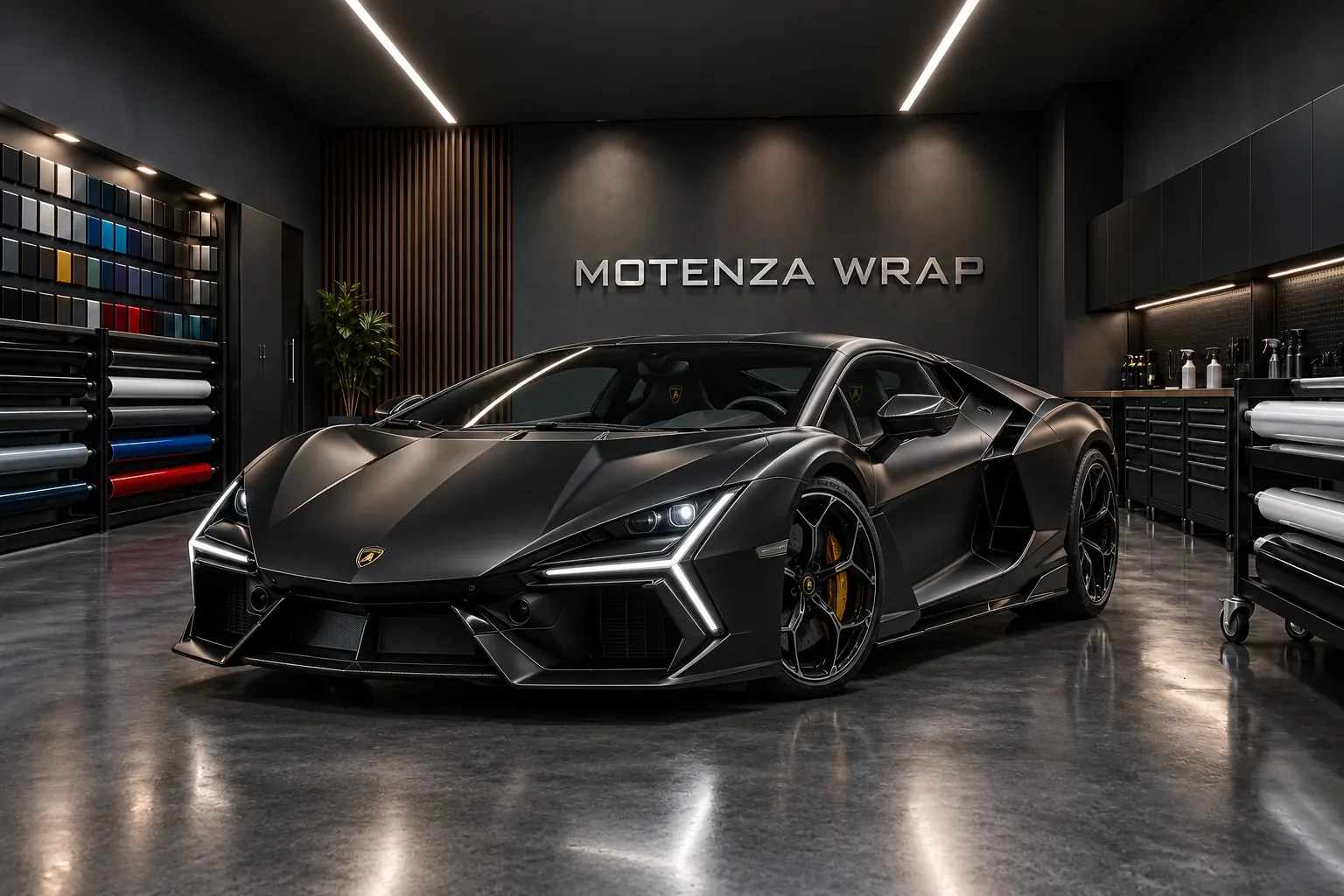
A car’s finish changes how its shape reads. Satin softens the reflections along a sharp shoulder; deep gloss emphasizes a long curve. Yet the work behind a convincing transformation begins before the first panel receives film. The owner needs a clear idea of what should change, which surfaces should remain and how the vehicle will be used afterward. That combination of design and practical planning is the starting point for this look at Motenza Wrap.
The company operates a studio at 1716 N Dixie Hwy, Hollywood, FL 33020, and markets its services to drivers from Miami, Fort Lauderdale and the wider South Florida area. Its published menu brings together color-change vinyl, paint protection film, ceramic coating, window tint, exterior accents, commercial graphics and marine wrapping. For someone comparing car wraps in Miami or Fort Lauderdale, the useful question is how those services fit a particular vehicle—not simply which color looks best on a screen.
A Hollywood studio for Miami and Fort Lauderdale drivers
Hollywood places the studio between the Miami and Fort Lauderdale markets. The company’s service-area information identifies Broward, Miami-Dade and Palm Beach as areas it serves, while keeping the installation address in Hollywood. That distinction matters when planning an inspection, arranging a ride home or comparing travel and vehicle downtime. A regional service reference should not be mistaken for an additional workshop.
Start with photographs of the current exterior and a description of the result you want. Include known paint repairs, existing film and the surfaces that concern you. A remotely discussed idea can lead to a useful assessment, but the final material, preparation, installation scope and appointment need direct confirmation. For a working vehicle, make the inspection and handover part of the operating schedule rather than treating them as an afterthought.
Color-change wraps: choose the whole composition
Motenza’s color-change service covers appearance-led transformations, with scope defined around the vehicle and its surfaces. A full exterior, selected panels and a roof accent are different projects. Door openings, mirror caps, bumper recesses and the factory color visible at returns deserve their own discussion. These small boundaries often determine whether a new body color feels integrated when the car is used, not only when it is photographed with every door closed.
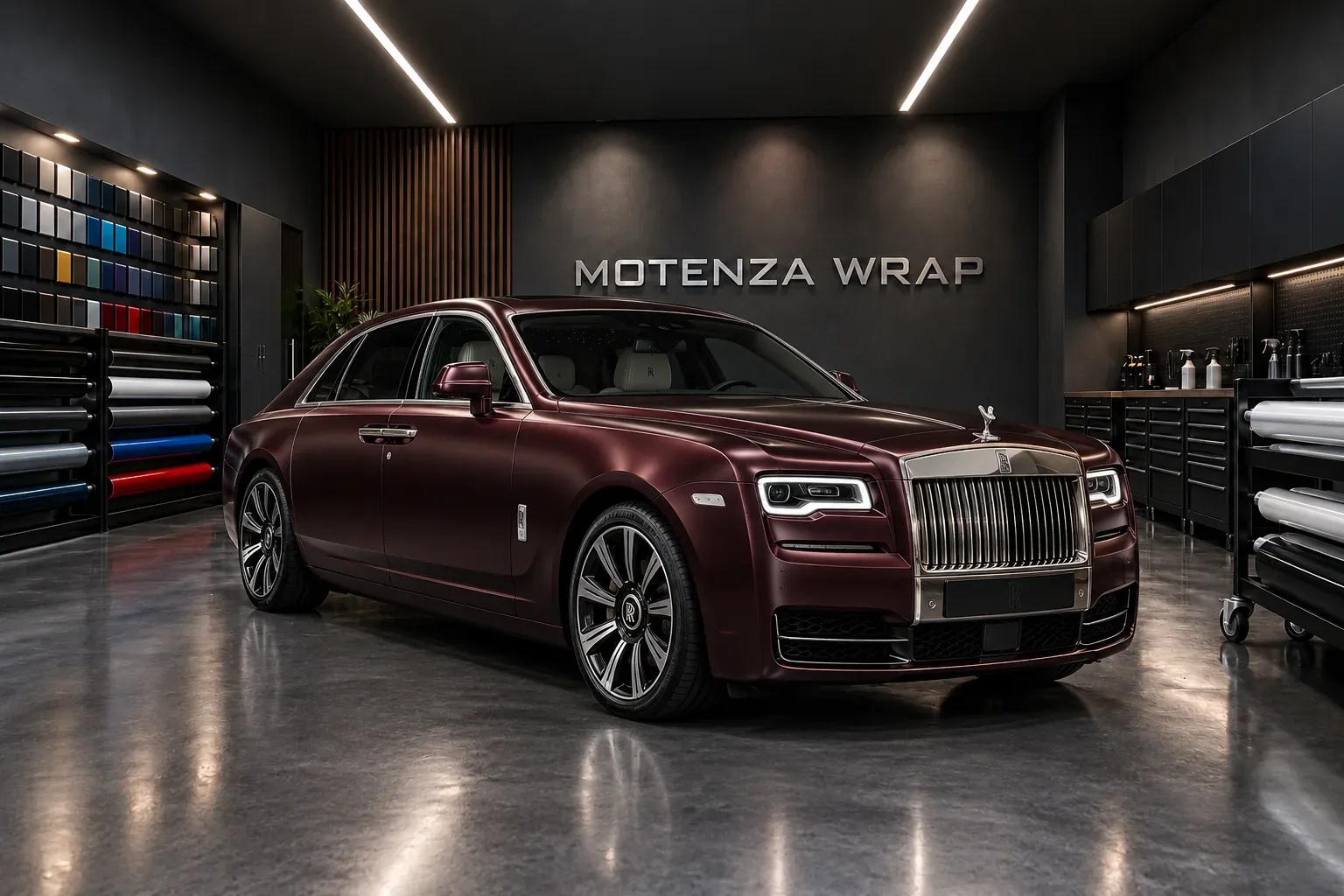
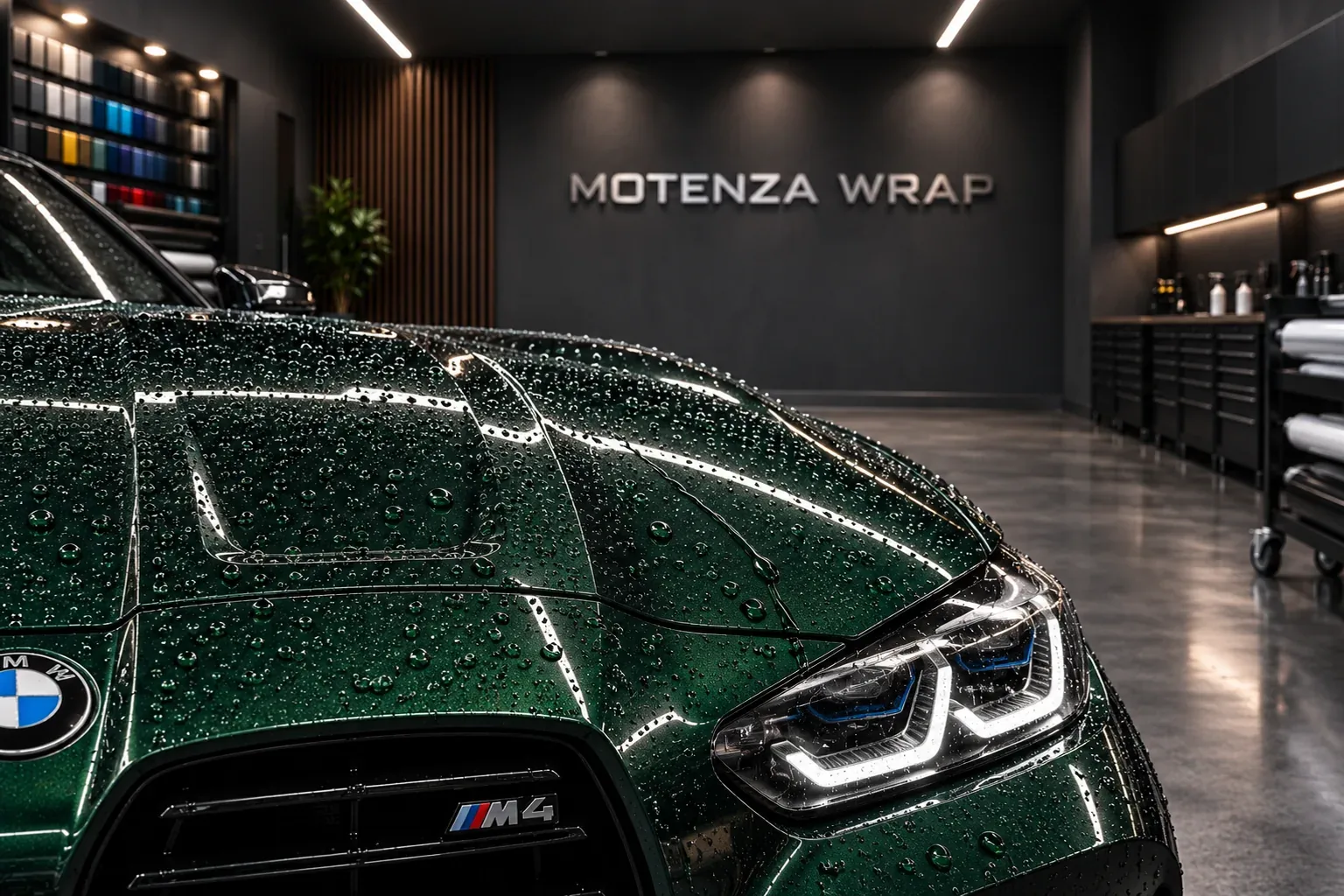
The finish collection presents satin black, burgundy satin, matte grey, British green and gloss red as visual directions. Use a reference to explain the quality you like: muted reflection, color depth or contrast against the wheels. Then inspect a physical swatch beside the actual vehicle. Screen brightness, surrounding light and the shape of a reference car can make the same color appear very different. Ask for the exact product and finish to be identified before approval.
PPF versus vinyl: match the material to the goal
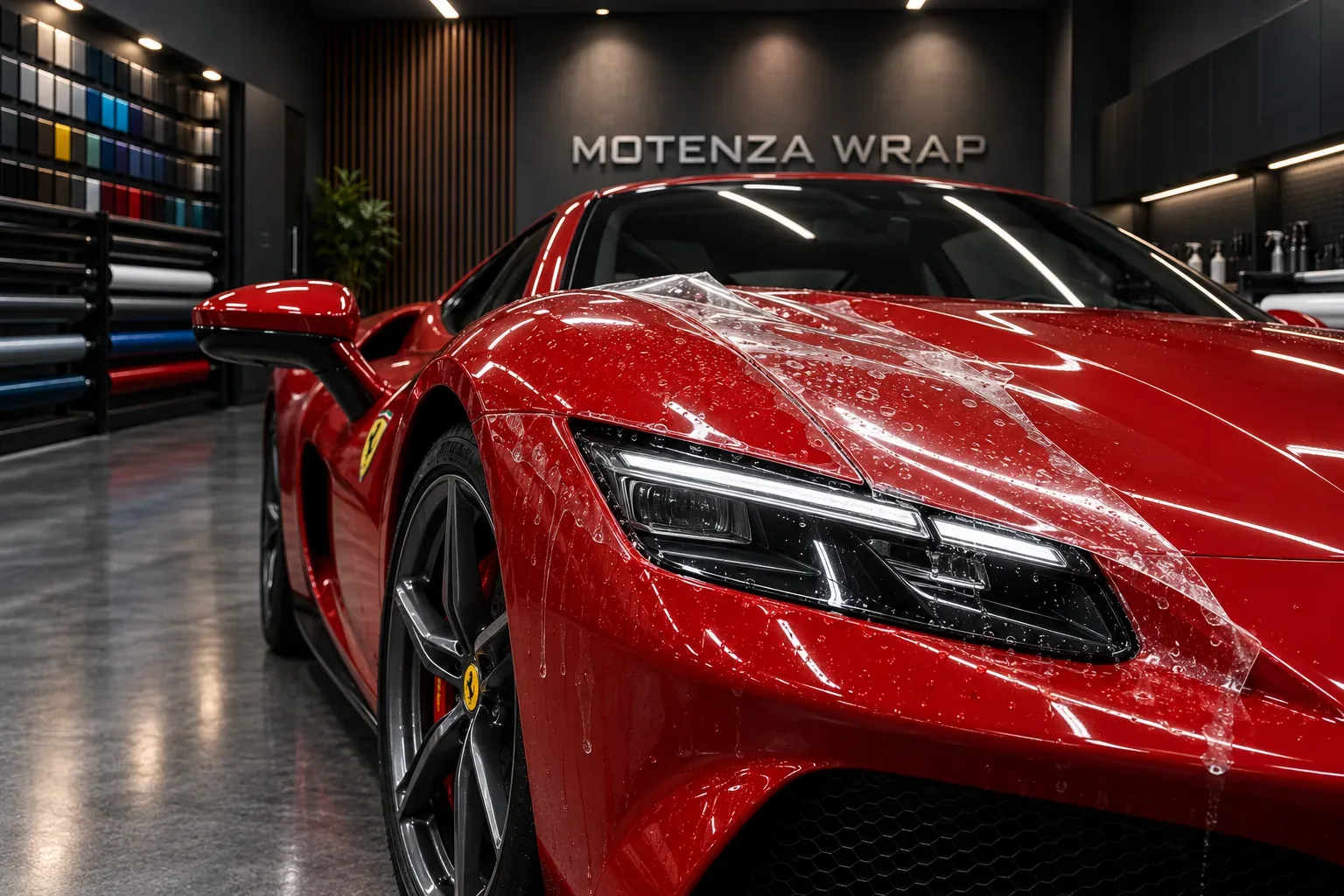
Paint protection film and decorative vinyl belong to different material decisions. An owner seeking a new color is solving an appearance problem; an owner concerned about exposed painted panels is evaluating protective coverage. Some colored protective films combine those objectives, but a similar-looking surface does not make two products interchangeable. Motenza’s PPF service describes full-front, full-body, matte and color-film directions for discussion.
Compare proposals using a panel list. Does front coverage include the complete hood and fenders, or only portions? Which mirror areas, bumper details and edges are included? A full-body description also needs exclusions and access decisions. Ask the installer to connect any performance or warranty statement to the selected product documentation. Protective film has limits, and existing chips, unstable paint or damaged clear coat remain surface-assessment questions.
Ceramic coating, tint and chrome delete: complete the brief
A ceramic-coating proposal should distinguish cleaning, any agreed paint correction and the coating itself. Water beading makes a striking image, but it does not tell you which preparation was performed or what ongoing care is needed. For an already wrapped or PPF-covered vehicle, identify a compatible treatment and its instructions. Specify whether the scope concerns painted panels, film, wheels or another surface rather than assuming one product suits everything.
Motenza also lists window tint, chrome delete and partial wraps. These can make the exterior more coherent without changing every panel. Decide which trim stays bright, whether the roof should contrast and how the glass should relate to the body. For tint, have the installer assess the actual glass-and-film combination and current Florida requirements before selecting a shade.
What determines car wrap cost?
A meaningful car wrap price begins with a comparable scope. Body size matters, but so do bumper complexity, existing-film removal, paint condition, material selection and the amount of disassembly. A clean exterior conversion with exposed factory-color jambs should not be compared as if it were identical to a more extensive jamb-and-return treatment. Ask for those decisions in writing before choosing between totals.
Motenza prepares individual proposals, so this profile does not assign an invented starting price. A practical estimate should identify the film, covered surfaces, preparation, removal or refitting, exclusions and how extra work discovered during inspection will be approved. Ask separately about the installation window, collection arrangements and aftercare. The objective is a proposal you can understand and use—not a low headline amount that leaves important tasks unspecified.
Commercial vehicle wraps: design for a working business
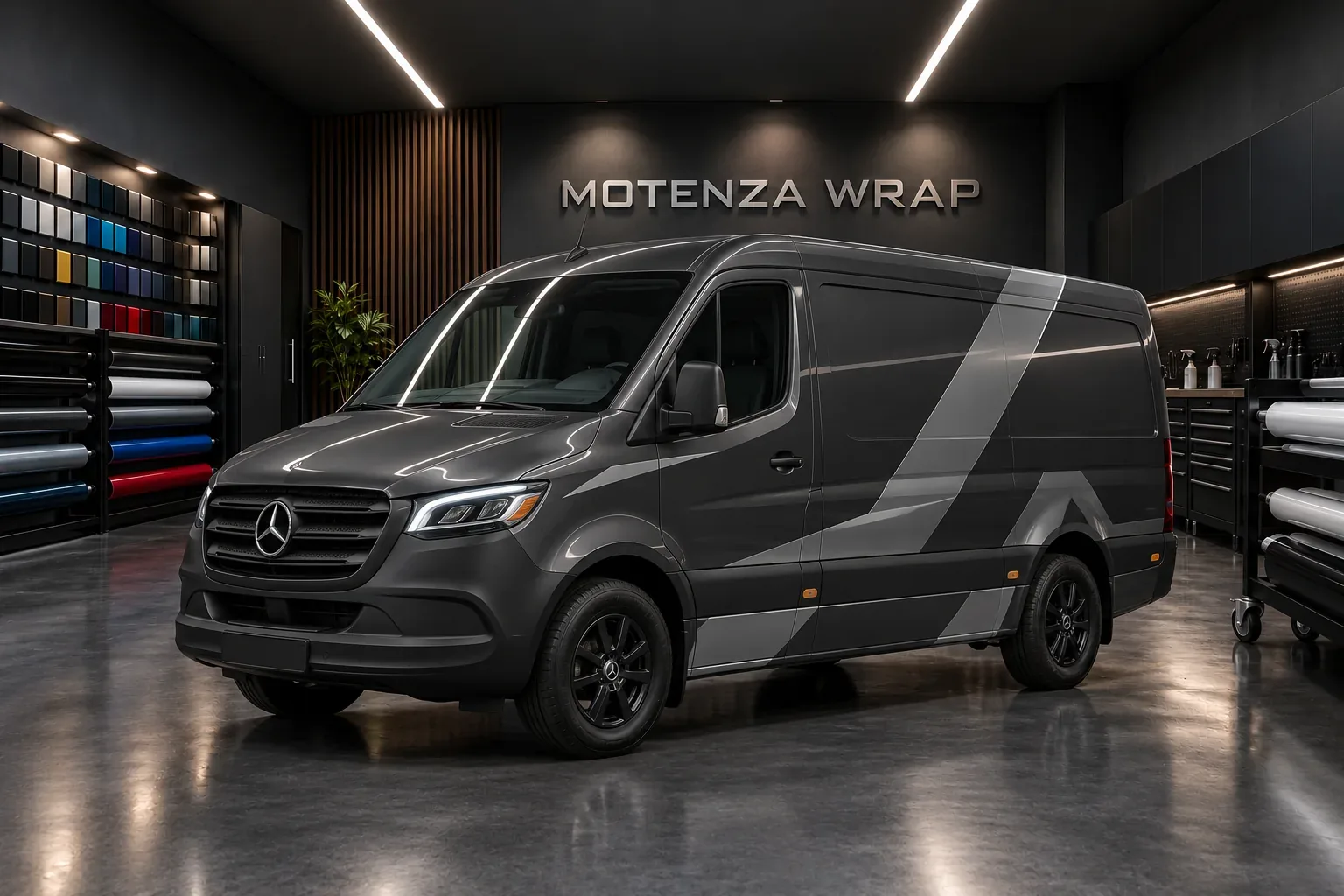
For a business, wrapping is a communication and scheduling decision as well as a finish choice. Motenza’s commercial and fleet services include vans, Sprinters, box trucks, food trucks and trailers. The vehicle’s body configuration should be part of the brief: sliding doors, rear hinges, vents and equipment can interrupt a layout that looks convincing on a flat drawing.
Choose a clear hierarchy: business name, a concise service message and a contact route that can be read quickly. Supply approved logo files and confirm spelling on every side before production. Plan when each vehicle can leave service and how replacement panels or changed contact details could be handled later. A wrap alone does not establish advertising results; a dedicated inquiry route and a simple record of where leads came from make its contribution easier to assess.
Boat wraps need a separate installation plan
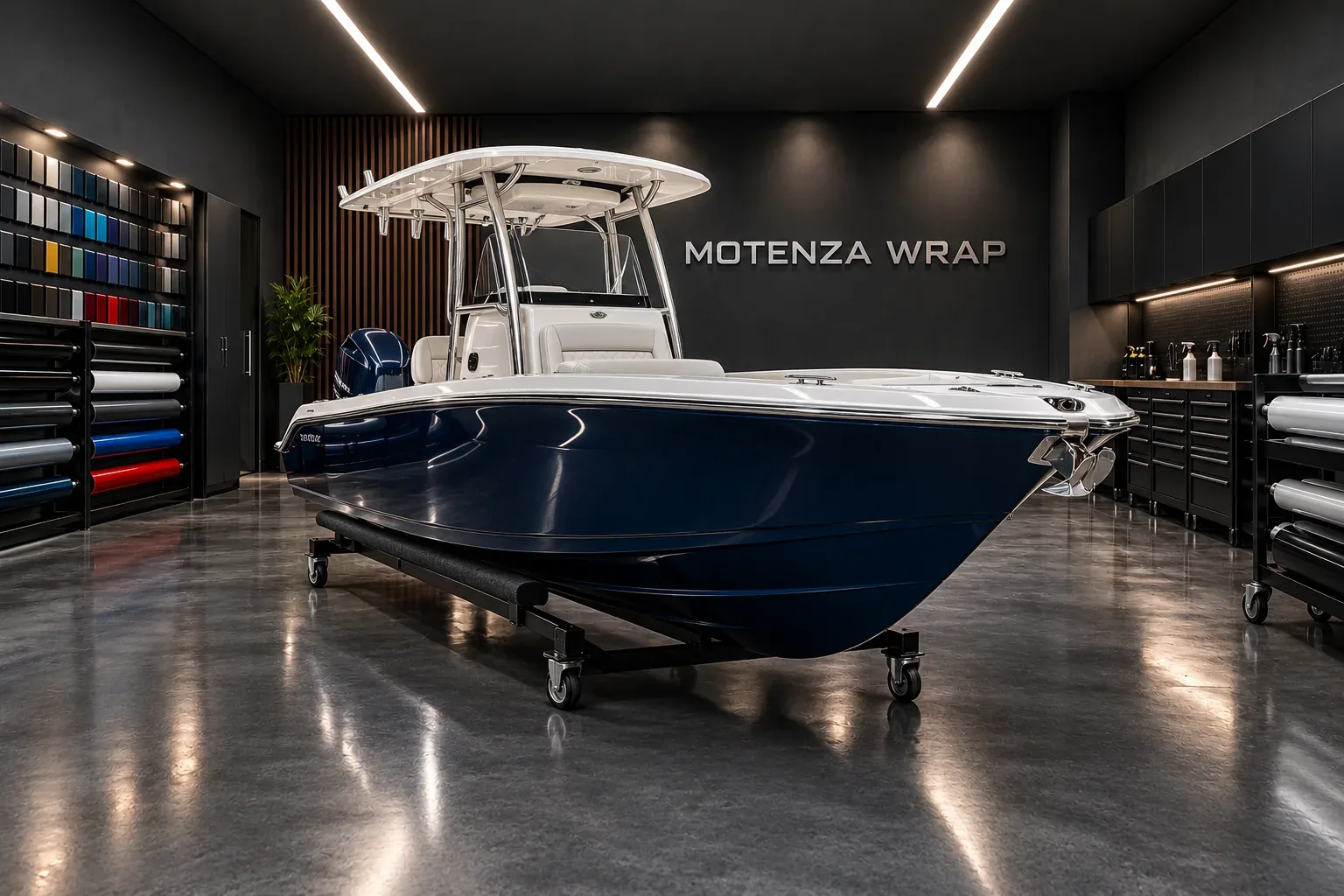
A long hull gives color a different scale, but a marine project should not be treated as a car wrap on a larger object. Motenza’s boat-wrap service asks owners to consider substrate condition, intended coverage, dimensions and access. Fittings, curves and the vessel’s operating environment influence the material and installation discussion. A decorative hull finish is separate from structural repair and underwater coating requirements.
Send clear hull photographs and explain how the boat can be presented for assessment. Confirm responsibility for transport, lifting, storage or marina arrangements when relevant. Those items should not be assumed part of a decorative-film quote. As with a fleet project, the strongest brief connects the desired appearance with the practical conditions under which the work can actually happen.
How long does a car wrap last in South Florida?
There is no useful universal lifespan for an unspecified film. Material, installation, panel orientation, outdoor parking and maintenance all belong in the conversation. Ask for the selected film’s actual care instructions and warranty terms, including exclusions and the distinction between product coverage and installation workmanship. A quoted warranty period and the condition of a daily-driven vehicle are different things. Keep the product details with your vehicle records.
For maintenance context, 3M’s product-care guidance recommends hand washing where possible and prompt attention to contaminants such as fuel spills. Use the instructions for the film actually installed; that reference does not establish that Motenza uses a particular manufacturer. Before applying polish, wax or a new coating to matte or satin material, check compatibility so a care step does not change the intended reflection.
A better first conversation with the studio
A useful inquiry can be short and still be specific. Send the year, make and model; clear exterior photographs; the existing color and known repairs; and a reference for the desired finish. Identify whether the priority is a new appearance, protective coverage, commercial branding or a marine project. Explain which surfaces must change and which should stay.
Then ask the studio to confirm the material, panel boundaries, preparation, access, expected installation window and collection conditions. For a commercial design, approve the artwork separately from the installation scope. At handover, review edges, agreed exclusions and the care instructions together. This gives both the owner and the installer a shared record of what was requested and what was delivered.
Questions about Motenza Wrap
Where is Motenza Wrap located?
The studio publishes its address as 1716 N Dixie Hwy, Hollywood, FL 33020. It serves inquiries from Miami, Fort Lauderdale, Broward, Miami-Dade and Palm Beach. Those references describe its service area; the published studio address is in Hollywood. Confirm an appointment before drop-off.
Does Motenza Wrap offer color-change car wraps?
Its service menu includes color-change vinyl, partial wraps, exterior accents and complex coverage discussed for the actual vehicle. Use a finish reference and physical sample to define the desired look, then confirm panels, jambs, preparation and the selected material in the proposal.
How much does a car wrap cost at Motenza?
The company prepares a project-specific proposal. Vehicle shape, material, coverage, existing-film removal, surface preparation and disassembly affect the scope. Send photographs and the desired finish, then request an itemized description. This profile does not quote an unverified starting price.
What is the difference between PPF and vinyl wrap?
Decorative vinyl is generally selected to change appearance; paint protection film is evaluated as a protective surface layer. Colored PPF can bring both goals into one product choice. Compare the exact film, coverage and documentation rather than treating the two categories as interchangeable.
How long does it take to wrap a car?
Installation time depends on inspection, preparation, body complexity, the covered surfaces and any removal or refitting. Ask the studio to confirm a realistic handover window for your vehicle. An inquiry alone does not reserve a date or establish that a full exterior and a partial wrap take the same time.
Does Motenza Wrap handle fleets and boat wraps?
Its public services include commercial vehicles, fleets and marine wraps. For commercial work, supply the vehicle list, body configurations and approved artwork. For a boat, send dimensions, hull photographs and access information. Confirm transport, mobile work or marina arrangements separately when needed.
Contact Motenza Wrap
The official Motenza Wrap website lists 1716 N Dixie Hwy, Hollywood, FL 33020, with calls or texts to +1 786 659 5011 and email at inquiry@motenzawrap.com. Its owner-contact link opens @pugachevmark on Instagram. Confirm the scope and appointment directly before arranging a vehicle drop-off.
For another side of vehicle personalization, read our Motenza Couture company profile, covering custom interiors and upholstery. The Pugachev Miami story looks at the luxury-rental business, while our Mark Pugachev profile places these businesses within a wider portfolio. Each service should be assessed on its own scope, location and direct company information.
Sources and further reading
Company information checked
- One studio. South Florida. | Motenza Wrap
- Color change wraps in Hollywood FL | Motenza Wrap
- Finish inspiration & wrap ideas | Motenza Wrap
- Paint protection film in Hollywood FL | Motenza Wrap
- Ceramic coating in Hollywood FL | Motenza Wrap
- Window tint in Hollywood FL | Motenza Wrap
- Chrome delete in Hollywood FL | Motenza Wrap
- Partial wraps & accents in Hollywood FL | Motenza Wrap
- Commercial & fleet wraps in Hollywood FL | Motenza Wrap
- Boat & marine wraps in Hollywood FL | Motenza Wrap
- 3M: Auto Film Product Care
- Car Wraps in Hollywood FL | Motenza Wrap
Motenza Wrap is associated with Motenza’s publisher. This company profile draws on the studio’s public service information; the images come from its finish collection and service pages. They show design directions and service concepts, rather than independently verified customer projects. No comparative rating or manufacturer authorization is implied.