Use the evidence and practical questions in this article to test your own assumptions. Any worked examples use hypothetical inputs.
Compare flood coverage separately
A standard homeowners policy generally does not cover flood damage, so a flood-policy comparison is a separate task. NFIP coverage follows federal program terms; private flood products depend on the insurer’s wording. Do not choose by the premium alone. Identify the building, occupancy, contents and mortgage requirements first. A Florida property outside a high-risk mapped zone can still flood, and a lender’s minimum requirement is not a complete assessment of the household’s potential loss.
Match the coverage categories
Put building and contents limits on separate lines, along with deductibles, settlement basis and covered locations. Ask about basements, lower-level enclosures, detached structures, temporary living expenses and business use when relevant. These questions do not imply every policy includes them. For a hypothetical raised home, items stored below the occupied floor can have different treatment from furniture upstairs. Read exclusions and definitions rather than assuming a broad label such as full flood cover settles the issue.
Check when coverage actually begins
NFIP generally has a 30-day waiting period, with specified exceptions; private-policy timing differs by product. Buying coverage after a storm is named or after a warning does not mean a loss is covered. Confirm the effective date and underwriting restrictions in writing. If replacing an existing policy, review cancellation, continuity and lender acceptance before ending it. A quote, a payment screen and an issued policy are different stages, and a gap can matter even when the new premium is lower.
Keep a comparison file ready for a claim
Save the application facts, declarations, policy, endorsements, photographs and household inventory. Record the broker’s explanation of major differences between the options. Ask how to report a loss, document damage safely and preserve receipts. Review the policy after renovations, occupancy changes or a mortgage change. NFIP versus private flood insurance is not a universal winner decision; the useful result is a policy whose limits, exclusions, effective date and claims process you understand for the property you actually own or rent.
Image source and usage
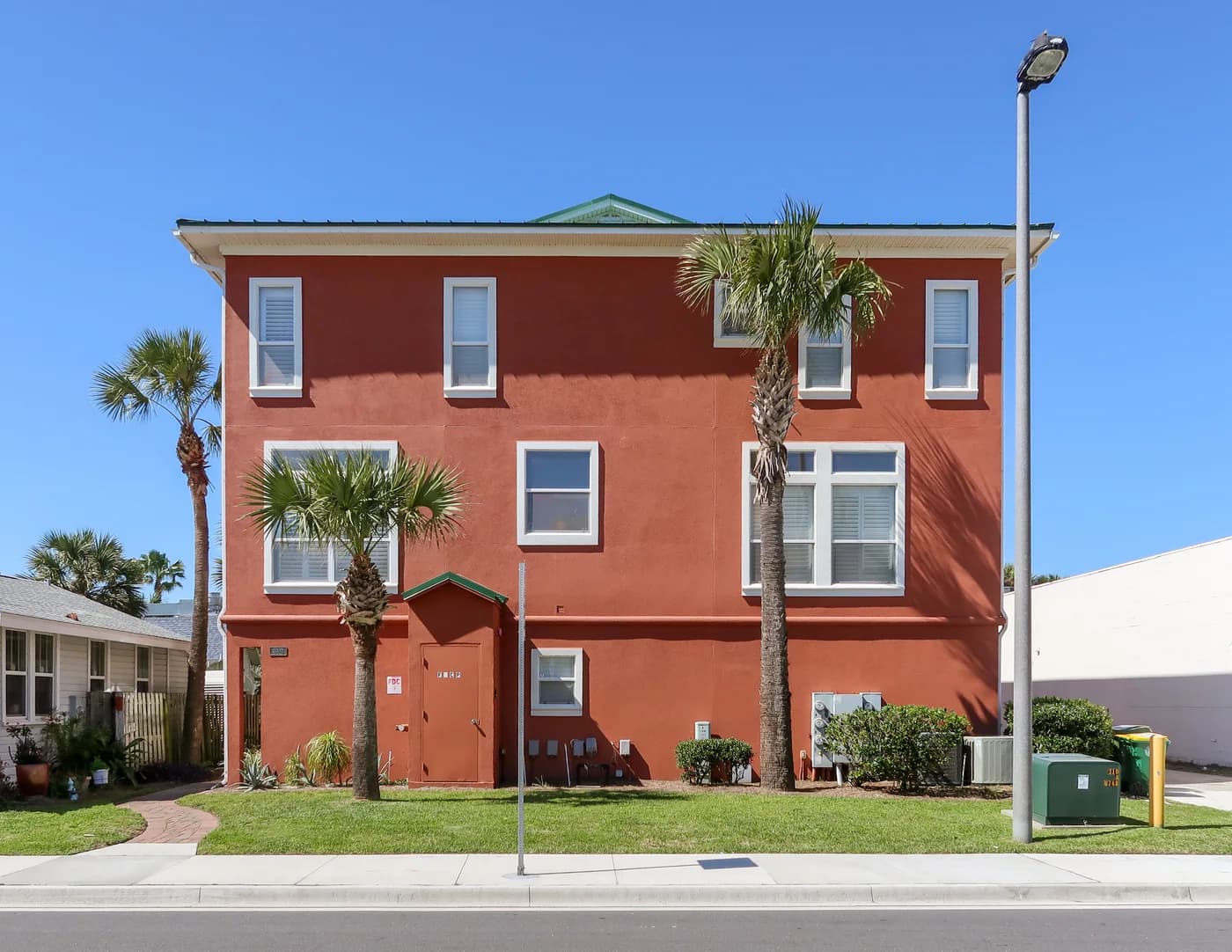
Condominium building in Jacksonville Beach, Florida
Tim Kiser
Source image · Image-use terms
Web versions are resized and compressed; attribution and applicable source terms are retained.
Frequently asked questions
Does homeowners insurance automatically cover flooding?
Generally no. Review a separate flood policy and the actual homeowners exclusions.
Can I assume immediate NFIP coverage?
No. A waiting period generally applies unless a specified exception fits.
Sources & further reading
Source links checked October 23, 2026. Rules and availability may change; verify current terms directly. Read our editorial standards.